









Are Plastic or Metal Frames Better for Thick Lenses?
TL;DR: What's the Best Frame Material for Thick Lenses?
For high prescriptions, the frame's size and shape are more critical than the material itself. However, the material directly influences your best design choices.
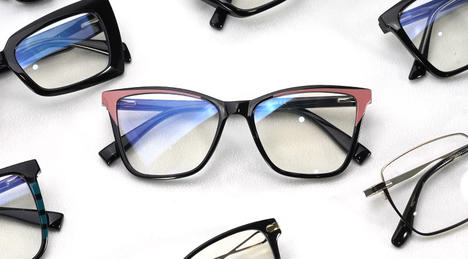
Plastic (Acetate) Frames: These are generally the superior choice for concealing thick lens edges. Their bulky nature effectively hides the sides of the lens, creating a more seamless look. They are ideal for very high prescriptions, especially when you choose a smaller, rounder frame style.
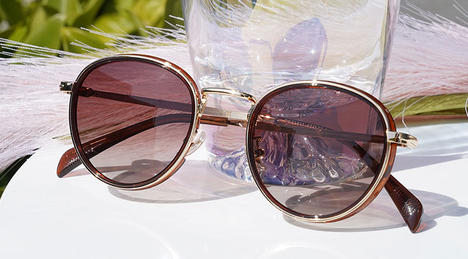
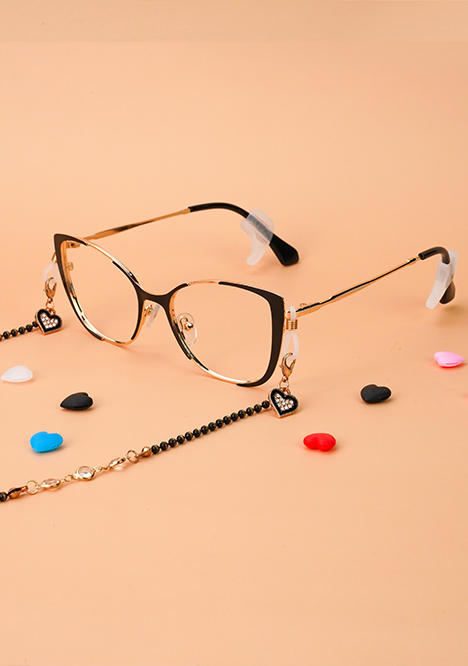
Metal Frames: While often lighter, thin metal rims expose the edge of a thick lens. They are a good option for lower-to-moderate high prescriptions, especially if you prioritize a lightweight feel and a precise fit, thanks to their adjustable nose pads.
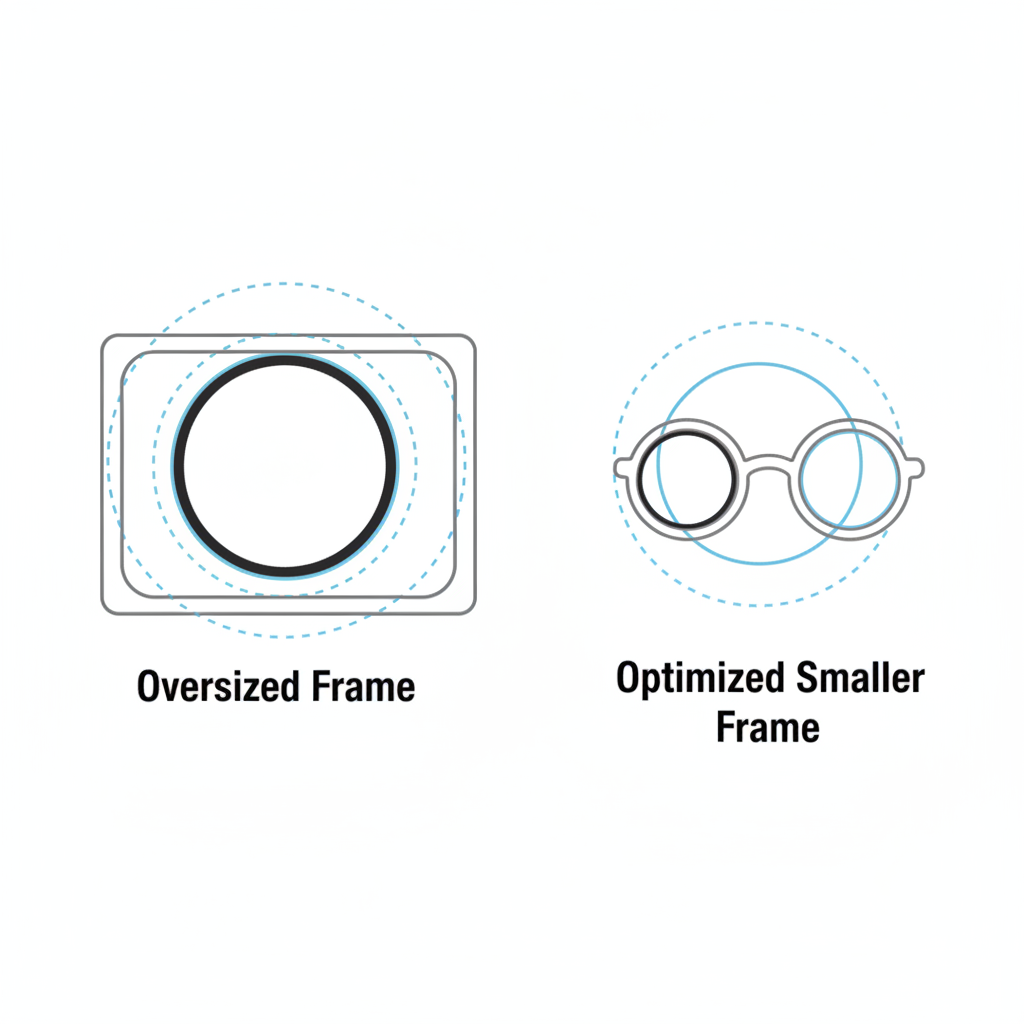
The Golden Rule: Regardless of material, choose the smallest, roundest frame that complements your face. This single decision will do more to reduce lens thickness and weight than any other factor.
Choosing new glasses with a strong prescription can feel like a balancing act. You want a style you love, but you’re also concerned about lenses that look thick, feel heavy, or create that distracting "bug-eye" or "tiny-eye" effect. The frame you choose plays the most significant role in managing these challenges.
While lens technology has come a long way, the foundation of a great pair of high-prescription glasses is a frame that is properly sized and designed to support the lenses. This guide breaks down the practical advantages and disadvantages of plastic and metal frames, helping you make an informed decision for both comfort and confidence.

Understanding Why Your Lenses Are Thick
Before comparing frames, it helps to know why some lenses are thicker than others. Your prescription, which you can learn more about in our guide to Reading Your Eyeglass Prescription, contains the numbers that dictate lens design.
Sphere (SPH): This number corrects for nearsightedness (a minus value, like -5.00) or farsightedness (a plus value, like +4.50). The further the number is from zero, the thicker the lens will be. Lenses for nearsightedness are thickest at the edges, while lenses for farsightedness are thickest in the center.
Cylinder (CYL) & Axis: These values correct for astigmatism, an imperfection in the curvature of your eye. A high cylinder value can also add to the overall thickness and weight of the lens.
A prescription is generally considered "high" or "strong" when the sphere value exceeds ±4.00 diopters.
The Role of Lens Index and Design
To combat thickness, lens manufacturers use different materials and designs:
High-Index Lenses: As explained by Ferris State University's College of Optometry, high-index lenses have a higher refractive index (e.g., 1.67 or 1.74) compared to standard plastic (1.50). This means they can bend light more efficiently, so less material is needed to achieve the same prescription power. The result is a thinner and lighter lens.
Aspheric Design: Traditional lenses have a spherical curve, like a slice of a ball. For strong prescriptions, this can cause visual distortion at the periphery of the lens. Aspheric lenses have a more complex, flatter curvature that reduces this distortion and further slims down the lens profile.
Pro Tip: For prescriptions stronger than ±4.00 D, you should always opt for at least a 1.67 high-index lens. For prescriptions exceeding ±6.00 D, a 1.74 high-index lens combined with an aspheric design is the standard recommendation for the best aesthetic and lightest weight.
Plastic (Acetate) Frames: The Best for Concealment
When we say "plastic," we're typically referring to cellulose acetate, a durable, plant-based plastic that allows for rich colors and patterns. For users with high prescriptions, acetate frames offer several distinct advantages.
Pros of Plastic Frames for Thick Lenses
Superior Edge Coverage: This is the number one reason to choose plastic. The inherent bulk of an acetate frame creates a "wall" that hides the thickest part of a minus-power lens. The edge of the lens is simply tucked away inside the frame material, making the thickness far less apparent.
Structural Strength: Thick acetate frames provide robust support for heavier glass or high-index lenses, reducing the risk of the lens popping out.
Style Versatility: The popularity of bold, chunky styles works in your favor. A fashionable, thick-rimmed frame not only looks great but is also the most practical choice for your prescription.
Cons of Plastic Frames
Potential Weight: While high-index lenses are light, a large acetate frame can add significant weight on its own, potentially leading to discomfort on your nose and ears.
Fit Limitations: Most plastic frames have a fixed, molded bridge. If this bridge doesn’t sit perfectly on your nose, the glasses can slide down. This is particularly problematic for high prescriptions, as even a few millimeters of slippage changes the vertex distance—the distance from the lens to your eye—which can alter the effective power of the prescription.
Metal Frames: The Lightweight Contender
Metal frames, often made from materials like titanium, stainless steel, or monel, are known for their sleek, minimalist aesthetic and low weight.
Pros of Metal Frames for Thick Lenses
Lightweight Construction: Titanium and other metal alloys are incredibly light and strong, which can help offset some of the weight from the lenses.
Adjustable Fit: This is a critical advantage. Metal frames almost always feature adjustable silicone nose pads. An optician (or you, with careful adjustments) can position these pads to ensure the glasses sit at the correct height and distance from your eyes. This provides a stable, precise fit that prevents slipping and maintains optical accuracy.
Minimalist Style: If you dislike the feeling of a bulky frame on your face, a thin metal frame offers a more "barely there" look and feel.
Cons of Metal Frames
Exposed Lens Edges: This is the primary drawback. The thin metal rim offers zero coverage for the edge of the lens. The full thickness will be visible from the side, which can be a significant cosmetic concern for many wearers.
Less Secure for Very High Prescriptions: In some cases, particularly with semi-rimless or rimless styles, the groove holding a very thick and heavy lens can be a point of weakness. A full-rim frame is always a safer bet.
Debunking a Common Myth: Are Metal Frames Always Better?
A common misconception is that metal frames are automatically the better choice for high prescriptions because they are lighter. While the frame material is lighter, it fails to hide the lens thickness, and the overall weight difference might be negligible once the heavy lenses are mounted. Often, a well-fitting, smaller acetate frame can feel more balanced and comfortable than a poorly adjusted metal one, even if the metal frame is technically lighter.
Decision Framework: Plastic vs. Metal for Your Prescription
Choosing the right material is about weighing the trade-offs between aesthetics, fit, and comfort. Use this table to guide your decision.
| Feature | Plastic (Acetate) Frames | Metal Frames |
|---|---|---|
| Lens Edge Concealment | Excellent. The frame's thickness hides the lens edge. | Poor. The thin rim fully exposes the lens edge. |
| Weight | Frame can be heavier, but balanced. | Frame is typically lighter. |
| Fit & Adjustability | Limited. Relies on a fixed bridge. | Excellent. Adjustable nose pads allow a custom fit. |
| Durability | Very durable and holds lenses securely. | Can be bent; rimless styles are less secure for heavy lenses. |
| Best For | Very high prescriptions (>-6.00D), users who prioritize hiding lens thickness. | Low-to-moderate high prescriptions (±4.00 to ±6.00D), users who prioritize a lightweight feel and precise fit. |
Key Takeaways: Your Checklist for Success
Ultimately, the perfect frames for your thick lenses depend more on design than material. Whether you lean toward plastic or metal, follow these expert-backed guidelines.
Prioritize Frame Size Above All: This is the most important rule. As an experienced optician would advise, reducing the eye size of a frame by just 3-6mm can make a noticeable difference when your prescription is over ±4.00D. Look for smaller, rounder shapes, as they require the least amount of lens material at the edges.
Ensure a Perfect Bridge Fit: For plastic frames, make sure the bridge sits flush against your nose without sliding. For metal frames, use the adjustable nose pads to achieve a secure fit. The goal is to keep the vertex distance correct and prevent slippage.
Invest in the Right Lenses: Don't put powerful lenses in a budget frame. Pair your chosen frame with the right lens technology. That means 1.67 or 1.74 high-index lenses and an aspheric design. An anti-reflective coating is also essential on high-index materials to reduce distracting glare.
Check for Safety Compliance: Reputable eyewear sellers must adhere to safety regulations. For instance, the U.S. Food and Drug Administration (FDA) mandates that all prescription lenses sold in the United States pass an impact-resistance test. This ensures your lenses are durable for everyday wear. Our guide on buying glasses online safely provides more details.
Avoid Risky Styles: With a strong prescription, it's wise to avoid certain trends. Oversized fashion frames will maximize lens thickness and weight. Rimless and semi-rimless styles offer less support and expose the entire lens edge, making them a poor choice for all but the most moderate high prescriptions.
By focusing on these principles, you can confidently wear even thin, stylish frames with a high Rx without sacrificing comfort or clarity.
Frequently Asked Questions (FAQ)
Q: Will my eyes look smaller with my new glasses?
A: This is a common effect called minification, and it happens with strong minus (nearsighted) prescriptions. The stronger the prescription, the more noticeable it is. Choosing aspheric lens designs and frames that place the lenses closer to your eyes can help reduce this effect.
Q: Do I really need to provide my Pupillary Distance (PD)?
A: Yes, it is absolutely critical. The PD ensures the optical center of each lens aligns directly with the center of your pupil. According to a study published in PubMed, incorrect PD is a common reason for errors in online glasses. For high-power lenses, even a small error can cause eye strain, headaches, and distorted vision. You can learn how to measure your PD at home accurately.
Q: Are plastic lenses safer than glass lenses?
A: Yes. Modern plastic, polycarbonate, and Trivex lenses are significantly more impact-resistant than glass. As noted, all lenses sold in the U.S. must meet an FDA standard for impact resistance. Furthermore, a PubMed study on UV radiation found that plastic lenses inherently offer better protection against harmful UV rays than glass lenses.
Disclaimer: This article is for informational purposes only and does not constitute professional medical advice. Please consult a qualified optometrist or ophthalmologist for a comprehensive eye exam and to discuss your specific vision needs, especially if you have a high prescription or pre-existing eye conditions.


