





The Polarization Trap: Why No-Glare Doesn't Always Mean UV-Safe
The Great Sunglass Deception: Is Your Glare Protection Leaving Your Eyes Exposed?
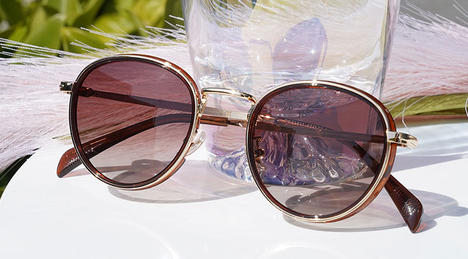
It’s a common assumption made every sunny day: a good pair of sunglasses is one that cuts the blinding glare. We associate that crisp, clear vision with protection. However, this belief is the foundation of a significant and potentially harmful misunderstanding. The feature that reduces glare—polarization—is entirely separate from the feature that protects your eyes from ultraviolet (UV) radiation.
Confusing these two can lead to a false sense of security. You might invest in expensive polarized lenses, believing you have the best protection, while your eyes remain vulnerable to the invisible damage caused by UV rays. This article will clarify the distinct roles of polarization and UV protection, explain the risks of relying on the wrong feature, and provide a clear framework for choosing sunglasses that offer complete safety, not just visual comfort.
Polarization: A Filter for Visual Comfort
Think of polarization as a smart gate for light. As explained by sources like Harvard Health Publishing, when light reflects off a flat surface like a road or the surface of water, it tends to become horizontally oriented. This concentrated horizontal light is what we perceive as glare.
Polarized lenses feature a chemical filter that is vertically oriented, acting like a microscopic picket fence. This filter blocks the horizontal light waves, eliminating glare and reducing eye strain.
Key Benefits of Polarization:
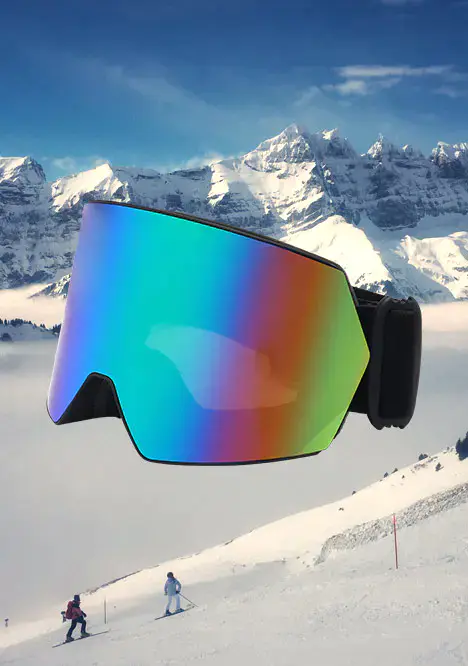
- Reduced Glare: Ideal for activities like driving, fishing, and skiing, where reflective surfaces are common.
- Enhanced Contrast: By cutting out the "visual noise" of glare, images can appear sharper and clearer.
However, polarization has limitations. It can make it difficult to view LCD screens on dashboards, smartphones, and certain instrument panels, a critical consideration for pilots, as noted by the Federal Aviation Administration (FAA). It is a feature designed for visual comfort, not for health protection.

UV Protection: The Non-Negotiable Health Shield
Ultraviolet radiation is an invisible part of the light spectrum that poses a significant threat to our eye health. Unlike glare, you can't see or feel UV rays, but their damage is cumulative and can be severe. The American Academy of Ophthalmology (AAO) and other health organizations have extensively documented the risks.
There are two primary types of UV rays to be concerned about:
- UVB Rays: Strongly linked to the formation of cortical cataracts and pterygium ("surfer's eye").
- UVA Rays: Can penetrate deeper into the eye, potentially contributing to macular degeneration over time.
A crucial study published in PMC found that individuals who did not wear sunglasses had a 57% increased risk of cataracts compared to those who did. This underscores that UV protection is not a luxury; it is a fundamental health requirement.
The gold standard for protection is labeled "UV400" or "100% UV Protection." This means the lenses block all light rays with wavelengths up to 400 nanometers, which covers the entire spectrum of UVA and UVB rays. A technical report in PubMed highlights the inadequacy of older standards that only protected up to 380 nm, noting the 380-400 nm band contains significant energy.
The Danger of the Darkness Fallacy
Here lies the most critical point: a dark lens without certified UV protection is more dangerous than wearing no sunglasses at all.
This phenomenon, often called the "darkness fallacy," is confirmed by institutions like the MD Anderson Cancer Center. Your pupil, the opening that lets light into your eye, naturally constricts in bright conditions to limit the amount of light—and UV radiation—that enters. When you put on dark lenses, you trick your pupil into dilating (opening wider) as if it were in a darker environment.
If those dark lenses lack a proper UV400 filter, your dilated pupils allow a flood of unfiltered UV radiation to stream into the sensitive tissues of your eye. You have effectively opened the door and invited the danger in, accelerating the potential for long-term damage like cataracts and other retinal issues. For a deeper dive into this topic, our article on whether darker sunglass lenses are more UV protective provides more detail.

How to Choose Sunglasses That Are Truly Safe
Navigating the market doesn't have to be confusing. A high price tag or a "polarized" sticker does not guarantee safety. Based on extensive experience with lens technology, the key is to prioritize verified protection over all other features.
Methodology Note: The following recommendations are based on established guidelines from regulatory bodies like the FDA and clinical advice from ophthalmology organizations. They are intended as a practical checklist for consumers to verify the safety claims of eyewear.
-
Look for the UV400 Label: This is the most important feature. The label should explicitly state "UV400" or "100% UV Protection." Be wary of vague terms like "UV absorbing" or "sun protection," which are not regulated. The FDA classifies sunglasses as medical devices and prohibits false labeling, but verification still falls on the consumer.
-
Ignore the Tint and Color: Lens darkness has no bearing on UV protection. A nearly clear lens made from a material like polycarbonate with a UV400 rating can offer complete protection. Polycarbonate has inherent UV-blocking properties, making it an excellent choice, especially for children's and sports eyewear, as recommended by the American Optometric Association (AOA).
-
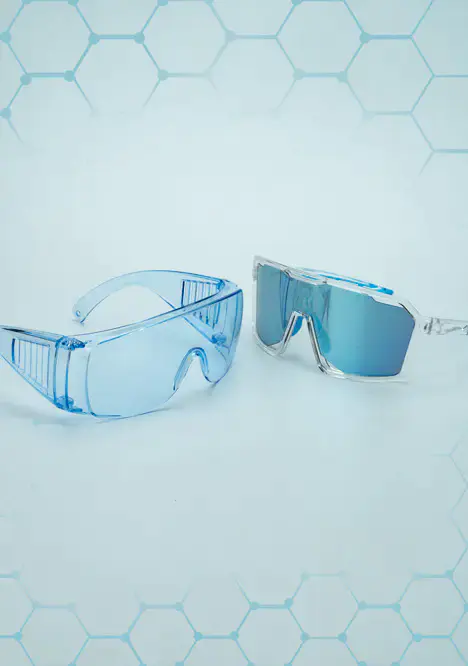
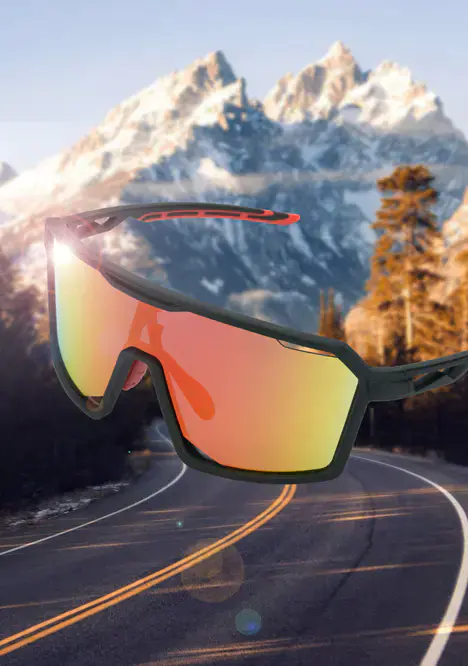
Consider Frame Geometry: UV rays don't just come from the front. A significant amount of damaging light can leak in from the sides and top of your frames. A study in PMC using 3D head-forms found that wraparound styles offered nearly 100% protection from this peripheral exposure. For high-exposure environments like snow or water, which can double UV exposure, oversized or wraparound frames are a safer choice.
-
Understand the Hierarchy of Features:
- Health (Non-Negotiable): UV400 Protection.
- Comfort (Optional): Polarization.
- Aesthetics (Personal): Lens color, mirror coatings, and frame style.
First, ensure your health is protected. Then, add features for comfort and style. Never sacrifice UV protection for glare reduction.
Your Vision Is Not Worth the Gamble
The polarization trap is easy to fall into but also easy to avoid. By understanding that glare reduction is a comfort feature and UV protection is a health essential, you can make informed decisions.
Always prioritize the UV400 rating as your primary criterion. Check the labels, understand that darkness does not equal safety, and choose a frame that provides ample coverage. Polarization is an excellent addition for enhancing visual clarity and reducing eye strain, but it should always be the second consideration after you have guaranteed your eyes are shielded from the invisible threat of ultraviolet radiation.
Disclaimer: This article is for informational purposes only and does not constitute professional medical advice. Please consult with a qualified eye care professional for any concerns about your eye health.
References
- Harvard Health Publishing. "Polarized sunglasses: Protecting your eyes from harmful glare." https://www.health.harvard.edu/staying-healthy/polarized-sunglasses-protecting-your-eyes-from-harmful-glare
- Federal Aviation Administration (FAA). "Sunglasses for Pilots." https://www.faa.gov/pilots/safety/pilotsafetybrochures/media/sunglasses.pdf
- American Academy of Ophthalmology (AAO). "How to Choose the Best Sunglasses." https://www.aao.org/eye-health/glasses-contacts/sunglasses-3
- Wang, S., et al. (2021). "Association of Sun-Related Behaviors and Cataract in a Rural Population of Taiwan: The Tianliao Old People (TOP) Study 04." PMC. https://pmc.ncbi.nlm.nih.gov/articles/PMC8321156/
- Cole, B. L. (2019). "Solar ultraviolet radiation protection by sunglasses: a technical report." PubMed. https://pubmed.ncbi.nlm.nih.gov/31274741/
- MD Anderson Cancer Center. "9 things to know about sunglasses, eye protection and cancer." https://www.mdanderson.org/cancerwise/9-things-to-know-about-sunglasses--eye-protection-and-cancer.h00-159699123.html
- FDA. "Guidance for Industry: Nonprescription Sunglasses." https://www.fda.gov/regulatory-information/search-fda-guidance-documents/guidance-document-nonprescription-sunglasses-guidance-industry
- American Optometric Association (AOA). "UV Protection." https://www.aoa.org/healthy-eyes/caring-for-your-eyes/uv-protection
- Sasaki, H., et al. (2019). "Ocular UV Dosimetry: The Effect of Sunglass and Hat Wear on the Ocular Surface and Intraocular UV Radiation." PMC. https://pmc.ncbi.nlm.nih.gov/articles/PMC6803516/
- Science News Explores. "Explainer: Polarized versus UV-blocking sunglasses." https://www.snexplores.org/article/polarized-uv-blocking-sunglasses


