










Polarized vs. Photochromic for Sensitive Eyes
Polarized vs. Photochromic Lenses: Which Is Right for Your Sensitive Eyes?
Navigating the world of specialty lenses can be challenging, especially when you're dealing with light sensitivity. The discomfort from harsh glare or the abrupt change from a dim room to bright sunlight can be debilitating. Two of the most common solutions are polarized and photochromic lenses, but they solve very different problems. Choosing the wrong one can lead to frustration and a lack of relief.
This guide provides a clear, evidence-based comparison to help you understand the distinct advantages of each technology. We will break down how they work, compare them in real-world scenarios, and provide the expert insights you need to make the best choice for your visual comfort and eye health.
TL;DR: The Core Difference
- Choose Polarized Lenses if: Your primary challenge is intense, reflective glare from flat surfaces like roads, water, or snow. They are the superior choice for driving and most outdoor activities.
- Choose Photochromic Lenses if: Your main need is convenience and a single pair of glasses that can adapt as you move between indoor and outdoor environments with varying light levels.
Understanding the Core Technology
Before comparing them, it’s crucial to understand that these two types of lenses are engineered for different purposes. One manages specific types of light waves, while the other reacts to ambient light conditions.
What Are Polarized Lenses?
Polarized lenses are designed with one primary goal: to eliminate glare. Glare is concentrated horizontal light that reflects off flat surfaces. Think of the blinding sheen from a wet road, the surface of a lake, or the hood of a car on a sunny day. This type of light creates significant visual discomfort and can be dangerous when driving.
These lenses feature a special chemical filter that is laminated in a vertical pattern. This pattern acts like a microscopic picket fence, blocking the horizontal light waves from passing through to your eye. As Harvard Health Publishing explains, this filtering process dramatically improves visual comfort and clarity by cutting out the distracting and often painful glare. It’s important to note that polarization itself does not block UV light, but nearly all polarized lenses sold today are combined with a material that blocks 100% of UV rays.
What Are Photochromic Lenses?
Photochromic lenses, often known by the brand name "Transitions," are designed for adaptability. These are also called light-adaptive lenses. Their core function is to automatically darken when exposed to ultraviolet (UV) radiation and lighten in its absence.
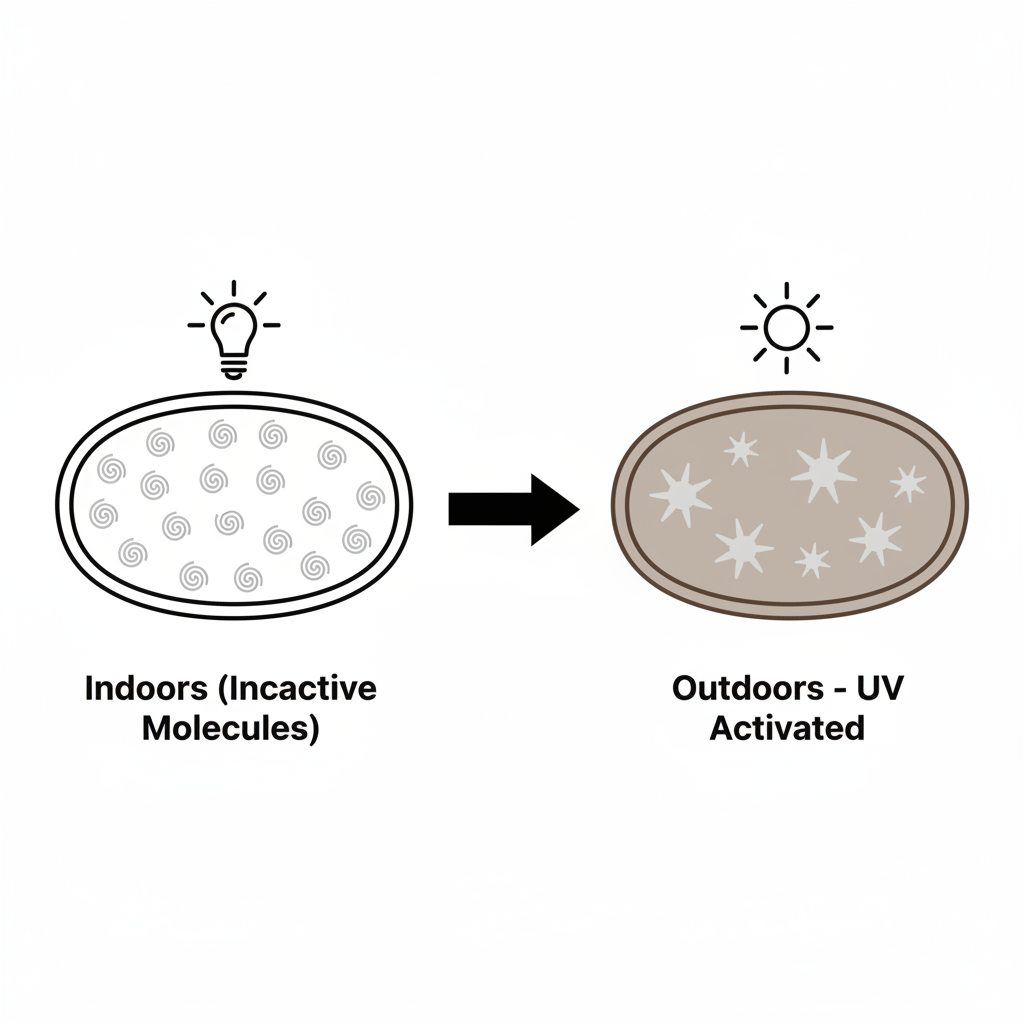
The magic lies in trillions of molecules (such as silver halide or spirooxazine) embedded within the lens. When UV rays strike these molecules, they undergo a chemical process that causes them to change shape. This new shape absorbs more visible light, resulting in the lens darkening. Once the UV source is removed—like when you walk indoors—the molecules revert to their original state, and the lens becomes clear again. This technology offers the convenience of having prescription glasses and sunglasses in a single frame.
Head-to-Head Comparison for Sensitive Eyes
For someone with photophobia or general light sensitivity, the choice between these two depends entirely on the environment where you need the most relief.
| Feature | Polarized Lenses | Photochromic Lenses |
|---|---|---|
| Primary Function | Eliminates reflective glare | Adapts lens tint to UV light levels |
| Glare Reduction | Excellent for horizontal glare from roads, water, snow | Good, but does not specifically filter glare |
| UV Protection | Typically 100% UV400 (as a separate feature) | 100% UV400 (inherent to the activation process) |
| Convenience | Requires switching to clear glasses indoors | Excellent; one pair for indoor and outdoor use |
| Activation Speed | Instant (always tinted) | Varies; takes 30-60 seconds to darken, longer to lighten |
| Driving Performance | Superior for cutting road glare | Poor; most don't darken behind UV-blocking windshields |
| LCD Screen Use | Can cause screens (phones, dashboards) to look dark | No effect on screens |
| Temperature Effect | Not affected | Performance is temperature-dependent; works better in cold |
Deep Dive: Performance in Key Scenarios
Winner for Driving: Polarized For driving, there is no contest. Polarized lenses are the safer and more comfortable choice. They specifically target and eliminate the dangerous glare that reflects off asphalt and other vehicles, which is a common cause of eye strain and temporary blindness on the road. Standard photochromic lenses are almost useless for driving. The windshield of your car blocks the very UV rays that the lenses need to activate, leaving them mostly clear even in bright sun.
Winner for Outdoor Activities: Polarized If you spend time on the water, skiing, or hiking, polarized lenses offer a distinct advantage. By cutting the glare from water, they allow you to see beneath the surface. For snow sports, they reduce the intense, reflected light that can lead to snow blindness. While photochromic lenses will darken and provide comfort, they won't offer the same level of clarity and glare elimination.
Winner for Everyday Convenience: Photochromic If your day involves constantly moving between indoors and outdoors—running errands, walking across a campus, or stepping out for lunch—photochromic lenses are incredibly convenient. The automatic tinting saves you from having to carry and switch between two separate pairs of glasses.
Common Pitfalls and Expert Considerations
Choosing the right lens involves understanding their limitations, which aren't always advertised. Based on years of optical experience, here are some critical factors to consider.
Myth Debunked: "Photochromic Lenses Are Great Driving Sunglasses"
This is the most common misconception. As mentioned, your car's windshield already blocks over 99% of UV rays. Because standard photochromic lenses rely on UV for activation, they will not get dark inside a car. While some newer, specialized versions can react to a small amount of visible light, they still don't achieve the full darkness or glare-blocking capability of a dedicated pair of polarized sunglasses. For driving safety, always opt for polarized lenses.

Expert Warning: Temperature Affects Performance
Photochromic technology is sensitive to temperature. The molecules that cause the lenses to darken work more efficiently in cold weather. This means your lenses will get darker, faster, on a bright winter day than on a hot summer day. Conversely, they will also be slower to lighten when you go back indoors in the cold. This is a crucial detail for users in climates with extreme temperatures.
The Non-Negotiable Baseline: UV400 Protection
Regardless of which technology you choose, ensure your lenses provide 100% protection against both UVA and UVB rays up to 400 nanometers. The American Optometric Association (AOA) stresses the importance of this standard for protecting against cataracts, macular degeneration, and other long-term eye diseases. Both polarized and photochromic lenses should always be paired with this fundamental level of protection. You can explore options for UV protection sunglasses for driving to ensure you have the right coverage.
Wrapping Up: Making the Right Choice for Your Eyes
The decision between polarized and photochromic lenses isn't about which is "better," but which is right for your lifestyle and specific needs.
-
You should choose POLARIZED lenses if:
- You do a lot of driving, especially during sunrise or sunset.
- You participate in water sports like fishing or boating.
- You are extremely sensitive to the reflective glare from flat surfaces.
- You want the crispest, clearest vision possible in bright, sunny conditions.
-
You should choose PHOTOCHROMIC lenses if:
- You want the convenience of a single pair of glasses for all lighting conditions.
- You frequently move between indoor and outdoor spaces.
- Your light sensitivity is more about general brightness than specific glare.
- You wear prescription glasses and don't want to invest in a separate pair of prescription sunglasses.
For some users, the ideal solution might be two pairs of glasses: a primary pair with photochromic lenses for daily, variable use, and a dedicated pair of polarized sunglasses kept in the car for driving and extended outdoor activities.
Frequently Asked Questions (FAQ)
Can I get lenses that are both polarized and photochromic? Yes, this combination is available. It offers the benefits of both technologies, providing adaptive tint that also cuts glare. However, these are premium lenses and can be significantly more expensive. They also still won't darken effectively inside a car.
Do photochromic lenses wear out? Yes. The chemical molecules in photochromic lenses lose their ability to transition over time. After about 2-3 years of regular use, you may notice they don't get as dark as they used to or don't become fully clear indoors.
Why can't I see my phone screen with my sunglasses? This is a common issue with polarized lenses. LCD screens on smartphones, car dashboards, and ATMs use a polarizing filter to be visible. Your polarized glasses may block this light, causing the screen to appear black or distorted at certain angles.
Are polarized lenses better for your eyes? They are better for reducing eye strain caused by glare, which is a significant benefit. However, from a health perspective, the most critical factor is 100% UV protection, which both types of lenses should provide.
Disclaimer: This article is for informational purposes only and does not constitute professional medical advice. Please consult with a qualified optometrist or ophthalmologist to determine the best eyewear solution for your specific health needs, especially if you have pre-existing conditions like severe photophobia, cataracts, or are recovering from eye surgery.


