









Polarized vs. UV Protection: What's the Key Difference?
Are polarized lenses automatically UV-safe? It’s one of the most common questions we hear, and the answer is crucial for your eye health: not always. Polarization and UV protection are two distinct technologies that solve different problems. One is a comfort and performance feature, while the other is a non-negotiable standard for health and safety.
Understanding the difference is the first step to making an informed choice and ensuring your eyes are truly protected from the sun. This guide will break down the science behind each feature, debunk common myths, and give you a clear framework for choosing the right sunglasses for your needs.
UV Protection: The Essential Health Shield
Think of UV protection as the invisible armor for your eyes. The sun emits ultraviolet (UV) radiation, which is a form of electromagnetic radiation that is invisible to the human eye. The two main types that reach the Earth’s surface and affect our eyes are UVA and UVB rays.
Long-term, cumulative exposure to this radiation can lead to serious eye conditions. According to the American Optometric Association (AOA), this damage can contribute to cataracts, macular degeneration, and pterygium (an abnormal growth on the eye’s surface). Furthermore, a staggering 90% of eyelid cancers are linked to UV exposure, as noted by the MD Anderson Cancer Center. This is why UV protection isn't just a feature—it's a fundamental health requirement.
So, what should you look for? The gold standard is a label that says "UV400" or "100% UVA/UVB Protection." This means the lenses are engineered to block at least 99% of UV rays up to 400 nanometers, covering the entire spectrum of harmful UVA and UVB light. This protection comes from the lens material itself—polycarbonate lenses, for example, naturally block UV rays—or from a special coating applied to the lens. It has nothing to do with the color or darkness of the tint.

Polarization: A High-Performance Filter for Glare
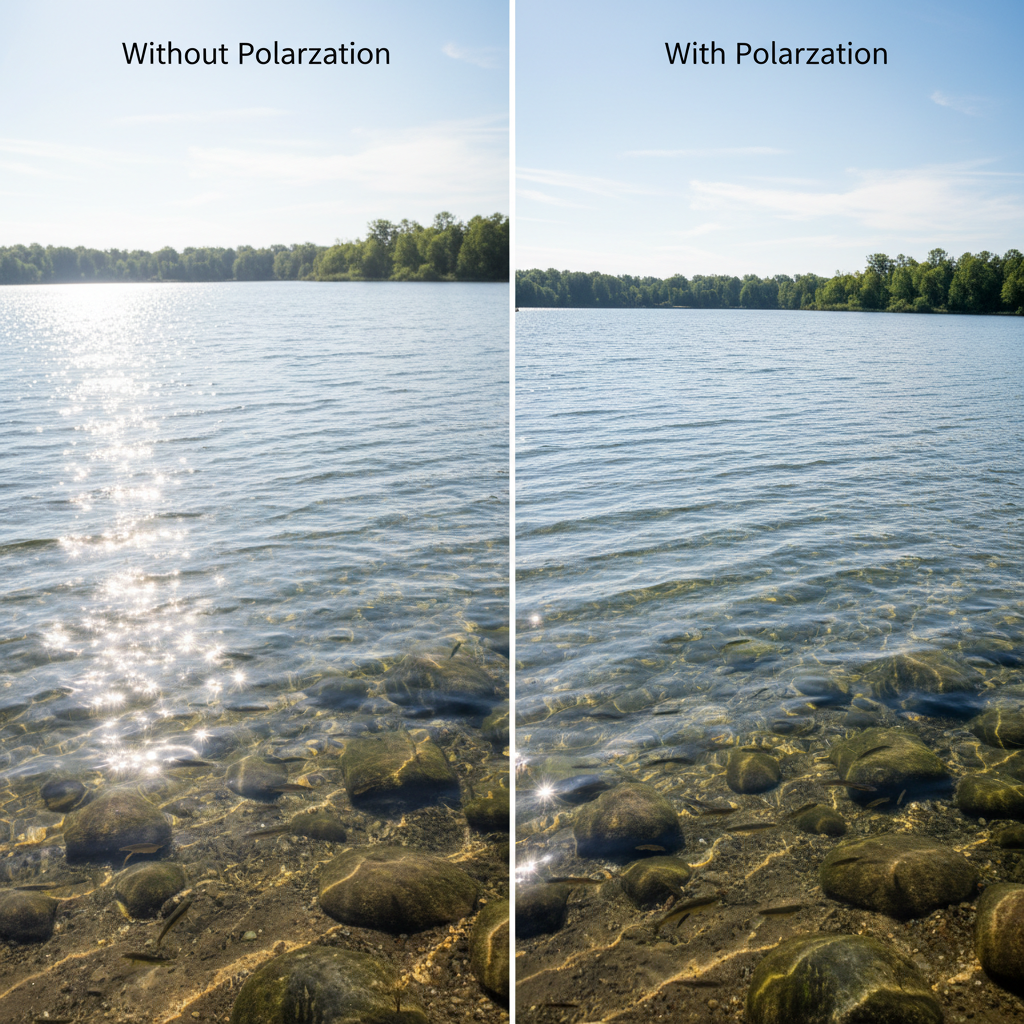
If UV protection is about health, polarization is about visual clarity and comfort. It’s a premium feature designed to combat a specific phenomenon: glare. Glare is created when light reflects off flat, smooth surfaces like a wet road, a calm lake, or the hood of a car. This reflected light is typically horizontally polarized, meaning it travels in a uniform, horizontal direction, creating a distracting and sometimes dangerous intensity.
Polarized lenses feature a special chemical film that contains molecules aligned vertically. As explained by Harvard Health, this vertical pattern works like a picket fence, blocking the horizontal light waves of glare while allowing normal, vertical light to pass through. The result is a sharper, clearer view with reduced eye strain.
However, this technology has a few specific drawbacks. Because it filters light in a specific way, it can cause the liquid crystal displays (LCDs) on your phone, car dashboard, or ATM to appear dim or completely black. This is also why the Federal Aviation Administration (FAA) advises pilots against wearing polarized lenses, as they can interfere with modern cockpit instruments.
Debunking Myths: The Critical Differences
Confusing polarization and UV protection can lead to poor choices that put your vision at risk. Let's clear up the most common misconceptions.
Myth: Darker Lenses Offer More UV Protection
This is the most dangerous myth about sunglasses. The darkness of a lens tint has no correlation with its ability to block UV rays. In fact, wearing dark lenses without certified UV protection is more harmful than wearing no sunglasses at all. Why? The dark tint causes your pupils to dilate, or open wider, to let more light in. If the lenses lack a UV filter, this dilation allows an even greater amount of damaging UV radiation to enter your eye. Always trust the UV400 label, not the color of the lens.
Myth: All Polarized Lenses Are UV-Protective
While most high-quality polarized sunglasses also include UV protection, the two are not mutually inclusive. Polarization is a separate film or property applied to the lens to reduce glare. It is entirely possible for a lens to be polarized but offer little to no UV blocking. Never assume "polarized" means "UV safe." A trustworthy pair of sunglasses will explicitly state both features if they have them.
To make the distinction crystal clear, here’s a direct comparison:
| Feature | UV Protection | Polarization |
|---|---|---|
| Primary Purpose | Blocks harmful ultraviolet (UVA/UVB) radiation. | Filters and reduces intense, horizontal glare. |
| How it Works | An invisible coating or inherent property of the lens material that absorbs UV photons. | A chemical film laminated onto or embedded in the lens that blocks horizontal light waves. |
| Key Benefit | Prevents long-term eye diseases like cataracts, macular degeneration, and eyelid cancers. | Improves visual comfort, reduces eye strain, and enhances clarity in bright, reflective environments. |
| How to Verify | Look for a "UV400" or "100% UVA/UVB Protection" label. An optician can test it with a photometer. | Look through the lenses at an LCD screen and rotate them; the screen should darken or go black. |
| Is it Essential? | Yes. This is a fundamental health and safety standard for all sunglasses. | No. This is a premium feature for enhanced performance and comfort. |
How to Choose the Right Lenses for Your Life
Armed with the right information, you can now choose features based on your lifestyle.
- For Everyday Driving: UV protection is mandatory. Polarization is highly recommended to reduce glare from the road and other vehicles, making for a safer, more comfortable drive. For more on this, our guide on Polarized vs. Non-Polarized Rx Sunglasses offers additional insights.
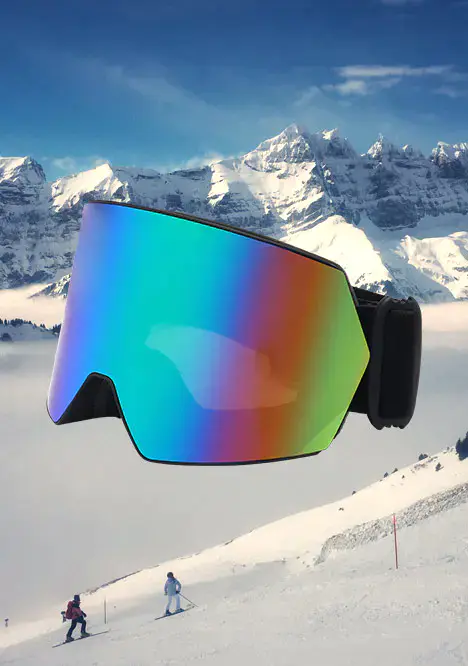
- For Water and Snow Sports: Both are essential. On water or snow, you face intense, reflected glare. Polarization is critical for seeing clearly and avoiding eye fatigue.
- For Pilots or Equipment Operators: UV protection is a must, but polarization is not recommended due to its potential to black out LCD screens and interfere with reading instruments.
- For General Outdoor Use: Always prioritize 100% UV400 protection. Polarization is a fantastic upgrade for added comfort, especially if you are sensitive to bright light.
How to Be a Smart Shopper: Verifying Your Lenses
In a market flooded with options, it can be hard to know who to trust. A recent study found that nearly 47% of people who don't wear sunglasses cite "uncertainty in the efficiency of UV protection" as the main reason. This highlights a major trust gap, especially with affordable eyewear.
Here’s how to ensure you’re getting what you pay for:
- Read the Label or Description: Reputable sellers will always clearly state if their lenses offer "UV400" or "100% UVA/UVB protection." This is your first and most important checkpoint.
- Understand the Material: Lens materials like polycarbonate and Trivex have UV protection built right in. Other plastics may rely on a coating that can theoretically scratch off over time.
- Perform a Quick Polarization Test: Find an LCD screen on a phone, computer, or gas pump. Look at it through your lenses and tilt your head 60 degrees. If the screen gets darker or goes black, your lenses are polarized.
- Visit an Optical Shop: For ultimate peace of mind, any optical shop with a UV photometer can test your lenses in seconds to verify their UV-blocking capability, a tip recommended by experts at University of Utah Health.
Key Takeaways
Choosing the right sunglasses doesn't have to be complicated. By remembering the core functions of each feature, you can protect your eyes and improve your vision.
- UV Protection is for Health: It's an invisible shield against long-term eye disease. Always demand certified UV400 protection.
- Polarization is for Clarity: It's a functional filter that cuts glare for more comfortable and sharper vision.
- The Two Are Not the Same: Never assume one feature implies the other. Verify both.
- Trust the Label, Not the Tint: The safety of your eyes depends on certified UV absorption, not the darkness of the lens.
Frequently Asked Questions (FAQ)
Are polarized sunglasses worth it? For activities like driving, fishing, boating, or skiing, they are absolutely worth it. The reduction in glare significantly improves comfort and safety. For general use, it’s a valuable comfort feature but not a necessity.
Why can't I see my phone screen with my sunglasses on? This is a classic sign of polarized lenses. The polarizing filter on your sunglasses blocks the light emitted from the LCD screen on your phone, causing it to look dark or black.
Do I need to wear sunglasses on a cloudy day? Yes. Up to 80% of the sun's UV rays can penetrate clouds. The American Academy of Ophthalmology warns that UV damage is cumulative, so it's important to wear protection even on overcast days.
Can I add polarization to my existing glasses? No, polarization is a film that is either embedded within the lens or bonded to its surface during the manufacturing process. It cannot be added to existing lenses.
Disclaimer: This article is for informational purposes only and does not constitute professional medical advice. Consult with a qualified eye care professional for any health concerns, especially if you have pre-existing conditions.


