









Polarized vs. Non-Polarized Rx Sunglasses
Polarized vs. Non-Polarized Rx Sunglasses: A Guide to Glare-Free Vision
When choosing prescription sunglasses, the frame style is just the beginning. The real decision, the one that impacts your visual comfort and safety, comes down to the lenses. You’ve likely seen the term "polarized" but may wonder if it’s a necessary upgrade or just marketing hype. The difference is significant, and choosing correctly depends entirely on your lifestyle.
This article will break down the science behind polarized and non-polarized lenses. We will explore how they work, compare them head-to-head, and provide clear guidance on which is the right choice for your specific needs, from daily driving to weekend adventures.
TL;DR: The Core Difference
- Non-Polarized Lenses: These are standard tinted lenses that reduce the overall intensity of bright light. They make your vision more comfortable in the sun but do not filter out harsh glare.
- Polarized Lenses: These lenses contain a special filter that specifically blocks intense, reflected light (glare) coming from flat surfaces like roads, water, and car hoods. This provides clearer, more comfortable vision with better contrast.
Understanding Glare: The Invisible Hazard
Before we can appreciate polarization, we need to understand its enemy: glare. Light travels in waves that vibrate in all directions. When sunlight is unobstructed, these waves are scattered and random. However, when light strikes a flat, reflective surface—like the asphalt of a road, the surface of a lake, or the windshield of an oncoming car—the reflected light waves become organized and vibrate horizontally.
This concentrated, horizontal light is what we experience as glare. It’s not just annoying; it’s a visual impairment. Glare reduces depth perception, distorts colors, causes eye fatigue, and can even hide potential dangers on the road.
How Polarized Lenses Work: The Science of Clarity
Think of a polarized lens as a microscopic venetian blind for your eyes. Laminated within the lens is a chemical film with molecules aligned vertically. This vertical pattern acts as a filter.
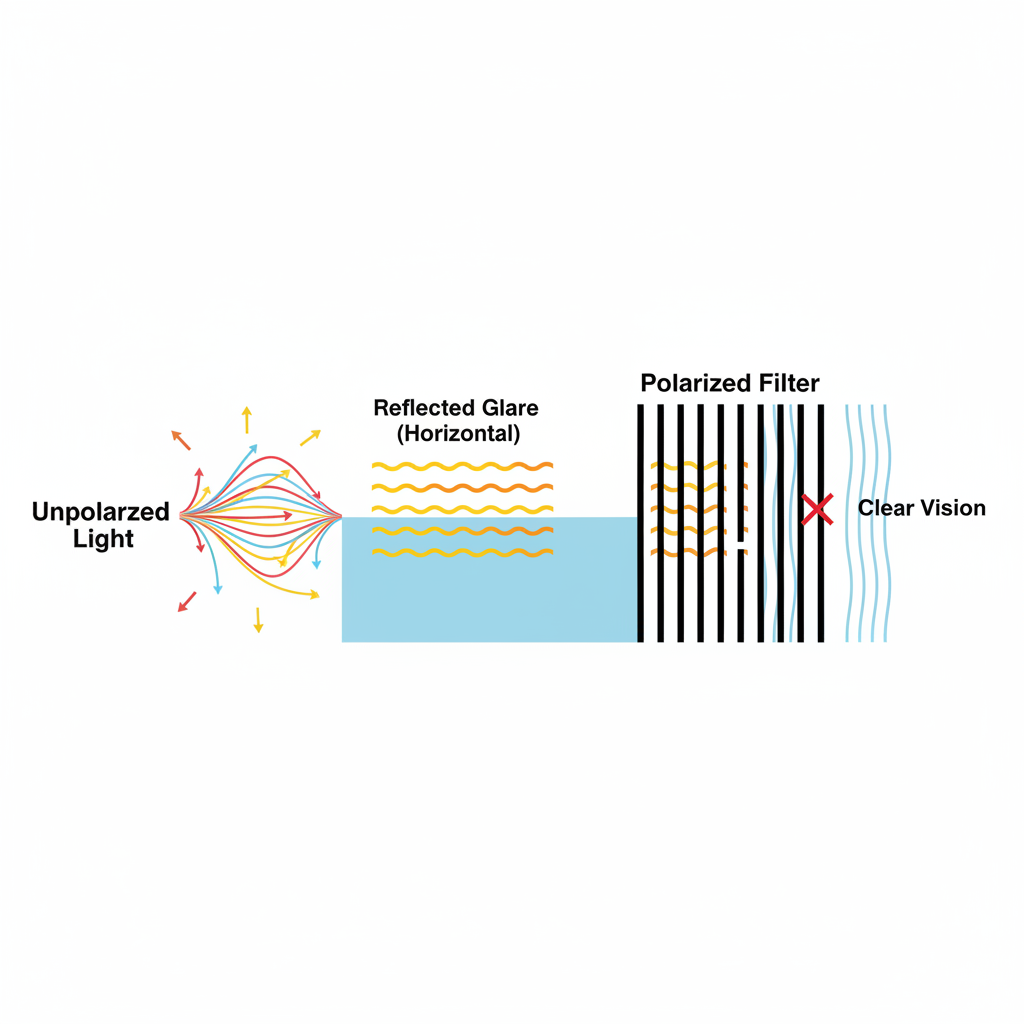
When the horizontal light waves of glare hit this filter, they are blocked. Meanwhile, the beneficial vertical light waves can pass through unimpeded. This selective filtering is what eliminates blinding glare. As a result, you see a world with crisper details, richer colors, and dramatically improved visual comfort. This technology is particularly effective at reducing horizontally reflected glare by a factor of 70-90% in real-world conditions.
Head-to-Head: Polarized vs. Non-Polarized Sunglasses
To make the choice clearer, let’s compare the two lens types across several key features.
| Feature | Polarized Lenses | Non-Polarized (Standard Tinted) Lenses |
|---|---|---|
| Glare Reduction | Excellent. Specifically designed to eliminate harsh, reflected glare. | Poor. Reduces overall brightness but does not filter glare. |
| Visual Comfort | Superior in high-glare environments, reducing squinting and eye strain. | Good. Makes bright conditions more comfortable. |
| Contrast & Color | Enhances contrast and makes colors appear more vivid and saturated. | Mutes colors slightly due to the tint; does not improve contrast. |
| Best Use Cases | Driving, boating, fishing, skiing, and any activity near water or snow. | General daily wear, low-glare environments, casual outdoor activities. |
| Potential Drawbacks | Can make it difficult to see LCD screens (phones, dashboards). | None, aside from the lack of glare reduction. |
Debunking a Common Myth: Lens Darkness and UV Protection
A dangerous misconception is that the darkness of a sunglass lens is related to its level of UV protection. This is incorrect. UV protection comes from an invisible coating or inherent property of the lens material that blocks harmful ultraviolet rays. According to health experts at MD Anderson Cancer Center, wearing dark sunglasses without certified UV protection can be more damaging than wearing no sunglasses at all. The dark tint causes your pupils to dilate, which allows even more harmful UV radiation to enter your eye.
Polarization is a feature for filtering glare, not UV rays. Whether you choose polarized or non-polarized lenses, you must ensure they provide UV400 protection, which blocks over 99% of UVA and UVB rays.
When to Choose Polarized Lenses (And When to Be Cautious)
The decision to go polarized is highly dependent on your daily activities. For many, the benefits are a game-changer.
Choose Polarized For:
- Driving: This is perhaps the most significant use case. Polarized lenses cut the glare from the road surface, dashboards, and other vehicles, which can significantly improve reaction time and reduce driver fatigue.
- Fishing and Water Sports: By eliminating the glare from the water's surface, these lenses allow you to see what’s beneath. For fishermen, this means spotting fish and underwater structures more easily. For boaters, it means better visibility of submerged objects.
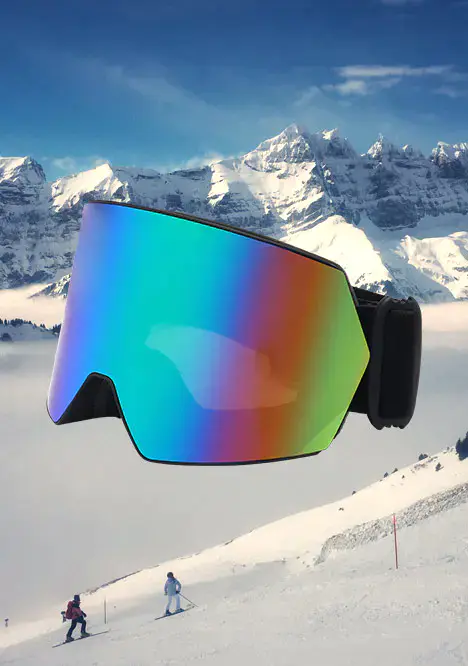
- Skiing and Snowboarding: Snow reflects a massive amount of light, and polarized lenses are excellent at cutting this intense glare, reducing the risk of snow blindness (photokeratitis) and improving your ability to see the contours of the terrain.

Reconsider or Avoid Polarized For:
While highly beneficial, polarization isn't suitable for every situation.
- Viewing LCD Screens: The polarizing filter can react with the anti-glare screens on smartphones, tablets, and some car dashboards, creating blind spots or making the screen appear dark.
- Aviation: The Federal Aviation Administration (FAA) explicitly advises pilots against wearing polarized lenses. They can interfere with the visibility of modern cockpit instruments and can also make it difficult to spot the glint of light off other aircraft.
- Low-Light Conditions: Polarized lenses are designed for bright light and should not be used for night driving.
Key Factors for Prescription Sunglass Wearers
When you’re investing in prescription sunglasses, a few extra considerations ensure you get the best performance and protection.
- UV Protection is Mandatory: As stated before, this is non-negotiable. All sunglasses sold in the United States must meet impact-resistance standards set by the Food and Drug Administration (FDA). Look for a label indicating 100% UV or UV400 protection.
- Frame Style and Coverage: To maximize protection, the American Academy of Ophthalmology (AAO) recommends oversized or wraparound styles. These frames help block UV rays from entering your eyes from the periphery.
- Lens Materials and Coatings: If you have a strong prescription, high-index lens materials can make your sunglass lenses thinner and lighter. Additionally, specialized lens coatings can add significant value. For more on this, you can explore different lens coatings for a strong prescription.
- Pro Tip: The Polarization Test: Unsure if a pair of sunglasses is polarized? Hold them in front of an LCD screen (like your phone or computer monitor) and look through one lens. Now, slowly rotate the sunglasses 90 degrees. If the lens is polarized, the screen will appear to darken or go completely black.
Wrapping Up: The Final Verdict
The choice between polarized and non-polarized prescription sunglasses isn’t about which is universally "better," but which is better for you.
If your daily life involves driving or spending significant time near water or snow, the glare-cutting power of polarized lenses offers an undeniable upgrade in comfort, clarity, and safety. The additional cost is often justified by the superior visual experience.
If you primarily need sunglasses for casual wear in low-glare environments, or if you are a pilot or someone who needs unobstructed views of LCD screens, then high-quality non-polarized lenses with UV400 protection are a perfectly suitable and effective choice.
Ultimately, the best sunglasses are the ones you’ll wear consistently. Ensure they have a comfortable fit, a style you love, your correct prescription, and, most importantly, certified protection from the sun's harmful rays.
Frequently Asked Questions (FAQ)
Are polarized lenses better for your eye health? Not directly. While they reduce eye strain from glare, they are not inherently healthier than non-polarized lenses that offer the same UV400 protection. The primary health benefit of any sunglasses comes from blocking UV radiation.
Can I get polarized lenses in a progressive or bifocal prescription? Yes, absolutely. Polarization is a filter that can be applied to virtually any type of prescription lens, including single-vision, bifocal, and progressive designs.
Do polarized lenses cost more? Typically, yes. The process of adding the polarizing film is an extra manufacturing step, which usually adds a modest amount to the final cost of the lenses.
How can I tell if my current sunglasses are polarized? Use the LCD screen test mentioned above. Look through a lens at a digital screen and rotate it. If the screen's image darkens or disappears, your lenses are polarized.
Disclaimer: This article is for informational purposes only and does not constitute medical advice. Consult with a qualified eye care professional to determine your specific vision needs and to receive a comprehensive eye exam.
References
- American Academy of Ophthalmology (AAO): Choosing the Best Sunglasses
- Federal Aviation Administration (FAA): Sunglasses for Pilots
- U.S. Food and Drug Administration (FDA): Impact-Resistant Lenses Guidance
- MD Anderson Cancer Center: 9 Things to Know About Sunglasses
- Harvard Health Publishing: Polarized Sunglasses


