















Post-LASIK Retinal Health: Why High Myopes Need Checkups.
Executive Summary: Your Vision is Clear, But Your Retina Still Needs You
Congratulations on your post-LASIK vision. The freedom from glasses and contact lenses is a significant life improvement. However, it's crucial to understand a key distinction: LASIK corrects your vision, but it doesn't cure the underlying anatomical traits of a highly nearsighted eye. The procedure masterfully reshapes your cornea—the front surface of your eye—to focus light correctly. But it does not change the elongated shape of your eyeball, which is the root cause of high myopia and its associated risks.
This article explains why, even with 20/20 vision, individuals with a history of high nearsightedness (typically -6.00D or more) must remain committed to annual dilated eye exams. We will explore the difference between the cornea and the retina, uncover the hidden risks that persist after surgery, and outline what a comprehensive retinal exam involves, empowering you to protect your eye health for a lifetime.
The Tale of Two Tissues: Understanding Your Cornea and Retina
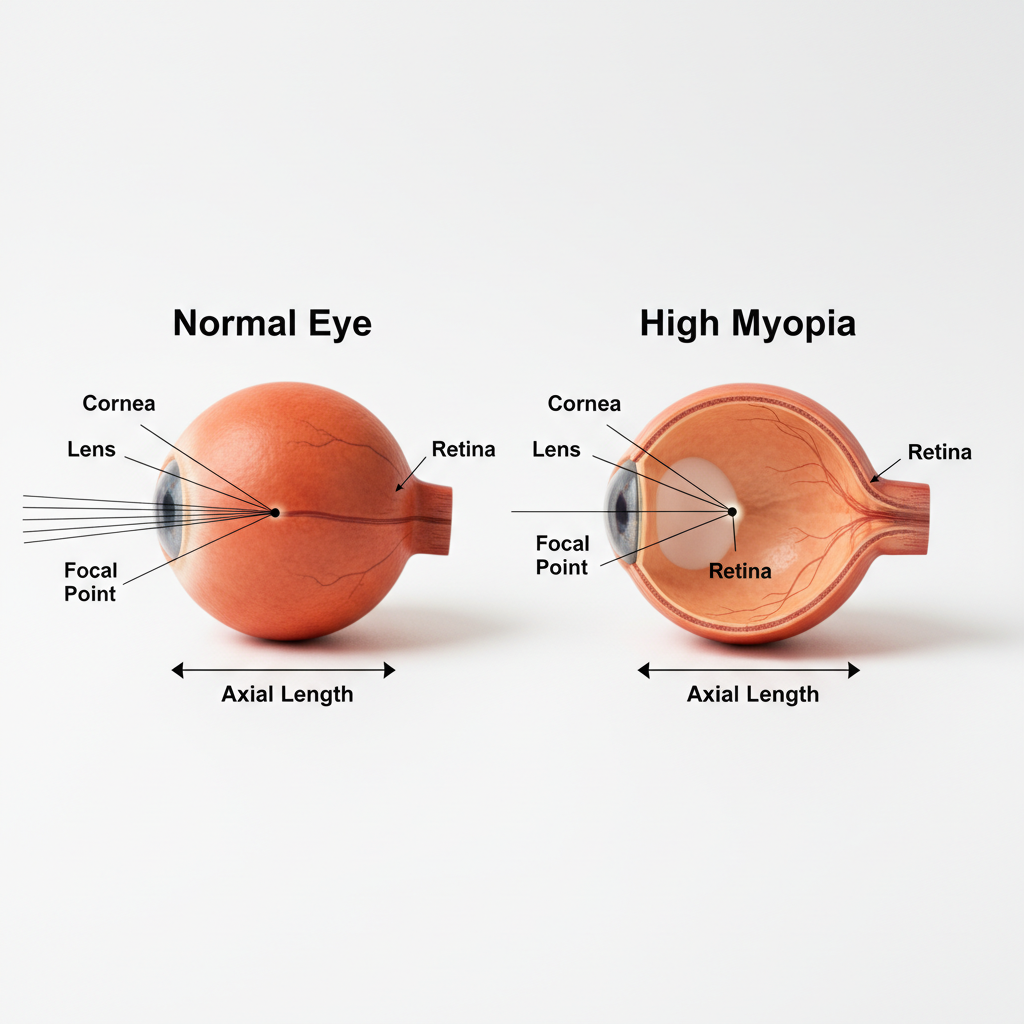
Think of your eye as a high-end camera. To get a clear picture, two components must work in perfect harmony: the lens at the front and the sensor at the back. In your eye, these are the cornea and the retina.
- The Cornea: The Camera's Lens: This transparent dome at the front of your eye is responsible for most of the eye's focusing power. When you have myopia, the cornea's curve causes light to focus in front of the retina, making distant objects blurry.
- What LASIK Corrects: LASIK surgery is an incredibly precise procedure that uses a laser to reshape the cornea. By subtly flattening its curvature, it changes the eye's focal point, moving it directly onto the retina. This is how it grants you clear distance vision.
- The Retina: The Camera's Sensor: The retina is a delicate, light-sensitive layer of tissue lining the back of your eye. It converts light into neural signals that are sent to the brain. A healthy retina is essential for sight.
- The High Myopia Factor: In individuals with high myopia, the eyeball isn't round like a marble; it's stretched into a longer, more elliptical shape. This elongation causes the retina to be stretched thin, much like a balloon that has been overinflated. This stretched tissue is more fragile and susceptible to damage.
The critical takeaway is this: LASIK brilliantly adjusts the "camera lens," but it cannot shorten the elongated eyeball or thicken the stretched "camera sensor." The structural risks associated with a thinned, fragile retina remain unchanged, even when your vision is perfect.
The Hidden Dangers: Why Your Pre-Surgery Prescription Still Matters
The excellent vision achieved after LASIK can create a powerful, yet misleading, sense of security. It’s easy to assume that because you see clearly, your eyes are completely healthy. However, the underlying retinal risks of high myopia are lifelong and require ongoing vigilance.
Expert Insight: The single most common oversight we see in practice is when post-LASIK patients with a history of high myopia stop attending their annual dilated eye exams. They feel "cured," but their retinal risk profile is largely the same as it was before surgery.
Here are the specific conditions that your eye doctor continues to monitor for:
-
Retinal Tears and Detachment: The connection between high myopia and retinal detachment is well-established. Because the retina is stretched thin, it is more prone to developing tears or holes. If fluid from within the eye seeps through a tear, it can lift the retina off the back wall—a sight-threatening emergency known as a retinal detachment. Studies confirm that high myopia itself, not the LASIK procedure, is the primary risk driver for this condition.
-
Lattice Degeneration: This condition involves the thinning of the peripheral retina in a cross-hatch or "lattice" pattern. These areas are weaker than the surrounding retina and can be where tears and holes develop. It is significantly more common in myopic eyes.
-
Earlier Onset of Posterior Vitreous Detachment (PVD): The inside of the eye is filled with a clear gel called the vitreous. As we age, this gel naturally liquefies and pulls away from the retina. This is PVD. While a normal part of aging, it can happen earlier in highly myopic and post-LASIK eyes. During this separation process, the vitreous can tug on the fragile retina, sometimes causing a tear.
-
Inaccurate Glaucoma Readings: LASIK thins the cornea, which can lead to artificially low intraocular pressure (IOP) readings from standard instruments. Since high myopia is also a risk factor for glaucoma, it is essential that your eye doctor is aware of your LASIK history to properly interpret your IOP and monitor for any signs of optic nerve damage.
The Annual Dilated Exam: Your Lifelong Vision Insurance Policy
A simple vision screening or a prescription check is not sufficient for monitoring retinal health. To properly assess the structures at the back of your eye, you need a comprehensive dilated fundus exam every year.
This is what the exam entails and why it's so important:
-
The Power of Dilation: Your doctor will use special eye drops to temporarily widen your pupils. This provides a large, clear window to view the entire retina, from the central macula all the way out to the far periphery.
-
Advanced Imaging and Examination: Your doctor will use a combination of tools and techniques to inspect your retina for any signs of trouble.
- Clinical Examination: Using a high-powered microscope (slit lamp) and a special lens, the doctor performs a 3D examination of your retinal tissue, optic nerve, and blood vessels.
- Scleral Depression: This is a critical technique, especially for high myopes. The doctor uses a small, blunt instrument to gently press on the outside of your eyelid. This allows them to bring the extreme peripheral retina into view—an area where tears often hide and can be missed without this step.
- Optical Coherence Tomography (OCT): While this advanced imaging technology provides an invaluable cross-sectional view of the central retina, it cannot scan the far periphery. It is an excellent tool for managing macular conditions but is not a substitute for a thorough, manual, dilated exam.
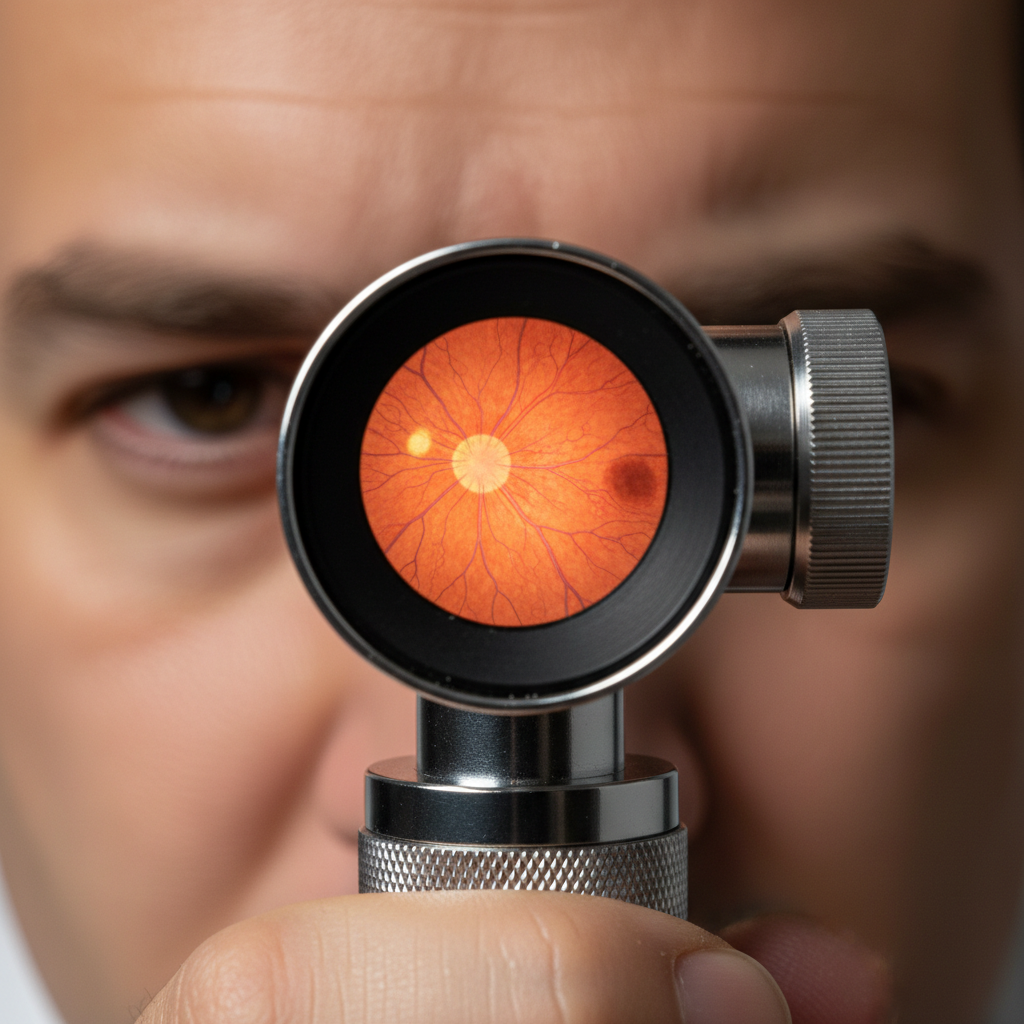
Methodology Note: The standard of care recommended by retinal specialists for high myopes, both pre- and post-LASIK, is a dilated fundus exam at least once a year. The first post-operative dilated exam is typically scheduled 3 to 6 months after the procedure to establish a new baseline.
Your Action Plan for Protecting Your Sight After LASIK
LASIK was an excellent investment in your quality of life. The final step is to protect that investment and your long-term health with a proactive mindset. Here is your simple, three-step action plan:
-
Communicate Your History: At every eye exam for the rest of your life, remind your eye doctor of your pre-LASIK prescription level (e.g., "I was a -8.00 before my LASIK surgery"). This immediately flags you as having a high-myopia retina and ensures the appropriate level of scrutiny.
-
Commit to Annual Dilated Exams: Schedule your dilated eye exam every year without fail. Do not let your clear vision lull you into a false sense of security. Think of it as the most crucial insurance policy you have for your sight.
-
Know the Urgent Warning Signs: If you experience any of the following symptoms, contact your eye doctor or go to the nearest emergency room immediately. These could signal a retinal tear or detachment:
- A sudden, dramatic increase in floaters (black spots or squiggles in your vision).
- Flashes of light in your peripheral vision, often described as a lightning streak.
- A shadow, curtain, or veil that appears to be blocking part of your vision.
By understanding the anatomy of your eye and embracing this ongoing partnership with your eye doctor, you can enjoy the clarity LASIK provides with the confidence that you are doing everything possible to ensure your eyes remain healthy for decades to come.
This article is for informational purposes only and does not constitute professional medical advice. Always consult with a qualified healthcare provider for any questions about your medical condition or before making any decisions related to your health or treatment.
References
- FDA LASIK Patient Risk Guide: U.S. Food and Drug Administration. (2022). What are the risks and how can I find the right doctor for me? https://www.fda.gov/medical-devices/lasik/what-are-risks-and-how-can-i-find-right-doctor-me
- Retinal Detachment Incidence in Myopia: The Eye Disease Case-Control Study Group. (1993). Risk factors for idiopathic rhegmatogenous retinal detachment. American Journal of Epidemiology. https://pmc.ncbi.nlm.nih.gov/articles/PMC3162735/
- Long-Term LASIK Safety: Koshimizu, J., et al. (2010). Long-term safety results of LASIK refractive surgery: A twenty-year retrospective study. Journal of Ophthalmology. https://cdn.fortunejournals.com/articles/long-term-safety-results-of-lasik-refractive-surgery-a-twentyyear-retrospective-study.pdf
- IOP Measurement Post-LASIK: Visual Aids Centre. Intraocular Pressure (IOP) Changes after LASIK. https://www.visualaidscentre.com/intraocular-pressure-iop-changes-after-lasik/


