




Prescription Lenses for Outdoor Sports: UV & Fit Tips
TL;DR: Your Quick Guide to Sports Prescription Lenses
For athletes, standard prescription glasses are a liability. Upgrading to sports-specific eyewear is essential for safety, clarity, and performance. Here’s what you need to know:
- Prioritize Safety: Always choose lenses made from Polycarbonate or Trivex. These materials are highly impact-resistant and can protect your eyes from debris, falls, and equipment.
- Demand Full UV Protection: Your lenses must be labeled "UV400" or "100% UV Protection." This is non-negotiable for protecting your long-term eye health and preventing conditions like cataracts.
- Fit Dictates Performance: A snug, wraparound frame is crucial. It prevents your glasses from slipping during intense activity and blocks wind, dust, and harmful peripheral light.
- Customize for Your Needs: Don't settle for a one-size-fits-all solution. Your specific prescription strength, sport, and typical lighting conditions should determine your lens design, tints, and coatings.
The Foundation: Why Lens Material and Impact Safety Come First
The first rule of any sport is to protect yourself, and your eyes are among your most vulnerable assets. While your everyday glasses provide clear vision, they are not built to withstand the dynamic forces of athletic activity. A stray ball, a fall on the trail, or a kicked-up piece of gravel can turn standard lenses into a serious hazard.
This is why regulatory bodies like the FDA have baseline standards for all eyewear. The FDA's guidance on impact-resistant lenses mandates that all prescription lenses pass a "drop ball test" to ensure they don't shatter from a minor impact. However, the demands of sport call for a much higher level of protection.
Your Best Options: Polycarbonate vs. Trivex
When it comes to sports, two materials stand out for their exceptional safety and performance. The American Optometric Association recommends polycarbonate or Trivex lenses for all sports and active wear.
Here’s a breakdown of how they compare:
| Feature | Polycarbonate | Trivex |
|---|---|---|
| Impact Resistance | Excellent | Excellent |
| Optical Clarity | Good (Lower Abbe Value) | Excellent (Higher Abbe Value) |
| Weight | Very Light | Lightest Available |
| UV Protection | Inherent (Blocks 100%) | Inherent (Blocks 100%) |
| Best For | General sports, safety glasses, budget-conscious athletes | Athletes seeking the best optical clarity, drill-mount frames |
For most athletes, polycarbonate is the workhorse material that provides fantastic protection. If you prioritize the absolute crispest optics with minimal chromatic aberration (color fringing), Trivex is a superior, albeit more premium, choice.
Expert Warning: Frame Retention Matters as Much as Lens Strength
A common mistake I see is focusing solely on the lens material while ignoring the frame's ability to hold it in place. An indestructible lens is useless if it pops out of the frame upon impact. True safety eyewear is a system. Look for frames with a deep "bevel" or groove that holds the lens securely. For high-impact sports, a frame that meets the ANSI Z87.1 safety standard, as detailed in guides for workplace safety, offers an even higher level of security. Features like rubberized nose pads, adjustable temple tips, and an optional retaining strap are critical for keeping your glasses locked in place when you need them most.
Seeing Clearly: Mastering UV Protection, Tints, and Glare
With safety covered, the next priority is achieving perfect visual clarity in a dynamic outdoor environment. This involves blocking harmful radiation, managing light levels, and cutting through performance-killing glare.
Debunking the Myth: Lens Darkness Has Nothing to Do with UV Safety
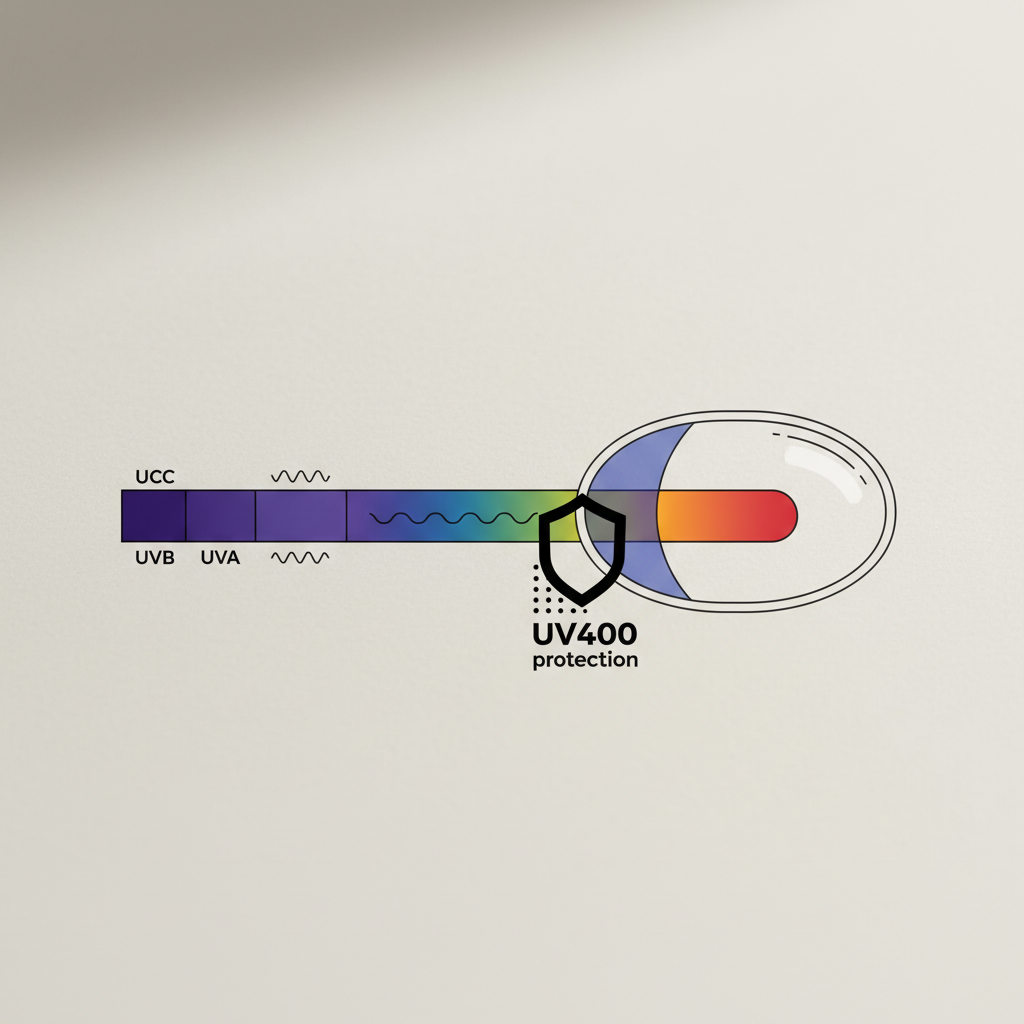
One of the most dangerous misconceptions is that a darker lens provides better UV protection. This is false. In fact, as experts at the MD Anderson Cancer Center warn, a dark lens without a proper UV filter is more hazardous than wearing no sunglasses at all. The dark tint causes your pupils to dilate, opening them up to allow even more damaging UV radiation to enter the eye.
UV protection is a chemical property of the lens material or an applied coating; it is completely invisible. Always verify that your lenses are labeled "UV400" or "100% UV Protection." This ensures they block all UVA and UVB wavelengths up to 400 nanometers, which, according to a technical report in PubMed, is a more cautious and protective standard than older guidelines that only blocked up to 380nm.
Choosing the Right Tint for Your Sport
Lens color isn't just a style choice; it's a functional tool that can enhance performance by manipulating contrast and color perception.
- Gray: Provides the most accurate color perception, making it ideal for general activities like running or cycling on the road where traffic signal recognition is important.
- Brown / Amber: Increases contrast by filtering out blue light. This is a favorite for golfers, trail runners, and cyclists who need to distinguish subtle contours in the terrain.
- Green: A great all-purpose tint that reduces glare, brightens shadows, and offers high contrast.
- Yellow / Orange: Significantly enhances contrast in low-light, hazy, or foggy conditions. They are popular for shooting sports and cycling at dawn or dusk but should be avoided for activities requiring true color recognition.
Polarization: A Powerful Tool with a Critical Caveat
Polarized lenses are designed with a special filter that blocks intense, horizontal glare reflected from flat surfaces like water, snow, or asphalt. As Harvard Health explains, this can dramatically improve comfort and reduce eye strain.
However, this technology has a major drawback for some athletes: it can cause digital displays on bike computers, GPS watches, and car dashboards to appear distorted or blacked out. For this reason, pilots are advised against them, and you should test them with your own devices before committing.
The Perfect Fit: Frame Geometry and Prescription Challenges
An elite athlete would never compete in poorly fitting shoes, and the same principle applies to eyewear. A frame that slips, bounces, or creates blind spots is a distraction at best and a danger at worst.
Why Wraparound Frames are the Athlete's Choice
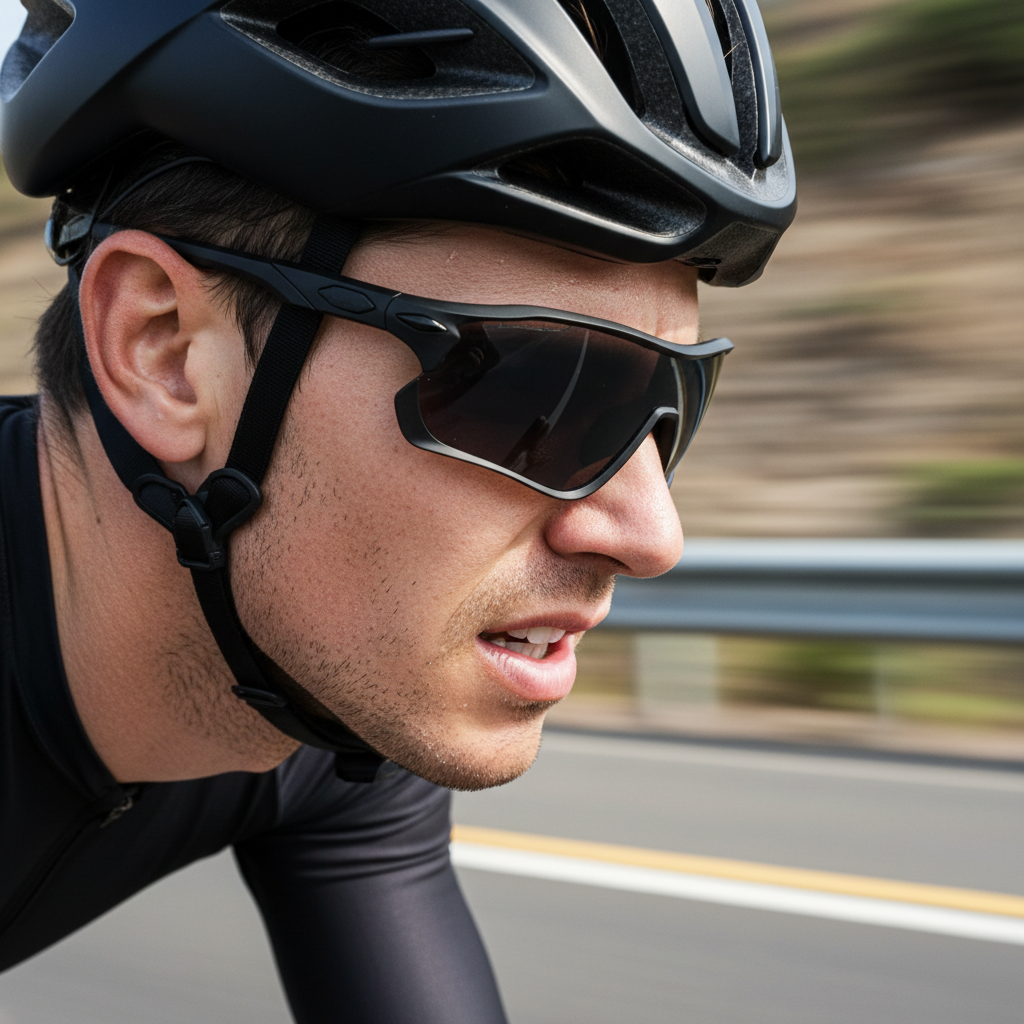
For sports, a high-wrap frame design is almost always the best choice. The curvature provides several key benefits:
- Unobstructed View: It offers a wider field of vision with fewer distractions from the frame edge.
- Peripheral Protection: It blocks wind, dust, and debris from entering your eyes from the side.
- Complete Light Blocking: Critically, it prevents peripheral light leakage. A groundbreaking study using 3D head-forms published in PMC found that traditional flat frames offered poor protection because of light seeping in from the top and sides, while wraparound styles provided nearly 100% UV blocking. You can find more details on this in our guide to wraparound high prescription sunglasses.
Navigating High Prescriptions in Sports Frames
Athletes with strong prescriptions (typically beyond ±4.00 D) face unique challenges, especially with wraparound frames. The high curvature can cause distortion, a "fishbowl" effect, and thick, heavy lenses.
The solution lies in advanced lens technology:
- High-Index Materials: These materials bend light more efficiently, allowing lenses to be made significantly thinner and lighter for better comfort and aesthetics.
- Aspheric & Digital Surfacing: These advanced manufacturing techniques create flatter lens curves that dramatically reduce peripheral distortion. This is a key strategy to minimize distortion in prescription sunglasses.
- Vertex Distance: This is the distance from the back of the lens to the front of your eye. For high prescriptions, it's a critical measurement that must be accounted for to ensure the effective power of your lens is accurate.
The Critical Measurement: Pupillary Distance (PD)
Your Pupillary Distance (PD) is the distance between the centers of your pupils. This measurement is used to align the optical center of your lenses with your eyes. An incorrect PD can cause eye strain and distorted vision. For wraparound frames or if you have any facial asymmetry, it is best practice to use a monocular PD—a separate measurement for the right and left eye—to ensure the most precise alignment possible.
Advanced Solutions and Proactive Maintenance
Getting the most out of your sports eyewear involves selecting the right coatings and adopting simple maintenance routines.
Fighting Fog: A Systems Approach
Fogging is one of the biggest frustrations for athletes. From my experience, relying on a single anti-fog coating is often not enough, especially during intense, sweaty activities. The most effective method is a systems approach:
- Start with a good anti-fog coating applied by the lab.
- Prioritize ventilation by choosing frames with built-in air channels or vents.
- Use an anti-fog wipe or spray before your activity to add a hydrophilic (water-spreading) layer.
- Acclimatize your glasses by putting them on a few minutes before you start, allowing them to adjust to the ambient temperature.
Performance-Enhancing Lens Coatings
- Anti-Reflective (AR) Coating: This is a must-have. It reduces distracting reflections from the front and back of your lenses, improving clarity and visual comfort. For total protection, opt for an AR coating that also blocks UV rays reflected off the back surface of the lens.
- Hydrophobic/Oleophobic Coatings: These functional coatings repel water and oil, making it much easier to keep your lenses clear of sweat, rain, and fingerprints.
Wrapping Up: Your Checklist for Performance Eyewear
Choosing the right prescription lenses for your sport is a critical piece of equipment. It enhances your performance, protects you from injury, and safeguards your long-term eye health. As you make your choice, run through this final checklist:
- Lens Material: Is it polycarbonate or Trivex for impact resistance?
- UV Protection: Does it offer certified UV400 or 100% UV protection?
- Frame Fit: Is it a wraparound design that is snug, secure, and compatible with your helmet?
- Prescription Needs: Have you considered high-index materials or aspheric designs if you have a strong prescription?
- Lens Features: Have you selected the right tint and coatings for your specific sport and conditions?
By investing in the right technology and fit, you can focus on what truly matters: performing at your best, safely and with perfect vision.
Frequently Asked Questions (FAQ)
Can I use my regular prescription for sports glasses? Yes, your core prescription (SPH, CYL, AXIS) is the same. However, it must be put into a sports-specific frame with impact-resistant lens materials like polycarbonate. Additional measurements like vertex distance and wrap angle may be needed for a perfect fit in high-wrap frames.
Are photochromic (transition) lenses good for sports? They can be a great convenience for activities with varying light, like a long run that starts in the morning and ends at noon. However, their transition speed can sometimes be a drawback in sports with rapid light changes, such as mountain biking through dense trees. They also don't darken inside a car, as the windshield blocks the UV rays needed to trigger the change.
How often should I replace my sports sunglasses? While frames and lenses are durable, the UV protection can degrade over time due to a process called photobleaching. Some research suggests that after about two years of heavy sun exposure, the UV-blocking efficacy can diminish. It's a good practice to consider replacing them every 2-3 years if you are frequently training outdoors.
Do I really need specialized sports glasses for running? Absolutely. Beyond the obvious UV protection, they shield your eyes from wind, which can be drying and irritating. They also provide a critical barrier against dust, pollen, and insects, helping you stay focused and comfortable on your run.
Disclaimer: This article is for informational purposes only and does not constitute professional medical advice. Consult with a qualified optometrist or ophthalmologist to determine the best eyewear solution for your specific health needs and activities, especially if you have pre-existing eye conditions.
References
- U.S. Food & Drug Administration (FDA): Impact-Resistant Lenses: Questions and Answers
- American Optometric Association (AOA): UV Protection
- MD Anderson Cancer Center: 9 things to know about sunglasses, eye protection and cancer
- PubMed Central (PMC): Ocular UV-Dose from Solar Radiation for an Adult and a Child Head-Form
- Harvard Health Publishing: Polarized sunglasses: Protecting your eyes from harmful glare


