









Can I Put New Progressive Lenses in My Favorite Old Frames?
The Short Answer: Maybe, But Proceed with Extreme Caution
TL;DR: While it's technically possible to put new progressive lenses into old frames, it's often a bad idea. Success depends entirely on your old frame's physical condition and optical geometry. Getting it wrong doesn't just mean a poor fit; it can lead to eye strain, headaches, and completely unusable glasses.
Consider this your go/no-go checklist:
- Green Light: Your frame is a sturdy, high-quality acetate or metal, with a relatively flat front and a lens height of at least 30mm. It fits you well and is in excellent structural condition.
- Yellow Light: It's a standard frame but you have a high prescription or strong astigmatism. The optical precision required is much higher, making any small incompatibility a major problem.
- Red Light: The frame is brittle plastic, a "wraparound" style, rimless or semi-rimless, or very small and narrow. In these cases, attempting to re-lens is almost certain to fail.
This guide will walk you through the critical checks an experienced optician performs, so you can understand the risks and make an informed decision.
The First Hurdle: Is Your Frame Physically Sound?
Before an optician even considers the optics, they assess the frame's physical integrity. A lab won't risk breaking your beloved frames or putting expensive new lenses into a structure that's about to fail.
Material Integrity
Over time, the plastics in eyeglass frames degrade. They lose plasticizers, becoming dry and brittle. An old injection-molded plastic frame might look fine, but the pressure of inserting a new lens can cause it to crack or shatter. High-quality, hand-polished acetate and metal frames generally last much longer, but even they can develop weak points.
An optician checks for:
- Crazing: Tiny hairline cracks in the plastic, especially around the lens groove.
- Discoloration: White or faded patches can indicate the plastic is breaking down.
- Flexibility: If the frame feels stiff and makes a creaking sound when gently flexed, it's a major red flag.

Structural Soundness
A frame is more than just the front. The hinges, temple arms, and nose pads must be in good working order. If the hinges are loose, the screws are stripped, or the frame is bent out of alignment, it cannot hold the new progressive lenses in the precise, stable position your vision requires. Progressives are highly sensitive to tilt and alignment; a wobbly frame will make the lenses feel unstable and distorted.
The Problem with Rimless and Semi-Rimless Frames
These styles are particularly poor candidates for re-lensing with progressives. The lenses themselves are a structural component, held in place by drill-mounts or a thin nylon cord. Progressive lenses have complex, variable internal stresses due to the power changes. The pressure points created by drill-mounts can easily cause a new progressive lens to fracture, sometimes weeks or months after you receive them.
The Optical Gauntlet: Why Progressives Demand a Perfect Fit
This is where most re-lensing projects fail. Unlike single-vision lenses, which have a single focal point, progressives have a complex, multi-part optical design. Getting it right requires three critical measurements to be perfectly aligned with the frame.

According to the Minkwitz theorem, an immutable law of optics, the unwanted astigmatism (peripheral blur) in a progressive lens cannot be eliminated—it can only be moved around. The goal of a good fit is to push that distortion into areas of your vision where you won't notice it, and this is entirely dependent on the frame.
1. Pupillary Distance (PD) and Frame PD Mismatch
Your Pupillary Distance (PD) is the distance between the centers of your pupils. The Frame PD is the distance between the geometric centers of the frame's two lens openings.
Here’s the critical part: For your eyes to see clearly without strain, the optical center of each lens must be placed directly in front of your pupil. If your PD is 62mm, but the frame's PD is 70mm, the lab has to decenter the lenses inward by 4mm on each side.
- The Rule: A mismatch of more than 2-3mm between your PD and the frame's PD can induce unwanted prism. This forces your eye muscles to work harder to fuse two images, leading directly to headaches and eye strain that no amount of "getting used to it" will fix. If your old single-vision lenses were already heavily decentered, that frame is a poor candidate for progressives.
2. Optical Center (OC) Height
This is the vertical measurement from the bottom of the lens to the center of your pupil. It determines the starting point of the progressive corridor. If the OC height is set too high or too low, you'll either have to tilt your head uncomfortably far back to read or crane your chin down to see in the distance. This measurement must be taken while you are wearing the specific frame, as it depends on how the frame sits on your nose.
3. Vertex Distance
Relevant for anyone with a strong prescription (typically over +/- 4.00D), the vertex distance is the space between the back surface of the lens and the front of your cornea. A change of just a few millimeters can alter the effective power of the lens. If your old frames sat very close to your eyes and you try to reuse a new frame that sits farther away, your new prescription may feel too strong or too weak, even if the numbers are correct.
Frame Shapes That Are Incompatible with Progressives
Beyond the basic measurements, the very shape of the frame can make it impossible to fit a progressive lens correctly.
The Vertical Height Requirement
A progressive lens needs enough vertical space to transition smoothly from distance to near power. If the frame is too short or narrow (a low "B-measurement"), the reading zone gets compressed and the intermediate zone becomes almost unusable.
- Rule of Thumb: Most opticians recommend a frame with a minimum vertical height of 28-30mm to provide a comfortable, usable progressive corridor.
The "Curse of the Curve": Base Curve and Wrap Angle
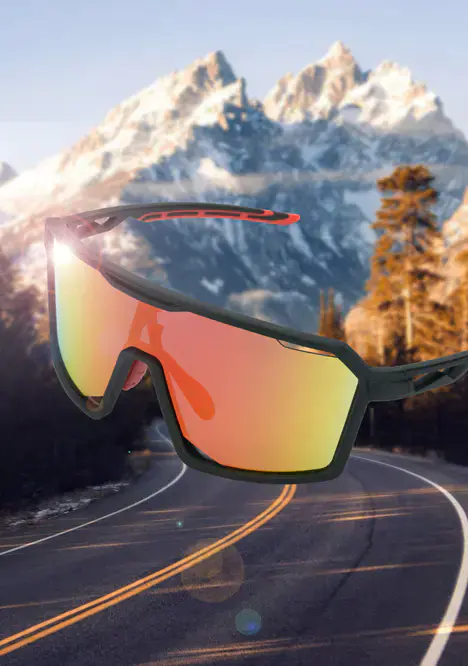
Fashionable "wraparound" or sport-style frames have a high base curve. As noted by experts, attempting to force a standard progressive lens design onto a highly curved surface results in massive peripheral distortion, rendering the glasses unwearable. According to a study on manufacturing errors, even subtle errors within tolerance can cause user satisfaction to plummet, and a high-wrap frame essentially guarantees a massive optical error. This is why experienced opticians will flatly refuse to put progressives in a high-wrap frame—it's a guaranteed failure.
This same distortion is a primary reason multifocal wearers have a higher risk of falls. A 2024 study found that progressive lens wearers have 2.23 times the odds of falling compared to bifocal wearers, largely because the distorted lower periphery of the lens impairs their ability to see steps and curbs clearly. Using an ill-suited, curved frame only magnifies this risk.
The Final Verdict: A Checklist for Re-Lensing
Before you invest in new lenses, run your old frames through this final checklist.
| Feature | Green Flag (Good Candidate) | Red Flag (High Risk of Failure) |
|---|---|---|
| Material | Sturdy metal or high-quality acetate. Feels solid. | Injection-molded plastic that is old, creaks, or shows fine cracks. |
| Structure | Hinges are tight, frame is aligned, nose pads are intact. | Wobbly arms, stripped screws, or visible bending/damage. |
| Style | Standard full-rim frame. | Rimless, semi-rimless, or a high-wrap sport style. |
| Size | Generous vertical height (B-measurement > 30mm). | Very narrow or small "retro" style frames. |
| Fit | Sits straight on your face with a slight downward (pantoscopic) tilt. | Sits very far from your face, is very close, or has a dramatic tilt. |
| Optics | Your PD is closely aligned with the frame's PD. | You have a high prescription and/or astigmatism. |
Why a New Frame Is Often the Smarter Investment
While the desire to save money or keep a sentimental frame is understandable, your vision is a poor area to compromise. The cost of new progressive lenses is significant, and putting them in an incompatible frame is like putting a high-performance engine in a car with a bent chassis and bald tires—you're paying for performance you simply cannot access.
Modern lens design has evolved. Technologies like free-form digital surfacing, which offers precision up to 0.01 diopters, create lenses that are customized not just to your prescription, but to the specific fit of the frame and your visual behavior. A 2011 randomized trial confirmed that these customized free-form lenses provide significantly wider, clearer fields of view compared to standard designs. By choosing a new, compatible frame, you are ensuring that you get the full benefit of the advanced optical technology you are paying for.
Ultimately, the small savings from reusing an old frame are not worth the high risk of ending up with unusable glasses and persistent discomfort. It is almost always a better investment to pair new progressive lenses with a new, optically appropriate frame, ensuring your vision is as clear and comfortable as possible.
This article is for informational purposes only and does not constitute professional medical advice. Consult with a qualified optician or optometrist to assess your specific needs and determine the best course of action for your eyewear.
References
- IOT Lenses. (n.d.). Manufacturing Errors in Progressive Lenses. Retrieved from https://iotlenses.com/de/blog/manufacturing-errors-progressive-lenses.html
- Kaur, G., et al. (2024). Falls Risk in Older Adults Wearing Multifocals. PubMed. Retrieved from https://pubmed.ncbi.nlm.nih.gov/39882858/
- Fay, A. M., et al. (2011). Clinical assessment of a customized free-form compared to a standard progressive lens. PubMed. Retrieved from https://pubmed.ncbi.nlm.nih.gov/21217408/
- Gifford, P., & Gifford, K. L. (n.d.). The Minkwitz theorem. Myopia Profile. (Concept referenced in multiple optical sources, e.g., https://iotlenses.com/blog/understanding-abbe-value-lens-design.html which discusses optical principles).


