











What Reading Power Do I Need By Age? (40, 50, 60+)
TL;DR: Your Quick Guide to Reading Power
Finding the right reading glasses power can feel like a guessing game, but it doesn’t have to be. While age is an excellent starting point, the best strength for you also depends on your unique eyes and how you use them. This guide will walk you through using an age-based chart, understanding its limitations, and performing simple checks to find a power that delivers crisp, comfortable vision without causing eye strain.
The Real Reason You Need Reading Glasses: An Introduction to Presbyopia
Have you recently found yourself holding your phone, a restaurant menu, or a book at arm's length to see the text clearly? This frustrating experience, often called the "trombone effect," is the classic first sign of presbyopia. According to the Mayo Clinic, presbyopia is a gradual, natural loss of your eyes' ability to focus on nearby objects.
It happens to virtually everyone, typically starting in the early to mid-40s. The cause isn't a disease, but rather a simple change in the anatomy of your eye. The crystalline lens, a clear structure inside your eye that changes shape to focus light onto the retina, becomes harder and less flexible with age. This makes it difficult for the lens to curve enough to focus on close-up text, resulting in blurry near vision.
This condition is incredibly common. A study on the global prevalence of presbyopia highlights that it is the most common cause of vision impairment in adults, affecting billions of people worldwide. It's not a matter of if it will happen, but when. The key is to manage it effectively to maintain your quality of life.
Common Symptoms of Presbyopia:
- Blurred vision at a normal reading distance.
- The tendency to hold reading material farther away to make the letters clearer.
- Headaches or eye strain after reading or doing close-up work.
- Needing brighter lighting when reading.
A Starting Point: The Age-Based Reading Power Chart
For those new to reading glasses, the numbers on the package can be confusing. These numbers represent the "power" or "strength" of the lenses in units called diopters (D). The higher the number, the stronger the magnification. A "+1.00" lens is a good starting point for many, while a "+2.50" lens provides significantly more magnification.
While a comprehensive eye exam is the most accurate way to determine your needs, age-based estimates provide a reliable starting point. Opticians have used these heuristics for decades to help people find a comfortable initial strength.
Expert Warning: Why the Chart Is Just an Estimate
A common misconception is that you can choose your reading power based on age alone. While the chart below is an excellent guide, it assumes you have no other vision issues. It doesn’t account for critical factors like astigmatism (an imperfectly shaped cornea) or anisometropia (different prescriptions in each eye). According to the American Academy of Ophthalmology (AAO), ready-made "cheaters" can’t correct for these common conditions, which is why a custom pair is often a better solution for preventing headaches and achieving truly clear vision.
Age and Reading Power Estimation Table
This table provides a typical range of reading power needed by age. It’s a great tool for your first pair or for a simple at-home vision check.
| Age Range | Estimated Power (Diopters) |
|---|---|
| 40–45 | +0.75 D to +1.25 D |
| 46–50 | +1.25 D to +1.50 D |
| 51–55 | +1.50 D to +2.00 D |
| 56–60+ | +2.00 D to +2.50 D |
How to Refine Your Reading Power for Your Life
Your age-based power is a great start, but true visual comfort comes from matching the lens strength to your specific daily tasks. The power you need for reading a book at 14 inches is different from the power you need for viewing a computer monitor at 24 inches.
Pro Tip: Consider Your Working Distance
As noted by consumer advocates at AARP, many people benefit from having multiple pairs of reading glasses for different tasks. This is a strategy I often recommend.
- For Reading (Books, Tablets): Your typical reading distance is about 14-16 inches (35-40 cm). The age-based chart above is well-suited for this distance.
- For Computer Work: Your monitor should be farther away, around 20-28 inches. For this intermediate distance, you typically need about half the power of your reading glasses. For example, if you use +2.00 D for reading a book, a +1.00 D pair would likely be more comfortable for computer use.
Using a lens that’s too strong for your computer will force you to lean in, potentially causing neck and back pain.
Why Custom Readers Are Often a Better Choice
Off-the-shelf reading glasses have their place, but they are built on a "one-size-fits-all" model that doesn't work for everyone. Here’s why a pair made to your specific measurements offers superior comfort and clarity:
- Astigmatism Correction: As the Cleveland Clinic points out, store-bought readers do not correct for astigmatism. If you have even a small amount of astigmatism, uncorrected lenses can lead to distorted vision and persistent headaches.
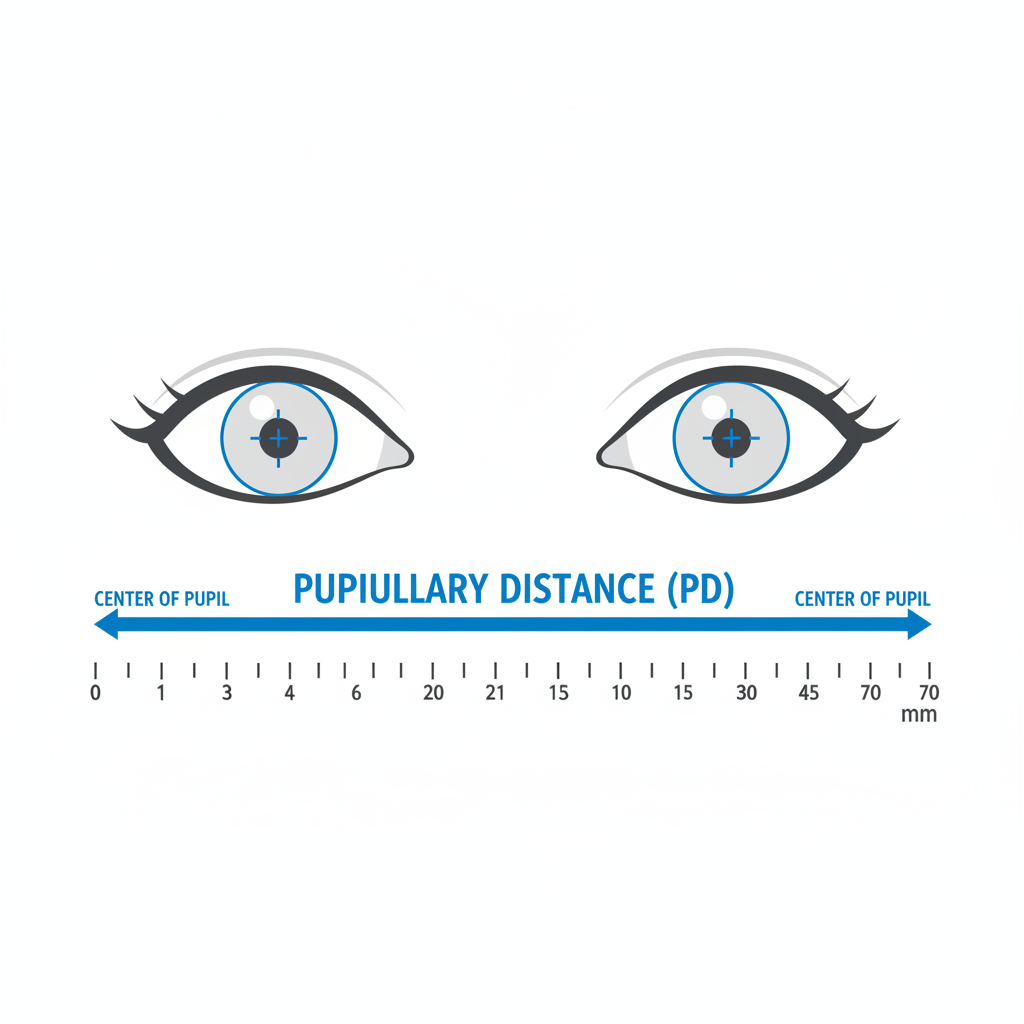
- Pupillary Distance (PD): Your PD is the distance between the centers of your pupils. For glasses to work correctly, the optical center of each lens must align with your pupil. Over-the-counter readers use a single, average PD. If your PD is wider or narrower than this average, you may experience eye strain as your eyes work to fuse two slightly offset images. This is why learning how to measure your PD at home is crucial for a good fit. Even a small PD error can matter, especially with higher-power lenses.
When to See an Eye Doctor: Know the Red Flags
While presbyopia is a normal part of aging, not all vision changes are. It is critical to distinguish between the predictable need for reading glasses and the symptoms of a more serious eye condition. As experts at Johns Hopkins Medicine explain, conditions like glaucoma, cataracts, or macular degeneration can also cause vision changes, but they require medical treatment.
Schedule a comprehensive eye exam with an optometrist or ophthalmologist if you experience any of the following:
- Sudden or significant changes in your vision.
- Flashes of light, "halos" around lights, or a sudden increase in floaters.
- Eye pain, redness, or a feeling of pressure.
- Distorted or wavy lines in your vision.
- Loss of peripheral (side) vision.
- Double vision.
- Your vision is not clear even when trying reading glasses.
Remember, you have a right to your prescription. The FTC's Eyeglass Rule mandates that your eye doctor must give you a copy of your prescription immediately following your exam, whether you ask for it or not. This allows you to shop around for the best value.
Wrapping Up: Your Key to Clear and Comfortable Vision
Choosing the right reading glasses is a crucial step in managing presbyopia and maintaining your ability to enjoy reading, hobbies, and work. While an age-based chart provides an excellent starting point, remember that it's only one piece of the puzzle. For the best results, consider your specific working distances, and for ultimate clarity and comfort, invest in a custom pair made with your exact pupillary distance and any necessary astigmatism correction. Most importantly, pay attention to your eye health and schedule a professional exam if you notice any red-flag symptoms.
Frequently Asked Questions (FAQ)
1. Can I just add the reading power to my distance prescription? Not directly. Your prescription will have a specific "ADD" value, which is the magnifying power added to your distance prescription to create a reading or progressive lens. This is determined during an eye exam. If you need help understanding your prescription, our guide can help you read your eyeglass prescription with confidence.
2. Is a stronger power always better for reading glasses? No. This is a common mistake. Choosing a power that is too strong will cause you to hold things uncomfortably close to your face and can lead to significant eye strain and headaches. The goal is to find the lowest power that allows you to see clearly at a comfortable distance.
3. What is the difference between computer glasses and reading glasses? The only difference is the power, which is optimized for a specific working distance. Since most people sit farther from their computer screen than they hold a book, computer glasses have a lower power (typically about half of your reading power) to keep your vision clear at that intermediate range.
Disclaimer: This article is for informational purposes only and does not constitute medical advice. The information provided is not a substitute for a professional eye examination or diagnosis from a qualified optometrist or ophthalmologist. Always consult with a healthcare professional for any questions about your vision or eye health, especially if you have pre-existing conditions or experience sudden changes in your vision.
References
- American Academy of Ophthalmology (AAO): Tips for Choosing the Right Reading Glasses
- Cleveland Clinic: Are Drugstore ‘Cheaters’ as Good as Prescription Reading Glasses?
- FTC Consumer Advice: Buying Prescription Glasses or Contact Lenses: Your Rights
- Johns Hopkins Medicine: Low Vision: What You Need to Know as You Age
- Mayo Clinic: Presbyopia
- National Center for Biotechnology Information (PMC): Global Prevalence of Presbyopia
- AARP: What to Know About Drugstore Reading Glasses


