









Screen Filters vs. Blue Light Glasses: Which Is Better?
Screen Filters vs. Blue Light Glasses: A Head-to-Head Comparison
Device settings like 'Night Shift' or 'Night Light' offer a free, built-in way to reduce blue light exposure from your screens. But how do they truly stack up against dedicated blue light filtering glasses? While both aim to solve the same problem, they differ significantly in effectiveness, color accuracy, and overall convenience. This article breaks down the science to help you decide which solution is the better fit for your needs.
TL;DR: Which Blue Light Solution is Better?
- Software Filters (Night Shift, etc.): A good, free starting point. They reduce some blue light by warming up your screen color but are less effective than glasses and cause significant color distortion. Best for casual users on a single device.
- Blue Light Glasses: The superior option for effectiveness and convenience. They use a physical filter for more precise and consistent blue light reduction across all devices and ambient light sources, with much better color accuracy. Best for multi-device users, digital professionals, and anyone serious about improving their sleep hygiene.
Understanding How Blue Light Affects Your Body
Before comparing the solutions, it's crucial to understand what we're trying to solve. Blue light itself isn't inherently bad. During the day, it's beneficial, boosting alertness and mood. The problem arises from overexposure at the wrong time—specifically, after dusk.
Your body's internal clock, or circadian rhythm, is highly sensitive to light. Exposure to blue light in the evening can trick your brain into thinking it's still daytime. This suppresses the production of melatonin, the hormone that tells your body it's time to sleep. According to Harvard Health Publishing, blocking blue light in the hours before bed can be a useful tool for managing your sleep cycle.
Common Myth: Blue Light and Digital Eye Strain
A prevalent misconception is that blue light from screens is the direct cause of digital eye strain. However, medical consensus points elsewhere. Ophthalmologists like Dr. Nicole Bajic from the Cleveland Clinic clarify that symptoms like tired eyes, headaches, and blurry vision are primarily caused by how we use our devices—specifically, reduced blink rates and the constant effort of focusing and re-focusing. A rigorous double-blind study published in PubMed found no significant difference in eye strain symptoms between users wearing blue-blocking lenses and those wearing a placebo.
The most recommended solution for digital eye strain is not a filter, but the "20-20-20 rule": every 20 minutes, look at something 20 feet away for at least 20 seconds.
How Software Screen Filters Work
Software-based solutions like Apple's Night Shift, Windows' Night Light, and Android's Night Mode all operate on the same principle: they reduce the amount of blue light emitted by your screen by shifting the display's color temperature.
Essentially, they apply a warm, orange-colored overlay to everything on your screen. You can usually schedule this to happen automatically at sunset or customize the "warmth" of the filter.
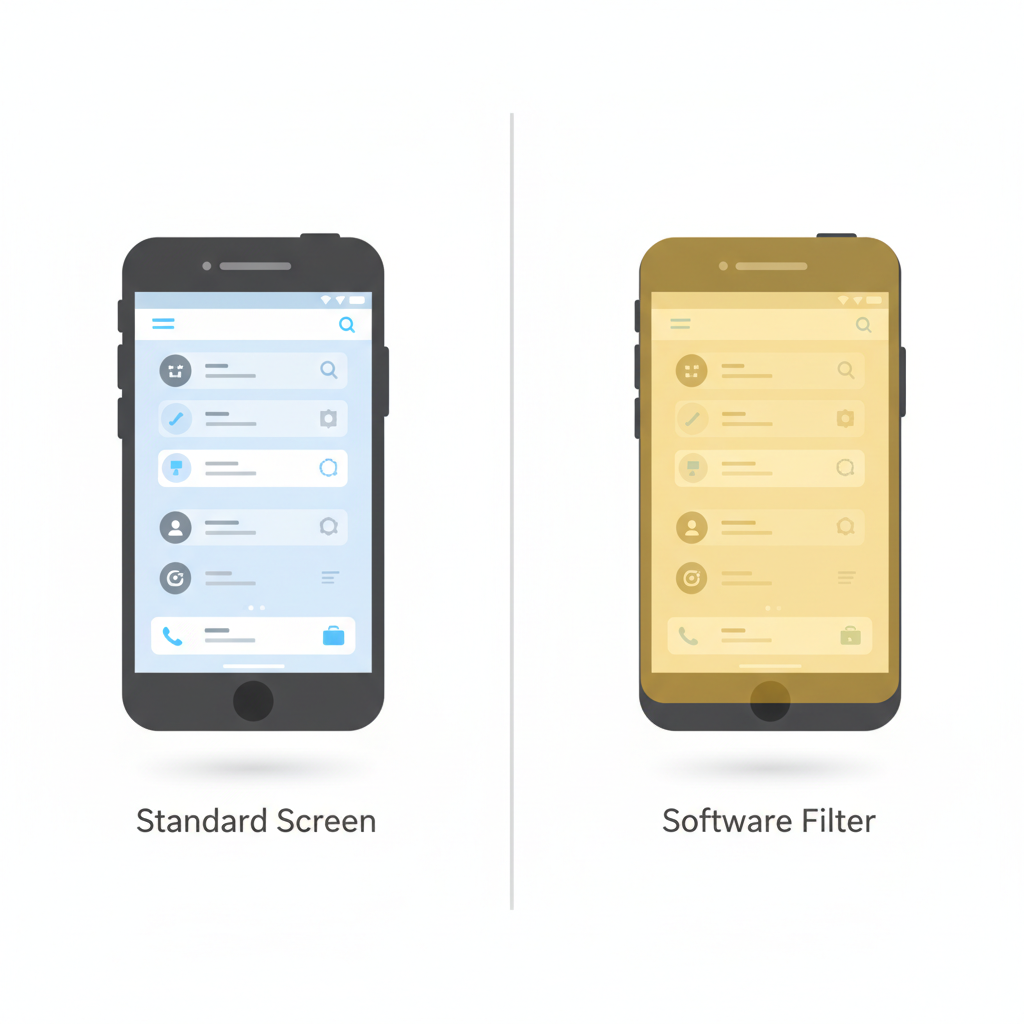
While these filters make the screen appear less blue, a key insight from optical testing is that they don't eliminate all short-wavelength energy. They primarily shift the color balance, which is a step in the right direction but doesn't provide the targeted spectral attenuation that a physical filter can.
Pros and Cons of Software Filters
| Pros | Cons |
|---|---|
| Completely Free: Built into most modern operating systems. | Severe Color Distortion: Makes color-sensitive work like photo editing or graphic design impossible. |
| Convenient: Can be set to activate automatically. | Incomplete Filtration: Reduces but does not fully block the most impactful blue light wavelengths. |
| Adjustable Intensity: You can control the level of warmth. | Device-Specific: Must be enabled and configured on every single device you use. |
| No Extra Gear: Nothing to wear, lose, or carry. | Doesn't Affect Ambient Light: Only works for the screen, not other light sources in your environment. |
How Blue Light Blocking Glasses Work
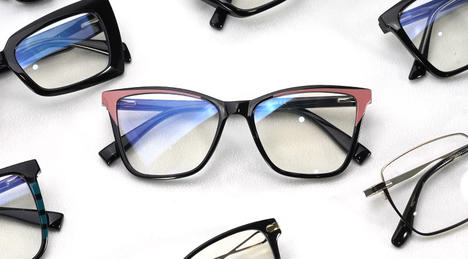
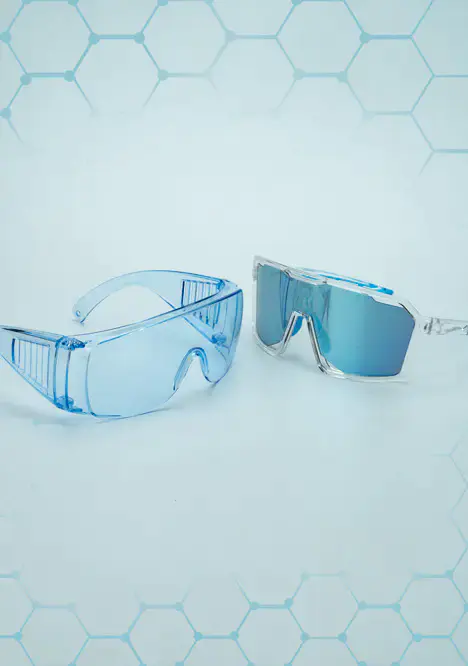
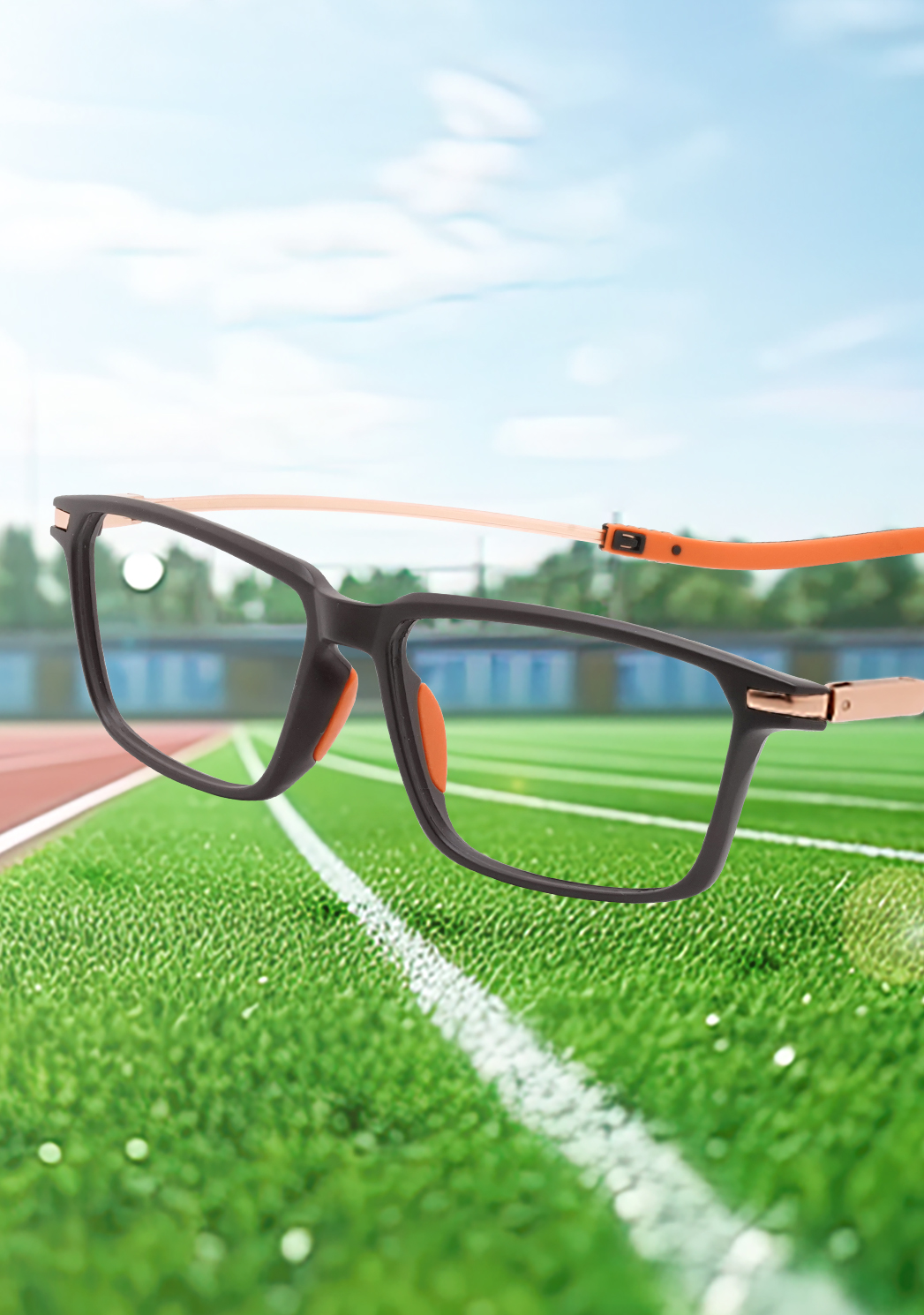
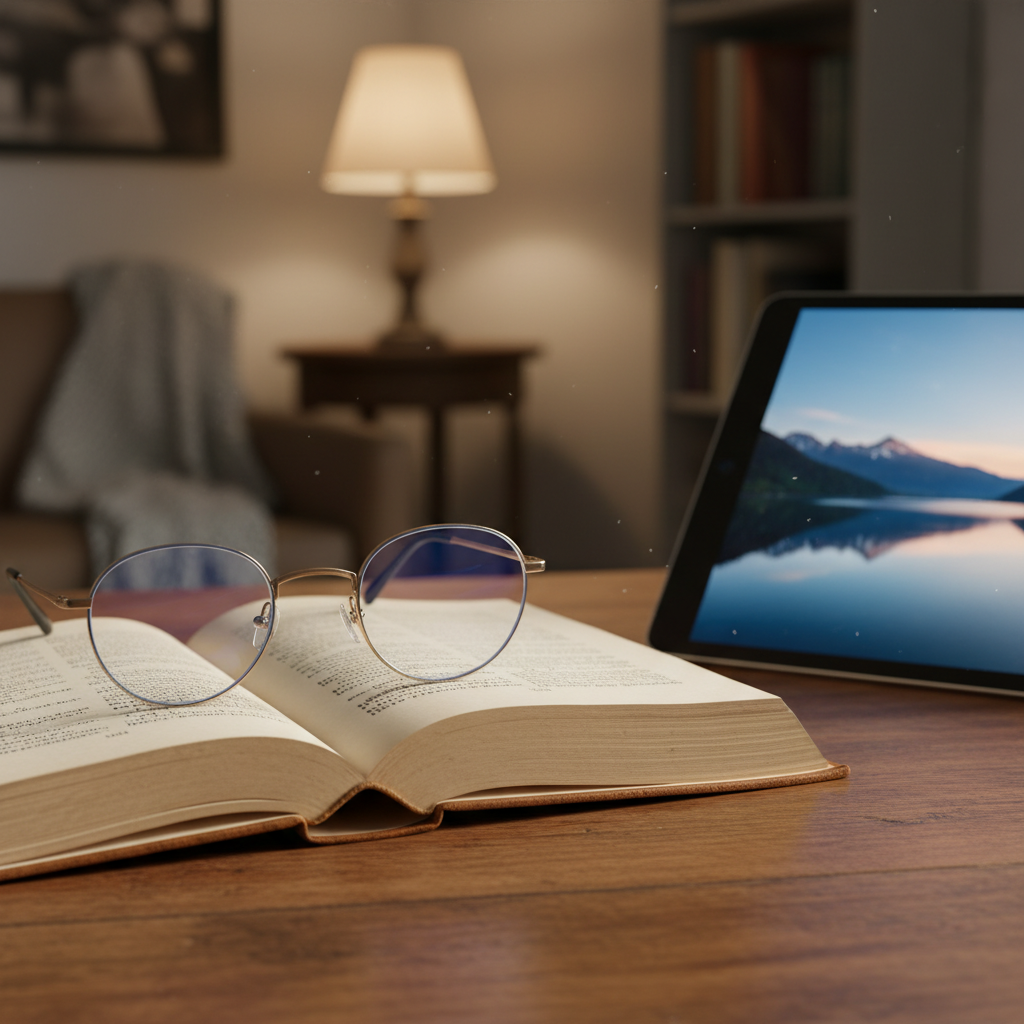
Blue light blocking glasses use lenses with a special coating or dye that is engineered to absorb or reflect specific wavelengths of blue light before they reach your eyes. Unlike software that just tints your entire screen, these physical filters are more precise.
According to a physics analysis in the PMC, high-quality filters can reduce the most potentially disruptive blue light (in the 400–455nm range) by 25-40% while still allowing less disruptive blue-turquoise light through, which is important for maintaining accurate color perception.
This approach offers a much more consistent and portable solution. The filtration is always active, works with any screen or light source, and moves with you from your laptop to your phone to your television.
Pros and Cons of Blue Light Glasses
| Pros | Cons |
|---|---|
| Superior Filtration: More effective at targeting and blocking specific blue light wavelengths. | Cost: A dedicated piece of equipment you have to purchase. |
| Better Color Accuracy: High-quality lenses are designed to minimize color distortion. | Another Item to Manage: You have to remember to wear them and carry them with you. |
| Portable & Universal: Works on all digital devices and with ambient LED lighting. | Fit and Comfort: Requires a proper fit, just like any pair of glasses. An incorrect pupillary distance (PD) can cause issues. |
| Consistent Protection: The level of filtration is constant and reliable. | Lens Quality Varies: Effectiveness depends on the quality of the lens and coatings. |
Head-to-Head: The Decisive Comparison
When choosing between software and hardware, your priorities will determine the winner. Here’s a direct comparison based on the factors that matter most.
Color Accuracy
Winner: Glasses
This is the most significant advantage of dedicated glasses. Software filters apply a blunt, heavy orange tint across the entire display, making everything look unnatural. You can confirm this with a simple "white card test": hold a white business card next to a screen with night mode on, and the difference is dramatic. High-quality blue light glasses, especially those with clear lenses for daytime use, are engineered to filter out specific wavelengths while having a minimal impact on the overall color spectrum. For designers, artists, or anyone who needs to see true colors on their screen, glasses are the only viable option.
Effectiveness for Sleep
Winner: Glasses
While software filters help, glasses provide a more robust defense against melatonin suppression. A systematic review in PubMed found substantial evidence that wearing blue-blocking glasses in the evening is an effective intervention for improving sleep onset. Because glasses filter all light sources, not just a single screen, they create a more consistent "virtual dusk" for your brain, which is key to preparing your body for rest.
Convenience and Portability
Winner: Glasses
This may seem counterintuitive, but for the modern multi-device user, glasses are more convenient. A software filter needs to be enabled and adjusted on your phone, your laptop, your tablet, and your desktop computer. Glasses are a single solution you put on, and you're protected everywhere. You can move from your monitor to your TV without a second thought.
Cost
Winner: Software Filters
You can't beat free. Software filters are built into the devices you already own, making them the most accessible option for anyone to try without any financial commitment.
Which Solution Is Right for You? A Simple Checklist
Use this framework to make your decision:
You should start with Software Filters if:
- You are on a tight budget.
- You primarily use only one device in the evenings.
- You are not bothered by significant changes in screen color.
- You are just curious and want to experiment with reducing blue light.
You should choose Blue Light Glasses if:
- You are serious about improving your sleep hygiene.
- You use multiple devices (laptop, phone, TV) in the evening.
- Color accuracy is important for your work or hobbies.
- You want a consistent, reliable solution that works everywhere.
Wrapping Up: The Smart Choice for Your Eyes and Sleep
While free software filters like Night Shift are a decent first step in managing your evening blue light exposure, they are a compromised solution. They fundamentally alter your screen's color in a way that can be distracting and impractical for many tasks.
For those seeking a more effective, accurate, and portable solution, dedicated blue light blocking glasses are the clear winner. They offer superior filtration technology that targets the most disruptive wavelengths with minimal color distortion, providing a consistent and reliable tool to help regulate your circadian rhythm and improve your sleep.
Frequently Asked Questions (FAQ)
Can blue light glasses harm my eyes?
For adults, there is no evidence that blue light blocking glasses are harmful. However, some research, including a model discussed by the Mayo Clinic, suggests caution for children. The concern is that chronically blocking blue light during the day could theoretically interfere with the natural development of the eye. For this reason, it's best to avoid indiscriminate, all-day use of blue blockers for children unless advised by an optometrist.
How do I know if blue light glasses are actually working?
The most reliable test is subjective: wear them consistently for 2-3 weeks in the hours before bed and track your sleep. You should notice that you feel sleepier earlier and perhaps find it easier to fall asleep. Avoid cheap, unverified glasses and look for brands that specify the range of light (in nanometers) they filter.
Will these glasses fix my digital eye strain?
No. The scientific consensus is that blue light is not the cause of digital eye strain. The best remedies are taking frequent breaks using the 20-20-20 rule, ensuring your screen is at the proper height and distance, and using lubricating eye drops if your eyes feel dry. If you wear prescription lenses, an inaccurate measurement for your pupillary distance (PD) can also contribute to strain, so ensure your measurements are precise.
Disclaimer: This article is for informational purposes only and does not constitute professional medical advice. Consult with a qualified healthcare professional, such as an optometrist or ophthalmologist, for any health concerns or before making any decisions related to your eye health, especially if you have pre-existing conditions.
References
- Harvard Health Publishing: Can blue light-blocking glasses improve your sleep?
- Cleveland Clinic: Do Blue Light-Blocking Glasses Actually Work?
- PubMed (Rosenfield et al.): Effect of short-term wear of blue-light filtering lenses on visual performance, sleep quality and ocular comfort
- PubMed (Hester et al.): The Effect of Blue-Blocking Glasses on Sleep, Mood, and Sleep-Wake Cycle
- PMC (Rahmani et al.): The effect of blue-light filtering spectacle lenses on color discrimination and contrast sensitivity
- PMC (Tosini et al.): The impact of blue light on sleep, biological rhythms, and eye health
- Mayo Clinic (Ostovari et al.): The Potential Impact of Blue Light Blocking Lenses on Myopia Development


