













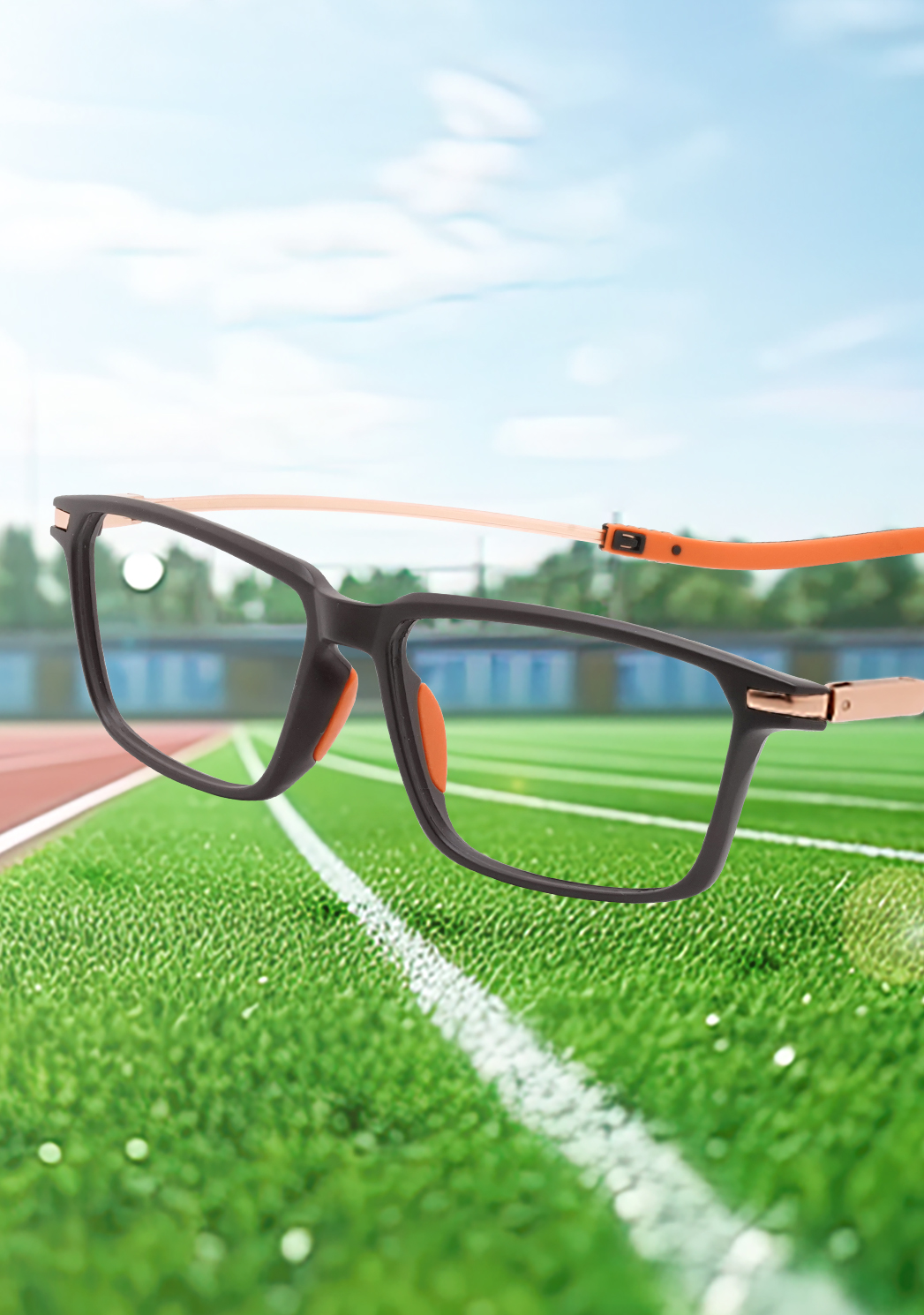



Senior Vision & The Mediterranean Diet: A Long-Term Guide
The Plate and the Pupil: How the Mediterranean Diet Sustains Senior Vision
As we age, concerns about vision naturally come to the forefront. The print on menus seems to shrink, and driving at night requires more concentration. While prescription eyewear is a critical tool for maintaining clarity and quality of life, a growing body of evidence suggests that what we place on our dinner plate is a powerful, proactive strategy for protecting our eyes from long-term, age-related decline. This isn't about a single "miracle food," but rather a sustainable, enjoyable pattern of eating. Enter the Mediterranean diet.
More than just a diet, it's a lifestyle rich in fruits, vegetables, whole grains, nuts, and healthy fats. Its benefits for heart health are well-known, but its impact on ocular health is just as profound. Research has illuminated a strong connection between this dietary pattern and a reduced risk for serious age-related eye conditions. For instance, a major study highlighted by the American Academy of Ophthalmology found that individuals with the highest adherence to a Mediterranean diet had up to a 40% lower risk of developing late-stage Age-Related Macular Degeneration (AMD), a leading cause of vision loss in seniors.
This guide will analyze how the key components of the Mediterranean diet work to preserve macular health, improve tear film stability, and help you and your loved ones evaluate dietary shifts as a foundational measure for lifelong vision wellness.
Why Your Diet is a Deciding Factor in Eye Health
The eye is one of the most metabolically active organs in the body. It requires a constant, rich supply of oxygen and nutrients to function, making it uniquely vulnerable to the cumulative effects of oxidative stress and inflammation. These two processes are the primary drivers behind many age-related eye diseases.
- Oxidative Stress: Think of this as a form of biological "rust." It occurs when unstable molecules called free radicals damage cells. The retina, with its high oxygen consumption and exposure to light, is a hotspot for this activity.
- Inflammation: While a necessary short-term immune response, chronic, low-grade inflammation can damage delicate tissues, including the tiny blood vessels that nourish the retina.
Conditions like cataracts are a direct result of this long-term cellular damage. Groundbreaking research from the National Eye Institute has revealed the specific chemical process at play. In the low-oxygen environment of the eye's lens, UV light exposure triggers a chain reaction called glycation, causing lens proteins to clump together. Over decades, this clumping is what leads to the clouding we know as a cataract. A diet rich in antioxidants can help neutralize these damaging free radicals before they can cause harm.
Furthermore, the health of your eyes is intrinsically linked to your overall cardiovascular health. The Centers for Disease Control and Prevention (CDC) notes that the eye provides a direct window into the body's vascular system. The same plaque buildup and vessel damage that affect the heart can also manifest in the retina, compromising blood flow and leading to conditions like diabetic retinopathy. Adopting a heart-healthy diet is, by extension, an eye-healthy diet.
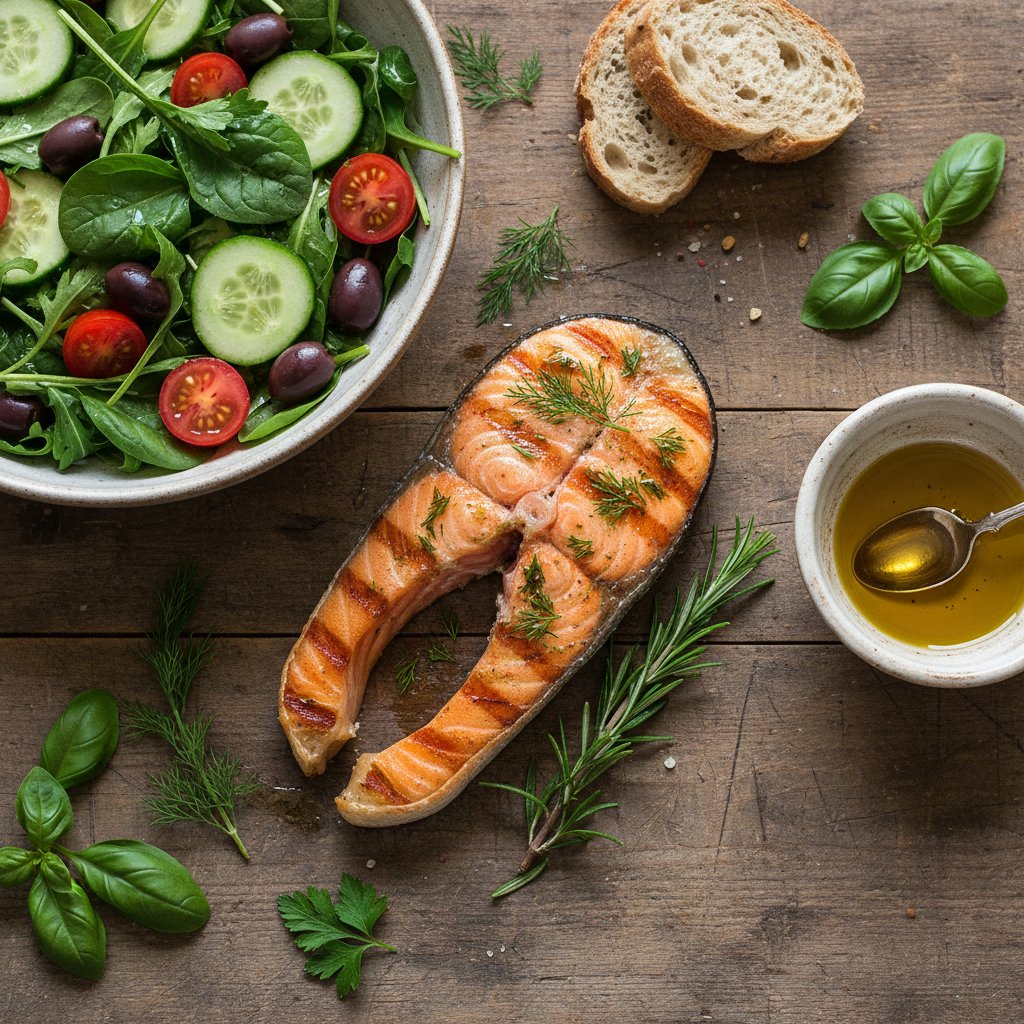
A Blueprint for Ocular Resilience: Deconstructing the Mediterranean Diet
The true power of the Mediterranean diet lies not in a single ingredient, but in the synergistic effect of its components. This pattern emphasizes whole, unprocessed foods that deliver a potent combination of vitamins, minerals, antioxidants, and anti-inflammatory compounds.
Key Components for Eye Health:
-
Omega-3 Fatty Acids (from Fatty Fish, Flaxseeds, and Walnuts): These healthy fats are crucial for managing inflammation throughout the body. For the eyes, they play a vital role in the function of the meibomian glands, which produce the oily layer of the tear film that prevents evaporation. A stable tear film is essential for comfort and clear vision. A comprehensive meta-analysis of 17 clinical trials confirmed that omega-3 supplementation significantly improves signs and symptoms of dry eye disease, a common complaint among older adults.
-
Lutein & Zeaxanthin (from Leafy Greens and Eggs): These two carotenoids are often called "internal sunglasses." They are the only dietary antioxidants that accumulate in the macula, the central part of the retina responsible for sharp, detailed vision. Here, they filter harmful high-energy blue light and act as powerful antioxidants. A large meta-analysis published in PubMed found that daily supplementation with 10-20mg of lutein significantly increased macular pigment optical density (MPOD) and improved visual acuity in individuals with AMD. While leafy greens like kale and spinach are excellent sources, research has shown the lutein and zeaxanthin in egg yolks are exceptionally bioavailable due to the accompanying fats, making them a highly efficient source.
-
Dietary Nitrates (from Leafy Greens): Foods like spinach, arugula, and beets are rich in dietary nitrates. The body converts these nitrates into nitric oxide (NO), a molecule that helps relax blood vessels and improve circulation. This is critical for the eye, as it can help regulate intraocular pressure (IOP). A long-term study from Harvard researchers following over 100,000 people found that those with the highest intake of green leafy vegetables had a 20-30% lower risk of developing glaucoma.
-
Vitamins C & E (from Berries, Citrus, Nuts, and Seeds): These are the workhorse antioxidants of the body. Vitamin C is a powerful water-soluble antioxidant found in high concentrations within the eye's aqueous humor, where it helps protect the lens. The long-running Beaver Dam Eye Study revealed that individuals who used vitamin C supplements for more than 10 years had a 60% lower risk of nuclear cataract progression. Vitamin E, a fat-soluble antioxidant found in nuts and seeds, works to protect cell membranes from oxidative damage.
From Theory to Table: Practical Steps and Common Pitfalls
Adopting a new eating pattern can feel daunting, but the Mediterranean approach is flexible and forgiving. The goal is progress, not perfection. Based on clinical observation, patients find the most success when they focus on adding beneficial foods rather than strictly eliminating others.
A Practical Heuristic: A simple rule of thumb we share with patients is to have "color and fat at every meal." This ensures you are consistently getting a diverse range of phytonutrients from colorful vegetables and the healthy fats needed to absorb them and support cellular health.
Making It Stick: A Day of Eye-Healthy Eating
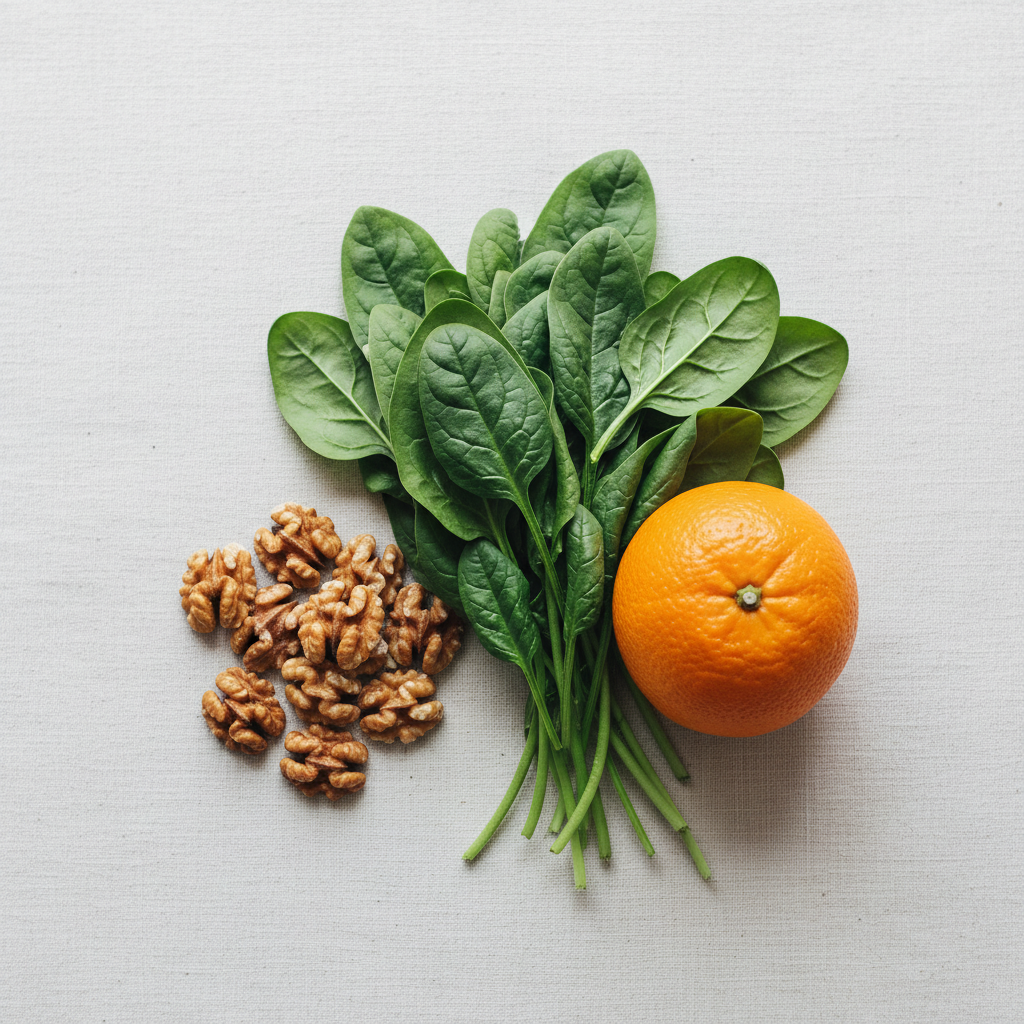
- Breakfast: Greek yogurt topped with a handful of blueberries (for Vitamin C) and walnuts (for Omega-3s and Vitamin E).
- Lunch: A large salad with spinach (for Lutein and Nitrates), chickpeas, cucumber, tomatoes, and a lemon-tahini dressing.
- Dinner: Baked salmon (for Omega-3s) served with a side of quinoa and roasted broccoli drizzled with olive oil.
The Consistency Mistake
A common pitfall is focusing on an isolated "superfood" (like eating kale once a week) instead of building a consistent daily pattern. The benefits of these nutrients are cumulative. It is the steady, daily intake of these protective compounds that builds ocular resilience over time, not sporadic, intense efforts.
Blood Sugar, High Prescriptions, and Vision Clarity
For seniors, especially those with high prescriptions or multifocal lenses, there is another crucial benefit to this dietary pattern. The Mediterranean diet, being rich in fiber and healthy fats, helps to stabilize blood sugar levels. As detailed in clinical literature like StatPearls on the Polyol Pathway, high blood sugar can cause the lens of the eye to swell, leading to temporary blurred vision and fluctuations in your prescription. By maintaining stable blood sugar, you help ensure the vision through your glasses remains as clear and consistent as possible.
A Clearer Path Forward
While no diet can reverse aging or eliminate the need for corrective lenses, the evidence is compelling: the Mediterranean diet is a powerful, science-backed tool for nourishing your eyes and defending against age-related decline. It supports the very structure and function of the eye, from the tear film on its surface to the photoreceptors in the retina. By viewing food as a form of long-term health maintenance, you are not just eating for a healthier heart or body, but for a future of clearer, more vibrant vision.
This approach provides a stable, healthy foundation that allows your prescription eyewear to perform its best. The journey begins not with a radical overhaul, but with a simple, actionable step: at your next meal, find a way to add a splash of color and a source of healthy fat to your plate.
Disclaimer: This article is for informational purposes only and does not constitute professional medical advice. The information contained herein is not a substitute for and should never be relied upon for professional medical advice. Always seek the advice of your physician or other qualified health provider with any questions you may have regarding a medical condition. Individuals with pre-existing conditions should consult a qualified professional before making significant dietary changes.
References
- American Academy of Ophthalmology (AAO). "Study Supports Efficacy of Mediterranean Diets in Reducing Risk of AMD." https://www.aao.org/editors-choice/study-supports-efficacy-of-mediterranean-diets-in-
- National Eye Institute (NEI). "New research sheds light on how UV rays may contribute to cataract." https://www.nei.nih.gov/about/news-and-events/news/new-research-sheds-light-how-uv-rays-may-contribute-cataract
- Centers for Disease Control and Prevention (CDC). "Cardiovascular Health Status and Comorbidities Among Adults with and Without Self-Reported Vision Impairment, United States, 2019." https://www.cdc.gov/pcd/issues/2022/pdf/22_0027.pdf
- Gianni, T., et al. "A meta-analysis of randomized controlled trials on the effect of omega-3 fatty acid supplementation on dry eye." PubMed, 2019. https://pubmed.ncbi.nlm.nih.gov/30702470/
- Ma, L., et al. "Lutein, Zeaxanthin and Meso-zeaxanthin Supplementation Associated with Macular Pigment Optical Density." PubMed, 2019. https://pubmed.ncbi.nlm.nih.gov/31887124/
- Vishwanathan, R., et al. "Consumption of 2 and 4 egg yolks/d for 5 wk increases serum lutein and zeaxanthin and macular pigment optical density in women." PubMed, 2006. https://pubmed.ncbi.nlm.nih.gov/16988128/
- Kang, J. H., et al. "Association of Dietary Nitrate Intake With Open-Angle Glaucoma." JAMA Ophthalmology (via PMC). https://pmc.ncbi.nlm.nih.gov/articles/PMC4966649/
- Mares-Perlman, J. A., et al. "Vitamin supplement use and incident cataracts in a population-based study." PubMed, 2000. https://pubmed.ncbi.nlm.nih.gov/11074813/
- D'Onofrio, B. "Polyol Pathway." StatPearls, NCBI Bookshelf. https://www.ncbi.nlm.nih.gov/books/NBK576381/


