







Slowing Macular Degeneration with UV Sunglasses
TL;DR: Can Sunglasses Help with Macular Degeneration?
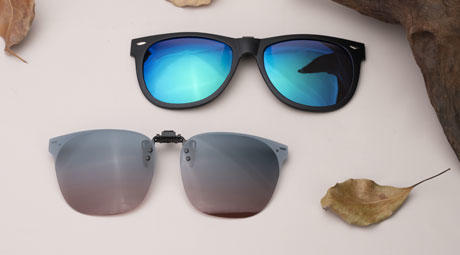
Yes, consistently wearing high-quality, UV-blocking sunglasses is a critical step in reducing your risk and potentially slowing the progression of Age-Related Macular Degeneration (AMD). While not a cure, sunglasses that block 100% of UVA and UVB rays (labeled UV400) act as a crucial shield for the macula. The key is not just the darkness of the lens, but the certified level of UV protection and the physical coverage the frame provides around your eyes.
Understanding Macular Degeneration: The Silent Threat to Sight
As we age, our eyes undergo changes. For many, this means needing reading glasses, a condition known as presbyopia. However, a more serious, age-related condition is macular degeneration (AMD). It’s a leading cause of significant vision loss in people over 50.
So, what is the macula? Think of it as the highly sensitive, central part of your retina, the light-sensitive tissue at the back of your eye. It’s responsible for your sharp, straight-ahead vision, the kind you need for reading, driving, and recognizing faces. When the cells in the macula begin to deteriorate, your central vision can become blurry, wavy, or develop dark spots.
It's vital to distinguish this from normal aging. While presbyopia is a universal focusing issue, AMD is a disease process. As experts at Johns Hopkins Medicine clarify, AMD can lead to "low vision"—a level of sight loss that standard glasses can't correct. This is why protecting the macula throughout your life is not just a good idea; it’s an essential long-term investment in your independence and quality of life.
The Science of Light Damage: More Than Just a Sunburn
We all know ultraviolet (UV) light can burn our skin, but fewer people understand how it damages our eyes. The damage is cumulative and often painless, happening slowly over decades.
UV radiation is divided into UVA and UVB rays. While the eye's cornea and lens are good at blocking some UVB, UVA rays penetrate deeper. But the danger doesn't stop there. A growing body of research points to the specific threat of short-wavelength blue light, also known as high-energy visible (HEV) light.
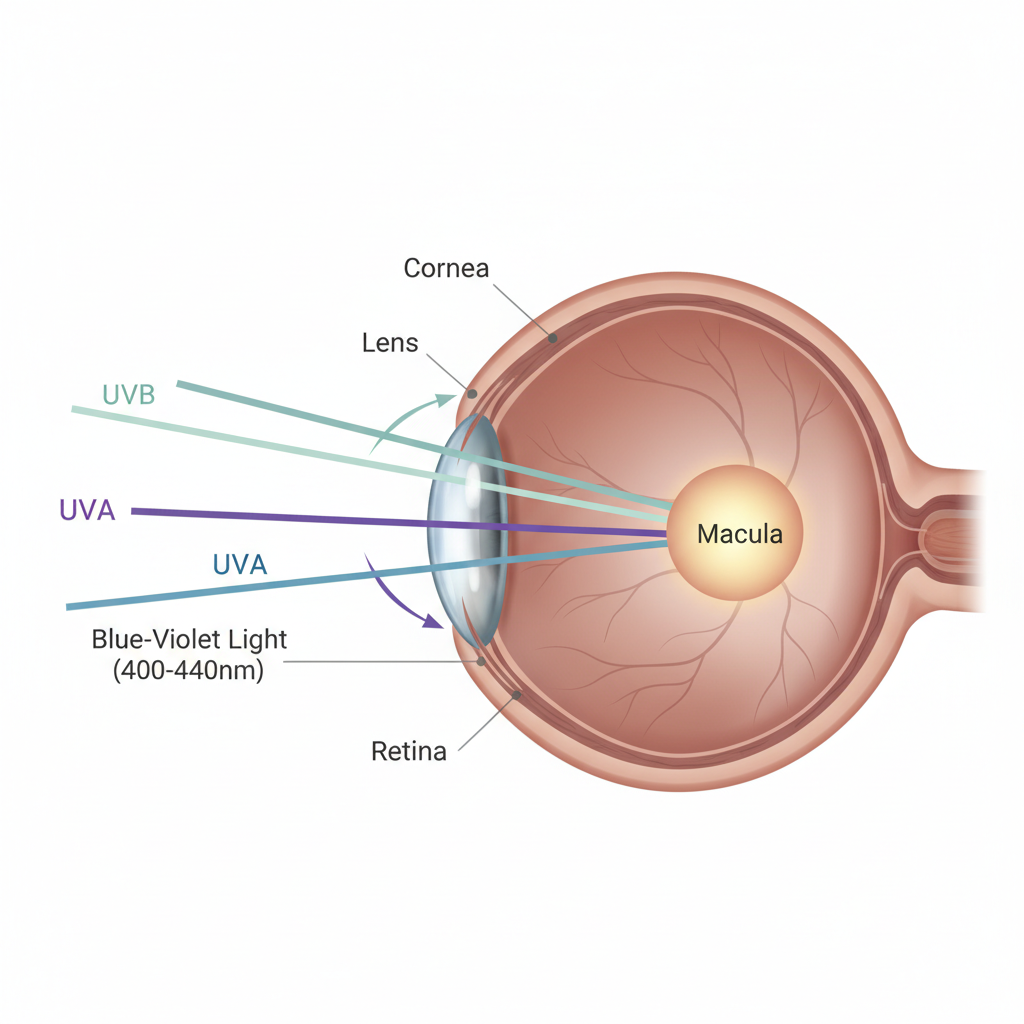
A crucial review in the journal PubMed on the mechanisms of light damage explains that visible blue light between 400–440 nm acts on a substance in the retina called lipofuscin. This interaction generates reactive oxygen species (ROS)—unstable molecules that cause oxidative stress and damage macular cells, a key driver of AMD. This is different from the mechanism that causes cataracts, where UV light itself can trigger a protein-clumping process known as glycation, as described by the National Eye Institute.
Myth Debunked: Darker Lenses Do Not Equal Better Protection
A pervasive and dangerous myth is that the darker the sunglass lens, the safer it is. This is incorrect. In fact, wearing dark lenses without certified UV protection is more hazardous than wearing no sunglasses at all. As experts from the MD Anderson Cancer Center warn, the dark tint causes your pupils to dilate, opening them up to allow more damaging, unfiltered UV radiation to enter the eye. The only thing that ensures protection is a label stating the lenses block 99-100% of UVA/UVB rays or are rated "UV400."
How to Choose Sunglasses for Optimal Macular Protection
Selecting the right sunglasses goes beyond fashion. It’s a healthcare decision. Here are the key features to look for, based on clinical recommendations and optical science.
1. Lens Technology: It Starts with UV400
The absolute, non-negotiable feature is 100% UV protection. Look for a sticker or label that says "UV400," which means the lenses block all light rays with wavelengths up to 400 nanometers, covering all UVA and UVB rays.
- Material Matters: Polycarbonate and Trivex lenses are excellent choices. They are lightweight, highly impact-resistant, and naturally block 100% of UV light without needing an extra coating. Standard plastic (CR-39) or glass lenses require a specific UV-blocking coating to be effective.
- Lens Color: While tint doesn’t block UV, it can improve visual comfort. The American Optometric Association (AOA) often recommends neutral gray lenses for driving as they provide true color perception. For patients who already have some macular changes, amber or brown tints can enhance contrast.
- Polarization for Glare, Not UV: Polarization is a filter that cuts down on intense glare from flat surfaces like water, pavement, and snow. While incredibly useful for activities like driving and fishing, it has nothing to do with UV protection. You can have polarized lenses with or without a UV400 coating, so you must always check the label.
2. Frame Design: Coverage is as Important as Filtration
UV radiation doesn’t just come from the front. It can leak in from the sides, top, and even reflect off the back surface of the lenses into your eye. This is why frame choice is a critical part of protection.
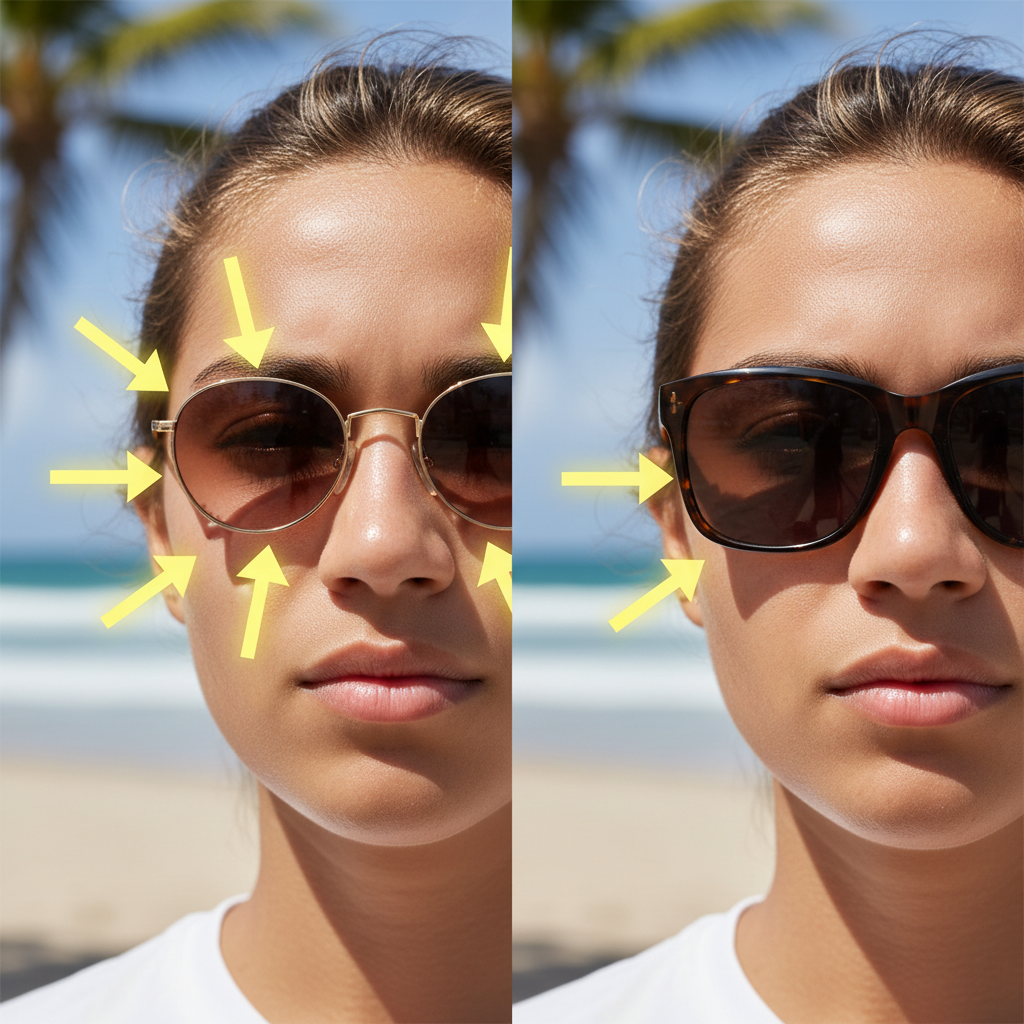
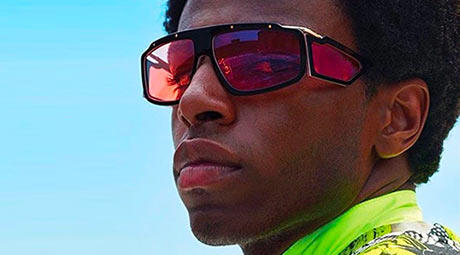
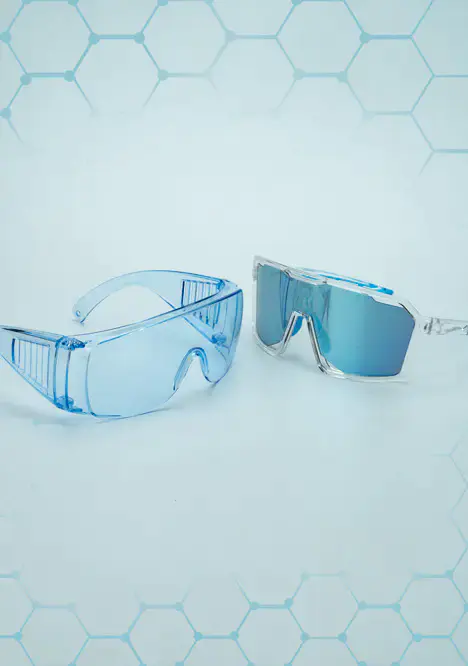
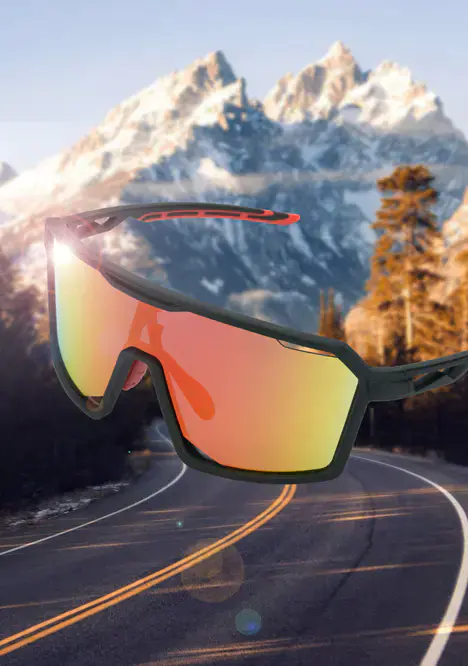
A fascinating study using 3D head models published in the journal PMC revealed that frame geometry is paramount. It found that "middle-sized" fashion sunglasses offered the least protection due to significant peripheral light leakage. The most effective designs are large, oversized frames or wraparound styles that fit closely to the face. The goal is to create a physical barrier that covers the entire eye socket.
Feature Checklist for Protective Sunglasses
To simplify your choice, here is a table summarizing what to look for:
| Feature | Essential Requirement | Why It Matters for AMD | Common Pitfall to Avoid |
|---|---|---|---|
| UV Protection | UV400 or 100% UVA/UVB | Blocks the primary radiation that damages retinal cells. | Assuming dark tint equals protection. |
| Frame Coverage | Large or Wraparound Style | Prevents peripheral UV light from entering the eye from the sides and top. | Choosing small, flat fashion frames that leave gaps. |
| Lens Material | Polycarbonate/Trivex | Provides inherent UV blocking and superior impact resistance for safety. | Buying cheap plastic lenses that may have a UV coating that can scratch off. |
| Lens Quality | No optical distortion | Ensures clear, comfortable vision without causing eye strain or headaches. | Lenses that make straight lines appear wavy or bent. |
Evaluating the Evidence: A Prudent Precaution
When it comes to eye health, it's important to follow the science. The link between lifelong UV exposure and the development of cataracts is incredibly strong. One study of a high-UV-exposure population in Taiwan found that participants who didn't wear glasses had a 57% increased risk of cataracts.
For macular degeneration, the evidence is more nuanced. A systematic review published in PMC on the topic rated the direct evidence linking UV to AMD as "marginal/inconsistent." This means that while we can't definitively say sunglasses prevent AMD with the same certainty as we can for cataracts, the underlying science of cellular damage from UV and blue light is sound. Therefore, ophthalmologists and optometrists worldwide universally recommend wearing protective sunglasses as a prudent and essential precaution.
Think of it like this: you wear a seatbelt not because you know you will crash, but because it’s a proven safety measure in case you do. Wearing UV400 sunglasses is your daily seatbelt for the long-term health of your macula.
Frequently Asked Questions (FAQ)
Q: Do I need to wear sunglasses on cloudy days?
A: Yes. Up to 80% of the sun's UV rays can penetrate clouds, as noted by the American Academy of Ophthalmology. UV exposure is a year-round threat.
Q: How often should I replace my sunglasses?
A: A good rule of thumb is every 2-3 years, especially if you wear them often. Over time, exposure to UV light can cause the protective coatings on some lenses to degrade, a process called photobleaching. Scratches also compromise protection and optical clarity.
Q: Can my clear prescription glasses offer UV protection?
A: Yes, many modern clear lenses, especially those made from polycarbonate, have UV protection built in. However, a study on clear lenses warns about back-surface reflection, where standard anti-reflective coatings can reflect UV rays from behind you into your eye. For optimal protection, ensure any clear lenses have a UV-absorbing anti-reflective coating.
Q: Is there a danger in buying cheap sunglasses?
A: The price tag isn't the issue; verification is. A study on consumer behavior found that nearly half of people who don't wear sunglasses cite "uncertainty in the efficiency of UV protection" as the reason. Many cheap, unregulated glasses may not provide the UV protection they claim. Always buy from a reputable source that can certify its lenses are UV400 compliant.
Key Takeaways
Protecting your vision from macular degeneration requires a proactive, long-term strategy, and sunglasses are a cornerstone of that plan. Remember these key points:
- AMD is a serious disease that affects your critical central vision. Cumulative UV and blue light exposure is a significant risk factor.
- Always choose UV400 lenses. This is the only standard that guarantees 100% protection. Lens darkness is irrelevant to safety.
- Coverage is crucial. Opt for large, oversized, or wraparound frames to block light from all angles.
- Consistency is everything. Make wearing sunglasses a daily habit, just like brushing your teeth, regardless of the season or whether it's sunny or cloudy.
Disclaimer: This article is for informational purposes only and does not constitute professional medical advice. Consult with a qualified ophthalmologist or optometrist for a comprehensive eye exam and personalized recommendations, especially if you have a family history of eye disease or notice any changes in your vision.
References
- PubMed: Mechanisms of Ocular Light Damage (Roberts, J. E.)
- PMC: Ocular UV Dosimetry & Frame Geometry
- PMC: Evidence for Sunglasses in AMD (Review)
- National Eye Institute (NEI): UV-Induced Glycation Mechanism
- Johns Hopkins Medicine: Low Vision vs. Aging
- MD Anderson Cancer Center: Sunglasses & Cancer Prevention
- American Optometric Association (AOA): Caring for Your Eyes (UV Protection)
- PMC: Public Awareness of UV Harm (Bakkar et al.)


