











How to Stop Sports Sunglasses From Fogging Up
TL;DR: The 3 Keys to Fog-Free Vision
Foggy sunglasses are caused by condensation when warm, moist air from your body heat and breath meets a cooler lens surface. Preventing it isn't about finding one "magic bullet," but about a systematic approach. The three keys to victory are:
- Maximize Airflow: Use frames with built-in ventilation and ensure a proper fit that allows heat to escape.
- Use Lens Coatings: Rely on factory-applied hydrophilic coatings and supplement with temporary anti-fog sprays when needed.
- Practice Smart Maintenance: Clean your lenses correctly to protect their coatings and ensure they perform as designed.
The Science of Fog: Why Your Sunglasses Steam Up
Every athlete has experienced it: that sudden, frustrating moment when your vision whites out. This phenomenon is simple science in a frustrating package. It’s condensation, the same process that fogs up your bathroom mirror. It occurs when the warm, humid air in the microclimate between your face and your sunglasses comes into contact with the relatively cooler surface of the lenses.
Several factors can accelerate this process:
- High Exertion: The harder you work, the more heat and sweat you produce, increasing the temperature and humidity of the air around your face.
- Environmental Conditions: High humidity or cold ambient temperatures create a larger temperature differential, making condensation more likely.
- Lack of Airflow: If air is trapped behind your lenses, it quickly becomes saturated with moisture, leading to fog.
This isn't just an annoyance; it's a critical safety issue. When your vision is compromised, so is your ability to react to obstacles and navigate your environment. Given that sports-related incidents can account for a significant portion of all serious eye injuries, maintaining clear, unobstructed vision is paramount for safety and performance. According to a review of protective eyewear standards, a large number of these injuries are preventable, and ensuring your gear works as intended is the first line of defense.
Pillar 1: Maximizing Airflow for Mechanical Fog Prevention
The most effective, passive way to combat fog is to keep air moving. If warm, moist air can escape before it has a chance to condense, your lenses will stay clear. This is achieved through smart frame design and proper fit.
Choose Ventilated Frames
Modern sports sunglasses often incorporate sophisticated ventilation systems directly into the frame. These aren't just for style; they are functional channels designed to promote airflow. Look for features like:
- Lens Vents: Small cutouts or channels, often 2–4 mm wide, at the top or sides of the lenses.
- Frame Vents: Ports built into the frame chassis, sometimes covered with a fine mesh to block debris.
- Foam Gaskets: In goggle-style eyewear, vented foam allows air exchange while creating a comfortable seal.
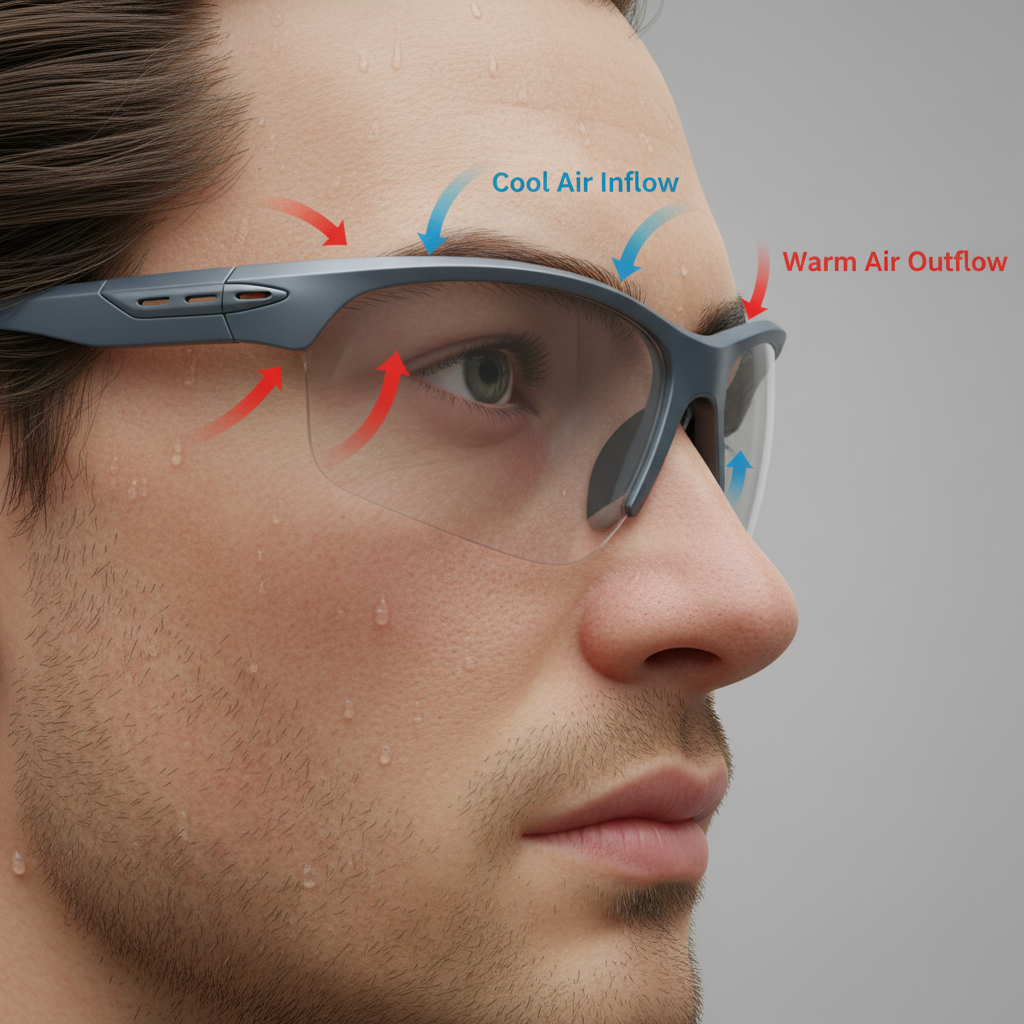
These features work by creating a convection current. As you move, cooler, drier air is directed across the inner surface of the lens, displacing the warm, moist air and carrying it away.
The "Clearance Gap": Ensure a Proper Fit
Even without dedicated vents, fit is crucial. A common mistake athletes make is pushing their sunglasses too tight against their face. While this feels secure, it can completely seal off the escape route for hot air.
For optimal performance in aerobic sports like cycling or running, aim for a clearance of about 5–10 millimeters between the top of the sunglass frame and your brow. This small gap is often all that’s needed to allow the significant amount of heat rising from your face to escape upwards, preventing it from getting trapped and causing fog.
Your other gear matters, too. A helmet brow or a face mask can inadvertently block these escape routes or redirect your exhalation directly onto the back of your lenses. When trying on sunglasses, wear the helmet or face covering you typically use to ensure the complete system works in harmony.
Pillar 2: Chemical Warfare With Anti-Fog Coatings
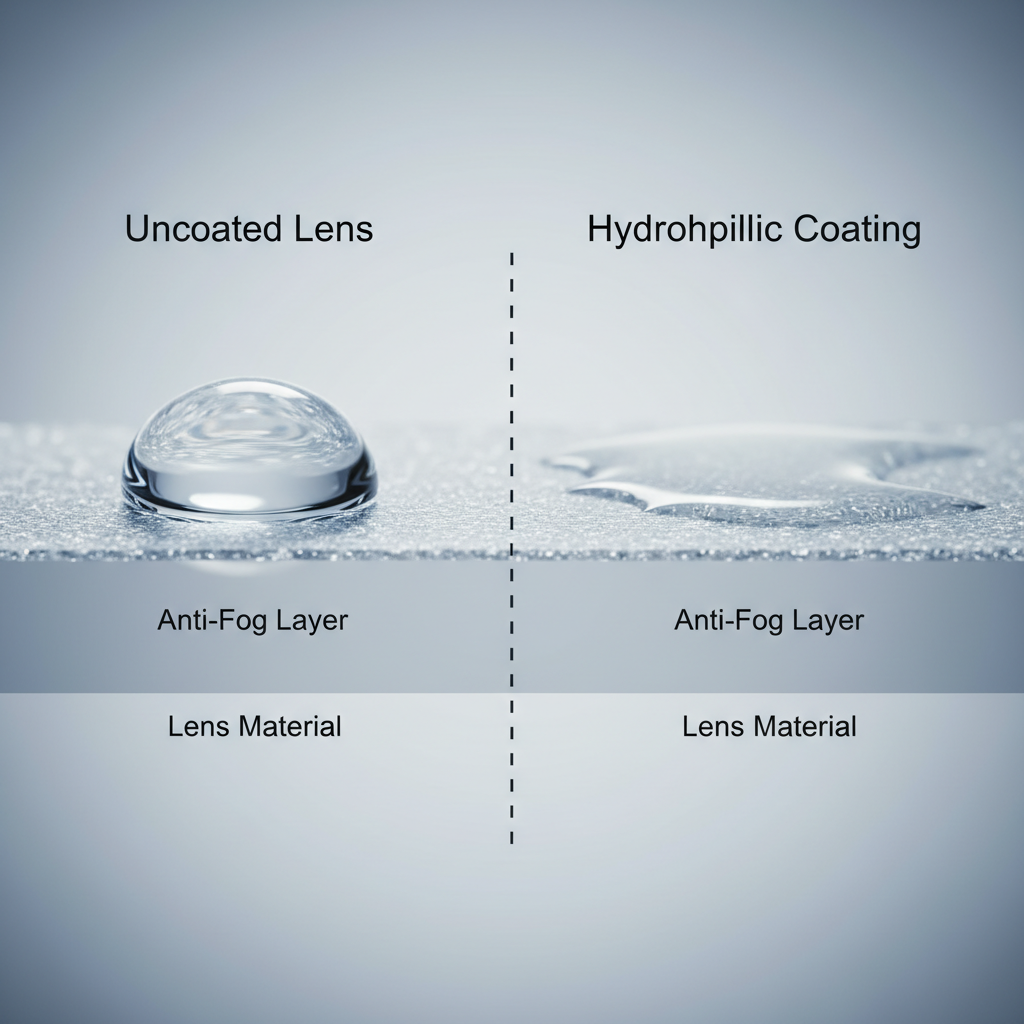
While airflow is the best mechanical defense, chemical solutions provide a powerful second layer of protection. These work by altering the surface tension of the lens, preventing tiny water droplets from beading up into a vision-obscuring fog.
Factory-Applied vs. Aftermarket Coatings
- Factory Coatings: Most high-quality sports sunglasses come with a permanent, hydrophilic (water-loving) anti-fog coating applied during manufacturing. This layer absorbs moisture and spreads it into an invisibly thin sheet across the lens, maintaining optical clarity.
- Aftermarket Sprays and Drops: These are temporary anti-fog treatments that you apply yourself. They work similarly to factory coatings but are less durable. Based on activity level and handling, a single application might last anywhere from a single intense, sweaty session to a few weeks of casual use. They are excellent for a quick performance boost before a race or in challenging weather conditions.
Myth-Busting: How NOT to Clean Your Lenses
A pervasive myth is that any old cloth or cleaner will do for sunglasses. This is the fastest way to destroy your investment. Never use alcohol-based cleaners, abrasive household chemicals, or the fabric of your t-shirt to wipe your lenses.
These harsh materials will strip away the delicate factory-applied anti-fog and anti-reflective coatings, permanently degrading their performance. Once a factory coating is gone, it cannot be restored. Always use a cleaner specifically formulated for optical lenses and a clean, dry microfiber cloth.
Pillar 3: A Systematic Approach to Fog-Free Performance
No single solution works for every athlete in every condition. The key is to layer these strategies into a system. For example, a cyclist on a cold, humid morning may need a combination of ventilated frames, a fresh application of anti-fog spray, and a slight adjustment to their helmet to ensure clear vision.
To help you decide on the best approach, here is a breakdown of the most common methods:
| Method | How It Works | Pros | Cons | Best For... |
|---|---|---|---|---|
| Ventilated Frames | Mechanical | Passive, always working, no reapplication needed. | Can allow more dust or wind exposure; effectiveness depends on movement. | High-speed sports like cycling, running, and skiing. |
| Hydrophilic Coatings | Chemical | Excellent optical clarity, durable if cared for properly. | Can be damaged by improper cleaning; effectiveness may degrade over time. | General all-around use; foundational to any good pair of sports glasses. |
| Anti-Fog Sprays/Drops | Chemical | High-performance, immediate results, great for tough conditions. | Temporary, requires frequent reapplication, adds a pre-activity step. | Race day, extreme humidity or cold, and reviving older lenses. |
| Proper Fit & Spacing | Mechanical | Free, foundational, highly effective. | May be limited by frame/face shape; can feel less secure to some. | Everyone. This should be the first adjustment you make. |
All lenses sold in the United States, including those in sunglasses, must meet specific impact resistance standards set by the FDA. As outlined in the FDA's "Drop Ball Test" regulations (21 CFR 801.410), this ensures your lenses won't shatter from common impacts, adding a crucial layer of safety that goes hand-in-hand with maintaining clear, fog-free vision.
Wrapping Up: Your Checklist for Clear Vision
Foggy lenses don't have to be a part of your athletic life. By understanding the causes and systematically applying the right solutions, you can keep your vision crystal clear. Remember to focus on the three pillars: maximize airflow through vented frames and proper fit, utilize lens coatings for surface protection, and practice smart maintenance to preserve performance.
Treat your eyewear as the critical piece of performance and safety equipment it is. A clear view allows you to perform at your best, stay safe, and fully enjoy your sport.
Frequently Asked Questions (FAQ)
Why do my sunglasses only fog up when I stop moving? This is a classic example of airflow at work. When you're moving, air is constantly flowing through the vents and around the frame, carrying away heat and moisture. The moment you stop, that airflow ceases, and the trapped, hot air immediately condenses on the cooler lenses.
Can I use anti-fog products meant for car windshields on my glasses? Absolutely not. Automotive products contain harsh chemicals that can permanently damage the delicate coatings on your sunglass lenses. They can also cause significant skin irritation or eye injury. Only use products specifically designed for optical eyewear.
Do polarized lenses fog up more than non-polarized ones? No. Polarization is a filter that cuts horizontal glare and has no physical effect on condensation. As explained by Harvard Health Publishing, a polarized lens can fog up just as easily as a non-polarized one if conditions are right. The solution lies in airflow and coatings, not the polarization filter.
Are more expensive sunglasses automatically better at preventing fog? Not necessarily. While premium brands often invest more in advanced coatings and ventilation designs, the price tag alone isn't a guarantee. The most important factors are the specific anti-fog features a pair of sunglasses has—vents, coatings, and an adjustable fit—not the cost.
Disclaimer: This article is for informational purposes only and does not constitute professional medical advice. While the tips provided can enhance safety and performance, they are not a substitute for proper training or equipment inspection. Always consult with a qualified professional for specific advice related to your health or sport.


