


















The Semester Refresh: Why Students Should Update Their Rx
TL;DR: Your Key to a Better Semester
- Grades & Headaches: That end-of-day headache and trouble focusing might not be just "study fatigue." It's often a sign your glasses prescription is slightly off.
- The .25 Diopter Problem: A tiny, almost unnoticeable shift in your vision (as small as 0.25 diopters) can cause significant eye strain and reduce reading stamina during long study sessions.
- Astigmatism on Screens: If you have astigmatism, an outdated prescription makes focusing on pixelated text (like on a tablet or laptop) much harder, leading directly to headaches.
- Know Your Rights: The federal "Eyeglass Rule" mandates that your eye doctor must give you a copy of your prescription after an exam, empowering you to buy glasses wherever you choose.
- The 50-10 Rule: For intense academic work, the standard "20-20-20" rule is often not enough. Try 50 minutes of focused work followed by a 10-minute break looking at something far away to fully relax your eye muscles.
As a new semester begins, you’ve likely stocked up on new notebooks, organized your digital files, and mapped out your class schedule. But amidst all this preparation, one of the most critical tools for academic success is often overlooked: an up-to-date pair of prescription glasses. You might be quick to blame digital eye strain or long nights in the library for your headaches and fatigue, but the real culprit could be a subtle change in your vision. This guide will help you identify the signs that your current glasses are no longer supporting your academic performance and explain why a "good enough" prescription simply isn't good enough.
The Hidden Link Between Your Grades and Your Glasses
The unique demands of student life create a perfect storm for visual fatigue. Your eyes are constantly working, shifting focus from a laptop screen to a textbook, to a professor’s whiteboard, and back again. This relentless cycle can expose even minor vision issues that you might not notice in your day-to-day life.
Why a 0.25 Diopter Shift Derails Your Studying
A diopter (D) is the unit used to measure the corrective power of a lens. Optometrists often find that students don't realize their prescription has changed until they fail a vision screening or see their grades slip. A shift as small as 0.25D might not make the world look blurry, but it forces the tiny muscles in your eyes to work overtime to maintain focus during prolonged reading. After an hour or two of studying, this extra effort manifests as eye strain, fatigue, and a loss of concentration. Many students mistakenly attribute this to "too much screen time" when the root cause is an uncorrected refractive error that a comprehensive exam could easily detect.
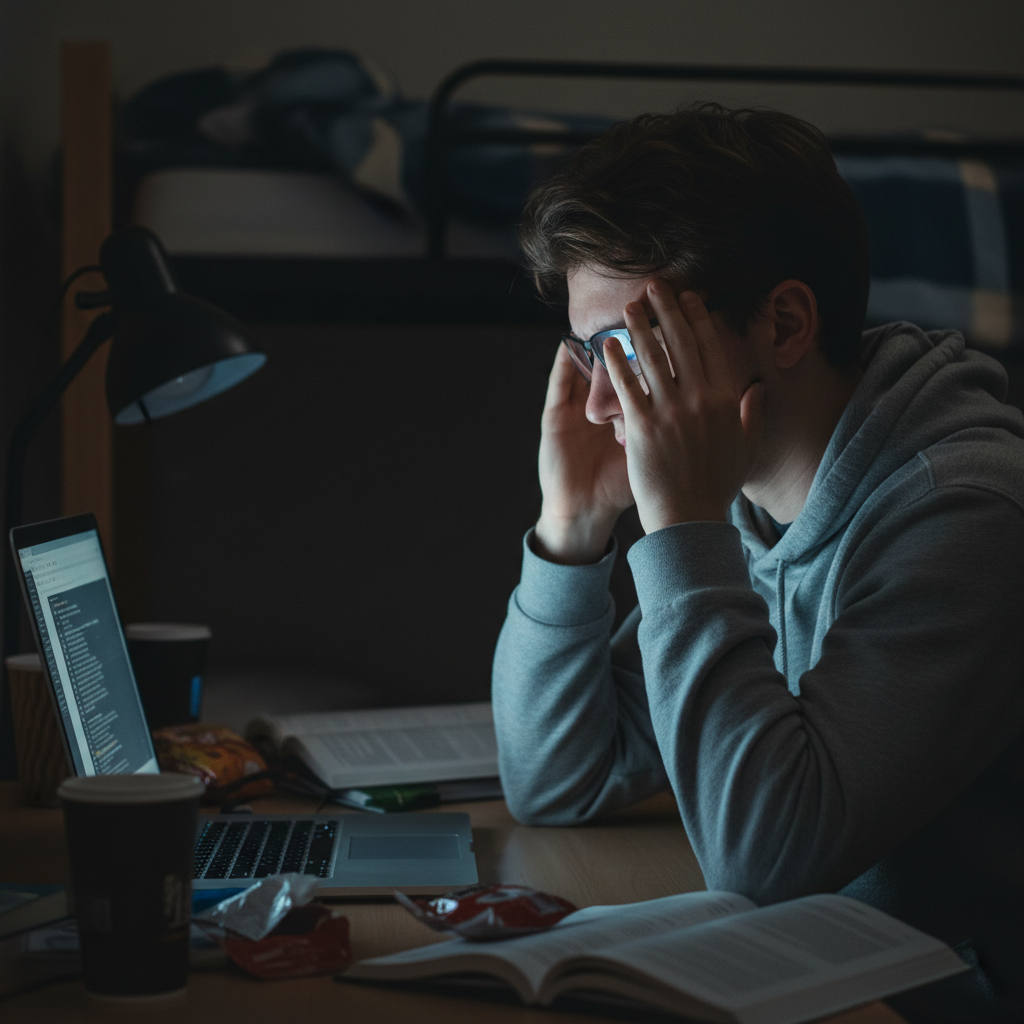
The Astigmatism and Tablet-Screen Headache
For students with astigmatism, an outdated prescription is particularly problematic. Astigmatism occurs when the eye is shaped more like a football than a sphere, causing light to focus at multiple points. Your prescription’s Cylinder (CYL) and Axis values are designed to correct this. When they're even slightly off, your eyes struggle to resolve the individual pixels on a high-resolution digital display, like a glossy tablet or laptop screen. This constant, subconscious effort to bring the text into a single, sharp focus is a direct cause of persistent headaches that seem to flare up during study sessions.
Is Your Eyewear Secretly Sabotaging You? A Self-Checklist
How can you tell if your prescription is the problem? Look for these subtle signs that go beyond just blurry vision.
- You Get Headaches Within an Hour of Reading: If headaches are a predictable part of your study routine, especially when working on a computer or with digital textbooks, it’s a strong indicator that your glasses are no longer providing the right correction.
- You Find Yourself Re-Reading Sentences: Losing your place or having to re-read the same line multiple times suggests your eyes are struggling to maintain consistent focus. This is a classic sign of accommodative stress, which is magnified by an incorrect prescription.
- The "50-10 Rule" Isn't Helping: You've probably heard of the 20-20-20 rule. For students, a more effective approach is often the "50-10 rule": 50 minutes of focused work followed by a 10-minute break where you look at objects more than 20 feet away. This longer break allows your eyes' focusing muscles to fully relax. If you try this and still feel significant strain, your prescription is the most likely culprit.
- You Instinctively Tilt Your Head or Adjust Your Glasses: Do you find yourself pushing your glasses up your nose, or tilting your head to find a "sweet spot" where the text looks clearer? This is often an unconscious attempt to compensate for an incorrect optical center, which can happen if your prescription is old or the frames don't fit properly. This is especially true for students who wear their glasses pushed up on their head, then look down through the top of the lenses at a laptop.
Your Prescription, Your Rights, and Your Next Steps
Taking control of your visual health is a straightforward process, and it's backed by federal law.
Understanding Your Prescription
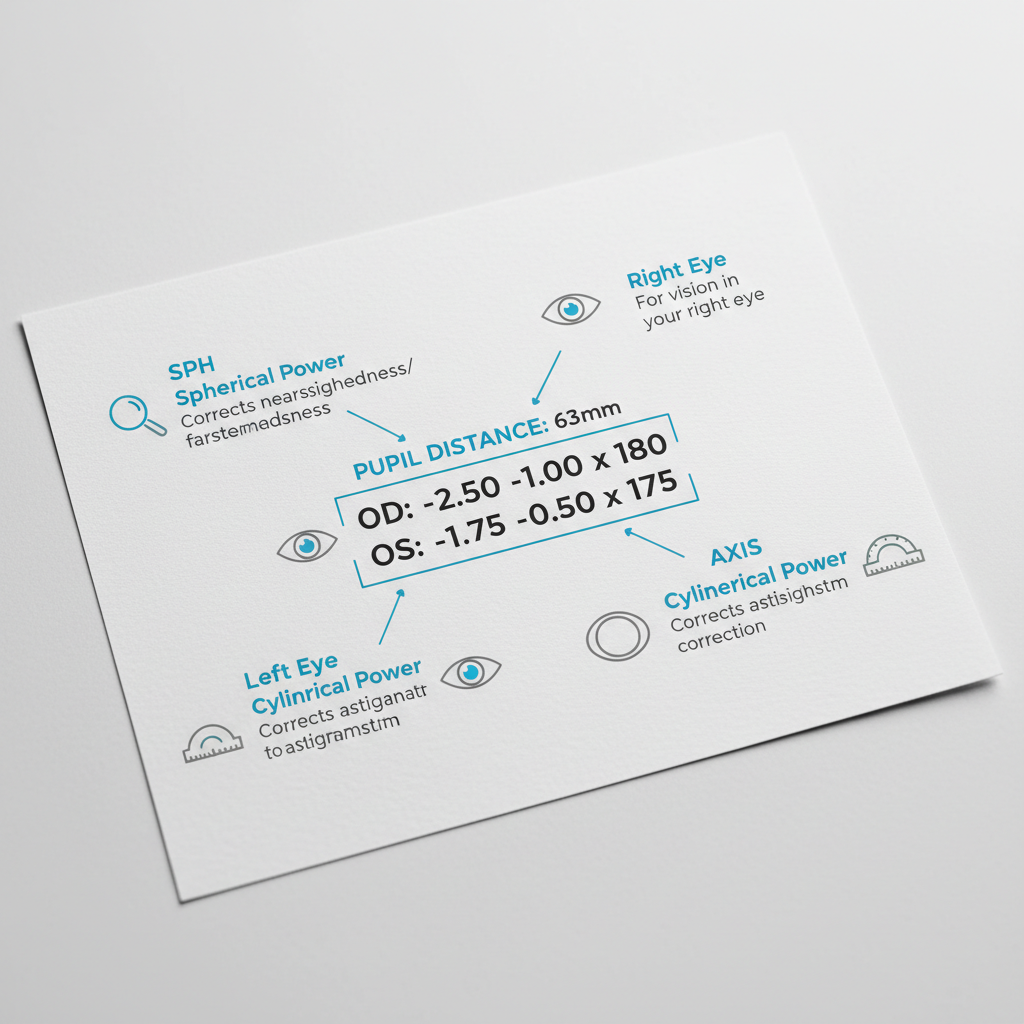
An eye prescription contains several key terms. According to the Cleveland Clinic, these are the basics:
- OD (Oculus Dexter): This refers to your right eye.
- OS (Oculus Sinister): This refers to your left eye.
- SPH (Sphere): This indicates the main lens power for correcting nearsightedness (a minus number) or farsightedness (a plus number).
- CYL (Cylinder) & Axis: These values correct for astigmatism. CYL is the amount of power needed, and the Axis is the orientation of that power in degrees (from 1 to 180).
You Own Your Prescription: The Eyeglass Rule
Many consumers are unaware that they have a right to their prescription. The FTC's Eyeglass Rule is a consumer protection law that requires eye doctors to provide patients with a copy of their prescription immediately following an eye exam. You do not have to ask for it, and they cannot charge you an extra fee or require you to buy glasses from them. This prescription portability gives you the freedom to purchase your glasses from any retailer you choose, whether online or in-person.
Why a Comprehensive Exam is Non-Negotiable
A vision screening, like the kind you might get at a DMV, is not a substitute for a comprehensive eye exam performed by an optometrist or ophthalmologist. A full exam not only determines your precise prescription but also assesses the overall health of your eyes, screening for conditions like glaucoma, cataracts, and even signs of other systemic health issues. Given that a large number of children and young adults have uncorrected refractive errors like astigmatism, as noted in studies on PubMed, this exam is a crucial part of your overall healthcare.
Set Yourself Up for a Clear Semester
Starting the semester with an updated prescription is more than just a minor upgrade; it's an investment in your academic performance and overall well-being. By eliminating the hidden strain of an outdated prescription, you free up mental and physical energy to focus on what truly matters: learning. Don’t let something as simple as a 0.25 diopter shift stand between you and a successful semester. Schedule an eye exam, get your current prescription, and ensure your vision is as ready for the academic challenge as you are.
This article is for informational purposes only and does not constitute professional medical advice. Always consult a qualified healthcare provider for any questions about your health or vision.
References
- Cleveland Clinic. (n.d.). How to Read Your Eye Prescription. Retrieved from https://health.clevelandclinic.org/how-to-read-your-eye-prescription
- Federal Trade Commission. (n.d.). Buying Prescription Glasses or Contact Lenses: Your Rights. Retrieved from https://consumer.ftc.gov/buying-prescription-glasses-or-contact-lenses-your-rights
- Hashemi, H., et al. (2021). The Prevalence of Refractive Errors and Associated Factors in Children. PubMed. Retrieved from https://pubmed.ncbi.nlm.nih.gov/34377043/


