







Sunglasses Lens Colors for Snow, High Altitude, and Glare Control
Seeing Clearly in the Snow: A Guide to Lens Tints and Glare
When you’re on a mountain, the brilliant white snow and intense high-altitude sun create one of the most visually demanding environments on earth. The wrong sunglasses don’t just cause discomfort; they can compromise your safety by hiding crucial details in the terrain. Choosing the right lens color is about more than just dimming the light—it’s about tuning your vision for optimal contrast, depth perception, and clarity.
This guide provides a detailed breakdown of how different lens tints perform in snow, high-altitude, and high-glare conditions. We’ll move beyond simple darkness to help you select the precise lens color that acts as a tool, enhancing your ability to read the terrain and protect your eyes from harmful radiation.
TL;DR: Quick Lens Recommendations for Snow
- For Bright, Sunny Days: Choose a Neutral Gray or Green lens with a low Visible Light Transmission (VLT) of 8-18%. These tints reduce brightness without distorting colors, giving you a true-to-life view of the landscape.
- For Overcast, Foggy, or "Flat Light" Days: Opt for an Amber, Rose, or Copper lens. These colors enhance contrast and definition, making it easier to see bumps, moguls, and subtle changes in the snow’s texture.
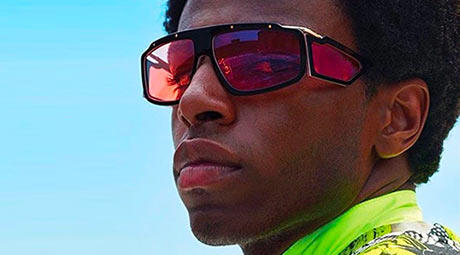
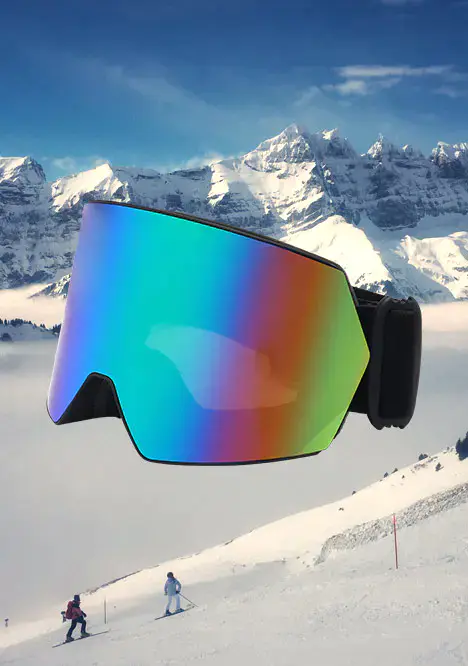
- For Extreme Glare (Glaciers/High Altitude): A dark, neutral lens with a mirrored coating is essential. The mirror reflects additional light away, providing maximum relief in the brightest conditions.
- Polarization is a Trade-Off: While excellent for cutting surface glare, polarized lenses can sometimes make it difficult to distinguish between snow and ice. Consider non-polarized options for technical terrain where spotting ice is critical.
The Science of Seeing in Snow Environments
Understanding why snow environments are so challenging for our eyes is the first step in choosing the right protection. It’s a combination of intense light from above and reflected light from below.
Why Snow is So Visually Intense
Snow acts like a giant mirror. Fresh snow can reflect up to 80% of the sun's UV radiation, meaning your eyes are hit by light from both the sky and the ground. This is compounded by altitude; for every 1,000 feet you ascend, UV radiation levels can increase by 3-5%. As the American Academy of Ophthalmology notes, even on a cloudy day, UV rays can penetrate clouds and cause significant harm.
This is why simply having dark lenses isn't enough. True protection comes from a combination of the right light filtration and complete UV blocking.

Common Myth: Darker Lenses Mean More UV Protection
One of the most persistent and dangerous myths is that the darkness of a lens determines its UV protection. This is incorrect. UV protection is a clear coating or a property inherent in the lens material itself (like polycarbonate) that blocks harmful ultraviolet rays.
According to experts at the MD Anderson Cancer Center, wearing dark lenses without certified UV400 protection can be more harmful than wearing no sunglasses at all. The dark tint causes your pupils to dilate, allowing more damaging UV radiation to enter the back of your eye. Always look for a sticker or label indicating "UV400" or "100% UV Protection." For a deeper dive, our guide explains why darker sunglass lenses are not always more protective.
Visible Light Transmission (VLT): Your Guide to Lens Darkness
Visible Light Transmission (VLT) is the percentage of light that a lens allows to pass through to your eye. A lower VLT number means a darker lens, suitable for brighter days. A higher VLT is better for lower light conditions.
Here’s a practical framework for choosing the right VLT for mountain environments:
| VLT Percentage | Lens Category | Best For |
|---|---|---|
| 8% - 18% | Dark | Bright, Bluebird Days: Intense, direct sun on open snowfields or glaciers. |
| 18% - 40% | Medium | Mixed / Partly Cloudy: All-purpose use with intermittent sun and clouds. |
| > 40% | Light | Overcast / Low Light: Foggy, stormy, or dusk conditions. |
A Practical Guide to Lens Tints for Snow and Altitude
Different colors filter light in different ways. Choosing the right one is about matching the lens’s properties to the ambient light conditions to maximize visual acuity.
For High-Contrast & Definition: Amber, Rose, & Copper
In "flat light" conditions—like on an overcast day or in the shadows—it becomes very difficult to see texture in the snow. Everything blends into a uniform white, hiding potentially dangerous bumps or dips.
Lenses with an amber, rose, or copper tint excel here. They work by filtering out a significant amount of blue light. Because blue light scatters easily in fog and clouds, removing it sharpens your focus and dramatically increases contrast and depth perception. This makes them the go-to choice for navigating challenging, low-contrast terrain.
For True Color Perception & Versatility: Gray & Green
On a bright, sunny day, the primary goal is to reduce the overwhelming brightness without altering your perception of the environment. This is where neutral tints shine.
- Gray Lenses: These are the most neutral option. They reduce the overall amount of light across the entire color spectrum equally. The American Optometric Association (AOA) often recommends gray lenses for driving because they allow for true color recognition. In the snow, this means you get glare reduction without any color distortion.
- Green Lenses: Similar to gray, green lenses provide high-fidelity color perception but can slightly enhance contrast in the green/yellow spectrum. They are a comfortable, versatile choice for varied conditions.
Advanced Lens Features for Glare Control
Beyond the base tint, modern lens technologies offer another layer of performance and protection specifically designed for high-glare environments.
Polarization: The Glare-Cutting Tool (with a Caveat)
Polarized lenses contain a special filter that blocks horizontally reflected light, which we perceive as glare. As an analogy from Science News Explores explains, the filter acts like a picket fence, only allowing vertical light waves through while blocking the horizontal waves that bounce off flat surfaces like water, asphalt, or a field of snow.
Expert Warning: While polarization is fantastic for reducing eye strain, it comes with a critical trade-off in the snow. Glare is what creates the specular highlight that helps your eyes identify icy patches. By cutting that glare, polarized lenses can make it harder to distinguish ice from snow. For this reason, many professional skiers and mountaineers prefer high-quality non-polarized lenses for technical terrain.
Mirrored Coatings: For the Brightest Conditions
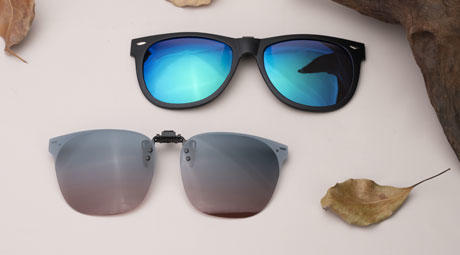
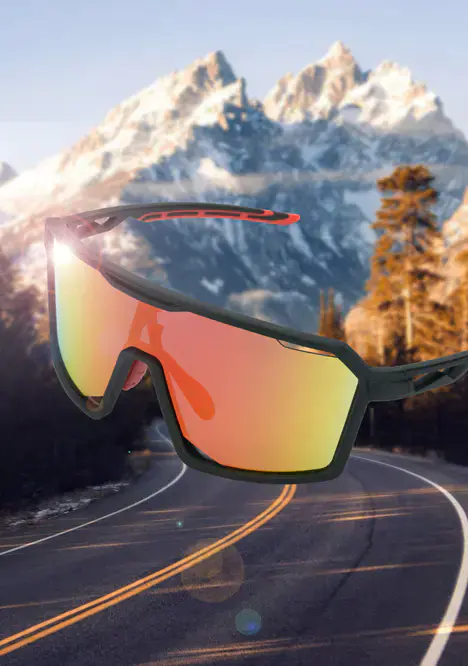
A mirrored coating is a reflective layer applied to the outside of the lens. Its primary function is to reflect a portion of the light away before it even reaches the lens tint, further reducing the VLT. This makes mirrored lenses ideal for the most extreme brightness, such as high-altitude mountaineering on glaciers where the sun's intensity is at its peak. They are typically paired with a dark gray or brown base tint for maximum light reduction.

Fit and Frame Geometry: Your Last Line of Defense
Even the best lenses are ineffective if light can leak in around the edges of the frame. This peripheral light can be a significant source of glare and UV exposure.
A groundbreaking study on ocular UV exposure using 3D head-forms found that goggle-style or full wraparound frames provided nearly 100% protection from peripheral light. Standard, flatter frames offered far less. When choosing sunglasses for snow, prioritize larger lenses and a frame that curves to fit the contour of your face. This not only blocks more light but also helps protect your eyes from wind and debris. For those with high-power needs, our guide to wraparound high prescription sunglasses offers additional solutions.
Wrapping Up: Key Takeaways for Mountain Eyewear
Choosing the right sunglasses for snow and high-altitude conditions is a technical decision that directly impacts your performance and safety.
- Prioritize UV400: Ensure your sunglasses block 100% of UVA and UVB rays, regardless of lens color.
- Match VLT to Conditions: Use low VLT (darker) lenses for bright sun and higher VLT (lighter) lenses for overcast days.
- Select Tint for Terrain: Use amber or rose tints to boost contrast in flat light. Use gray or green for true color vision on sunny days.
- Use Advanced Features Wisely: Mirrored coatings are for extreme sun. Understand the ice-spotting trade-off before choosing polarized lenses.
- Fit is Final: A close-fitting, wraparound frame is essential for blocking peripheral light and providing comprehensive protection.
Frequently Asked Questions (FAQ)
Q1: Can I use my regular dark gray sunglasses for skiing? You can, especially on a very sunny day. However, if the weather turns cloudy or foggy, you will likely struggle with "flat light" and have a hard time seeing the contours of the snow. A dedicated pair with an amber or rose lens is a much safer and more effective tool for variable mountain conditions.
Q2: Are polarized lenses always better for snow? Not always. While they are superior for cutting glare from flat, wet surfaces, they can make it more difficult to spot patches of ice on a ski slope. The decision depends on your activity; for casual snowshoeing or driving, they are great. For high-speed skiing or snowboarding where ice is a major hazard, non-polarized may be a better choice.
Q3: Do I still need sunglasses on a cloudy day in the mountains? Absolutely. Up to 80% of UV rays can penetrate cloud cover. Combined with the high reflectivity of snow, a cloudy day in the mountains can still result in significant UV exposure and conditions like photokeratitis (snow blindness).
Q4: What does UV400 mean and why is it important? UV400 means the lens blocks all light rays with wavelengths up to 400 nanometers. This covers all of the harmful UVA and UVB spectrum. Some older standards only protected up to 380 nm, but as a technical report in PubMed highlights, the 380-400 nm band contains significant UV energy. The UV400 standard ensures the most complete protection available.
Disclaimer: This article is for informational purposes only and does not constitute professional medical advice. Consult with a qualified eye care professional to determine the best eyewear for your specific needs, especially if you have pre-existing eye conditions.
References
- American Academy of Ophthalmology. (n.d.). Sun Safety. Retrieved from https://www.aao.org/eye-health/tips-prevention/sun
- MD Anderson Cancer Center. (2023). 9 things to know about sunglasses, eye protection and cancer. Retrieved from https://www.mdanderson.org/cancerwise/9-things-to-know-about-sunglasses--eye-protection-and-cancer.h00-159699123.html
- American Optometric Association. (n.d.). UV Protection. Retrieved from https://www.aoa.org/healthy-eyes/caring-for-your-eyes/uv-protection
- Science News Explores. (2023). Let’s learn about polarized versus UV-blocking sunglasses. Retrieved from https://www.snexplores.org/article/polarized-uv-blocking-sunglasses
- Sliney, D. H. (2019). Ocular dosimetry for solar ultraviolet radiation. Photochemical & Photobiological Sciences, 18(10), 2495-2506. Retrieved from https://pmc.ncbi.nlm.nih.gov/articles/PMC6803516/
- Cole, B. L. (2019). Solar ultraviolet radiation protection by sunglasses. Clinical and Experimental Optometry, 102(4), 337-346. Retrieved from https://pubmed.ncbi.nlm.nih.gov/31274741/


