






A Functional Guide to Sunglass Lens Colors & Tints
TL;DR: Your Quick Guide to Sunglass Tints
- Myth Buster: The darkness of a lens has no correlation with its UV protection. Safety comes from a UV400 rating, which blocks 100% of harmful UVA and UVB rays. Dark lenses without this certification are more dangerous than no sunglasses at all.
- Grey Lenses: Best for true color perception. Ideal for driving and general everyday use.
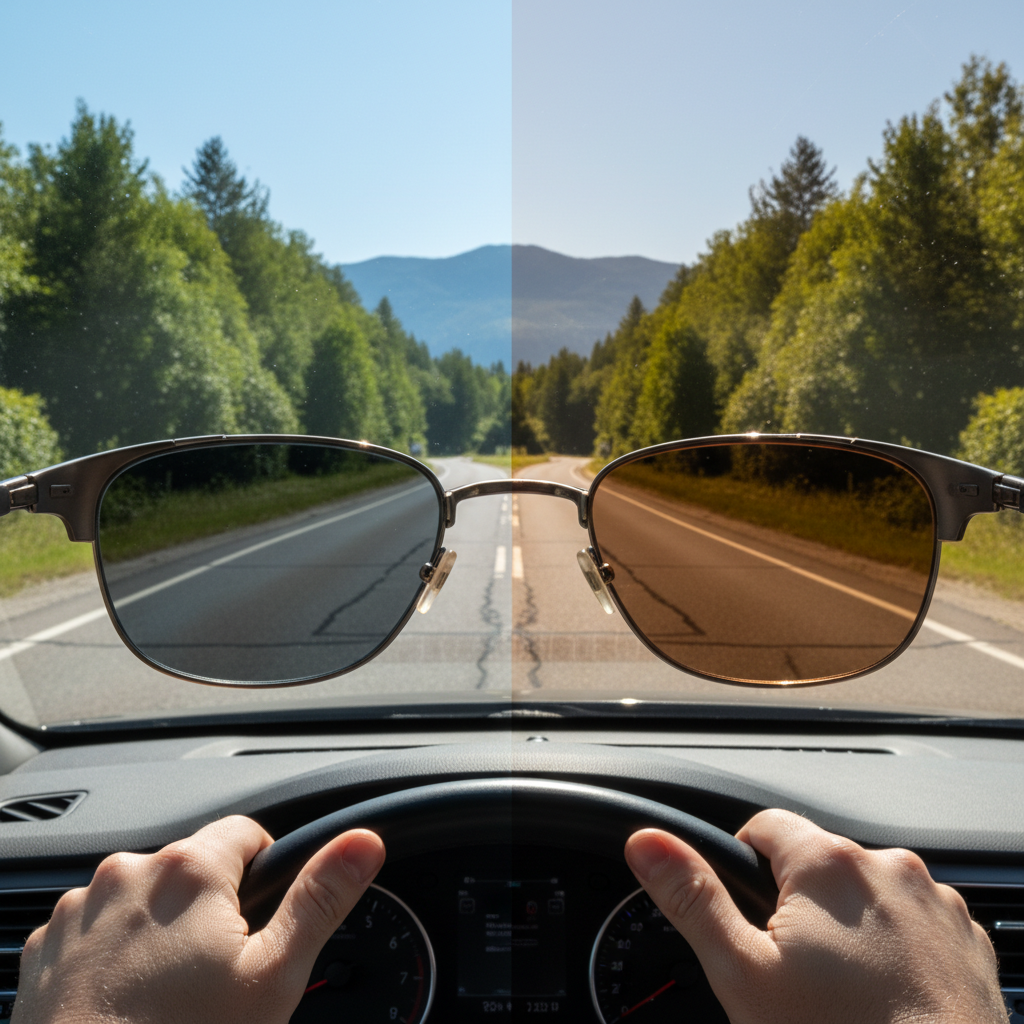
- Brown/Amber Lenses: Enhance contrast and depth perception. Excellent for activities where judging distance is crucial, like fishing, golfing, or driving in variable light.
- Green Lenses: Offer a balance of good contrast and true color. A versatile choice for most outdoor activities in both sunny and overcast conditions.
- Polarization: A feature that cuts glare from flat surfaces like water and roads. It's a must-have for boating and fishing but can interfere with LCD screens and is not recommended for pilots.
Beyond being a style statement, the lenses in your sunglasses are a functional tool designed to enhance your vision and protect your eyes. Choosing the right lens color, or tint, can dramatically improve visual comfort and performance depending on your activity. However, a pervasive myth often leads consumers astray: the idea that the darkness of the lens is a measure of its protective power.
This guide will debunk that common misconception, explain the science behind true UV protection, and provide a practical breakdown of what different lens colors do. By the end, you'll be able to select the perfect tint that not only matches your style but also serves your specific visual needs, whether you're behind the wheel, on the water, or simply enjoying a sunny day.
The Critical Myth: Lens Darkness vs. UV Protection
One of the most dangerous misconceptions in eyewear is that a darker lens offers more protection from the sun's harmful ultraviolet (UV) rays. This is fundamentally incorrect and can put your eye health at risk.
Why Dark, Uncertified Lenses Are a Hazard
Your pupil, the black circle in the center of your eye, naturally constricts in bright light to limit the amount of light that enters. When you wear any dark-tinted glasses, your pupils dilate (widen) because they are tricked into thinking it's darker than it is.
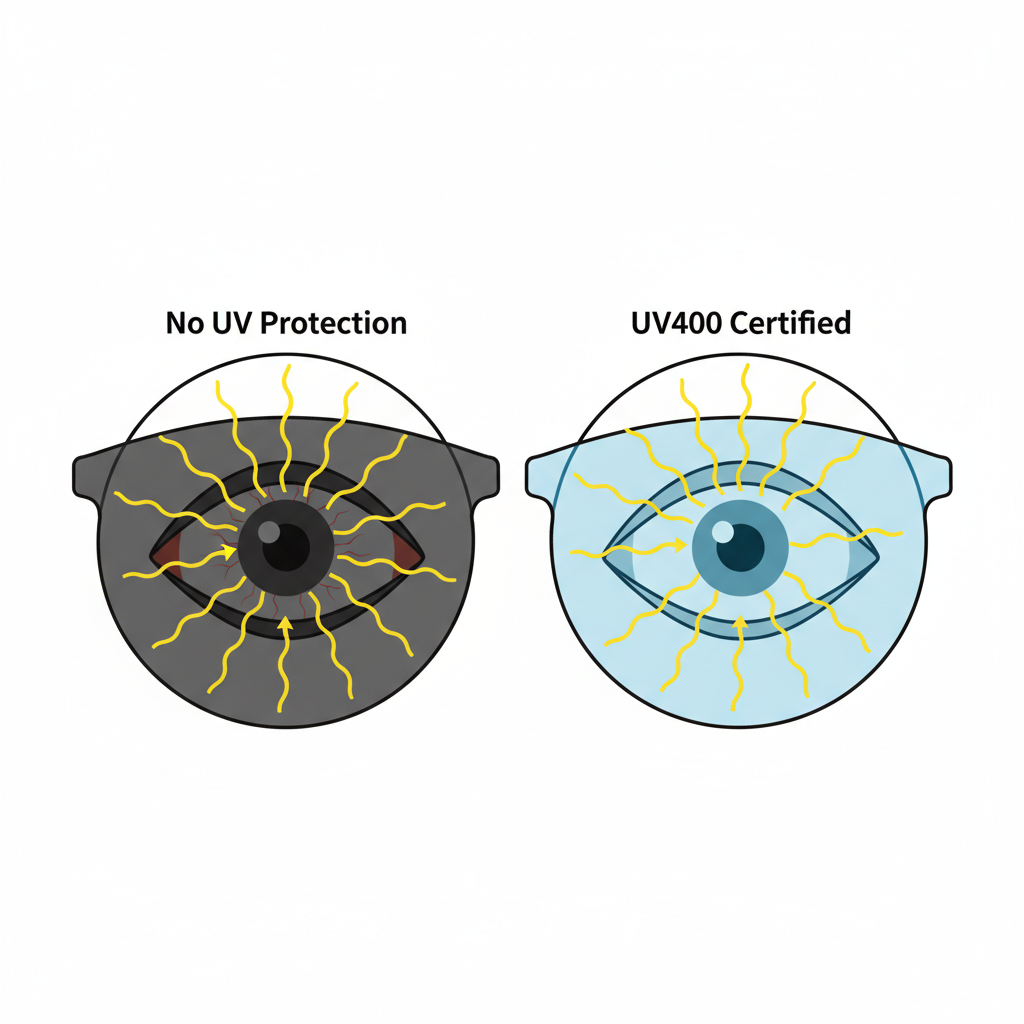
If the lenses have a certified UV-blocking filter, this is perfectly safe. However, if you are wearing cheap, dark sunglasses without proper UV protection, this pupil dilation becomes a significant problem. As experts at MD Anderson Cancer Center warn, this allows an even greater flood of damaging UV radiation to enter the eye, potentially increasing your risk for conditions like cataracts and macular degeneration. In this scenario, you would be better off wearing no sunglasses at all, as your pupils would be naturally constricted, providing a degree of protection.
The Science of Safety: What "UV400" Really Means
True eye protection comes from the lens material itself or a special, clear coating that filters out UV radiation. It has nothing to do with the color or darkness (Visible Light Transmission, or VLT) of the tint.
When shopping for sunglasses, the most important label to look for is "UV400" or "100% UVA/UVB Protection." This certification ensures the lenses block all light rays with wavelengths up to 400 nanometers. This covers the entire spectrum of harmful UVA and UVB rays. As a technical report critiquing international standards points out, the 380-400 nm band contains significant solar energy, making the UV400 standard a medical necessity, not just a marketing term. A study on public awareness also found that uncertainty about UV protection efficiency was a major reason people didn't wear sunglasses, highlighting the need to trust in verified standards like UV400.
A Functional Guide to Sunglass Lens Colors
With safety addressed, we can focus on function. The color of your sunglass lenses filters visible light differently, which can enhance your vision for specific tasks and environments. This is measured by Visible Light Transmission (VLT), which is the percentage of light a lens lets through.
- Bright, Direct Sun (e.g., beach, skiing): 8-15% VLT
- General Outdoor Use: 15-35% VLT
- Overcast or Low-Light Conditions: 35-60% VLT
Here’s a breakdown of the most common tints and their benefits:
| Lens Color | Visual Effect | Best For | Why It Works |
|---|---|---|---|
| Grey | Reduces overall brightness without distorting colors. | Driving, General Purpose | Provides true-to-life color perception, which is crucial for recognizing traffic signals and signs. The American Optometric Association (AOA) often recommends grey for this reason. |
| Brown / Amber | Enhances contrast and depth perception by filtering blue light. | Fishing, Golf, Driving, Skiing | These tints make green landscapes and road details appear more vibrant and defined, which is excellent for activities where judging distance and spotting objects is key. |
| Green | Provides high contrast and good color accuracy. | All-purpose, especially in variable light | Green lenses transmit colors evenly, dim glare, and brighten shadows, offering a good balance of the benefits found in grey and brown tints. |
| Yellow / Orange | Significantly increases contrast and brightness. | Low-light conditions (dawn/dusk), indoor sports | These tints excel in foggy or hazy conditions by filtering out "hazy" blue light, making your environment appear brighter and sharper. However, they can cause color distortion. |
Advanced Features: Polarization, Photochromic, and More
Beyond base tints, modern sunglasses offer advanced features that provide further functional benefits.
Polarized Lenses: Cutting the Glare
Think of glare as disorganized, horizontal light waves bouncing off flat surfaces like a wet road, a body of water, or the hood of a car. As explained by Harvard Health, polarized lenses contain a chemical filter that acts like a "picket fence," blocking these horizontal waves while allowing useful vertical light to pass through. This dramatically reduces glare, decreases eye strain, and makes vision clearer and more comfortable.
- When to Use Them: Ideal for driving, boating, and fishing.
- When to Avoid Them: Polarization can make it difficult to read LCD screens on your phone, car dashboard, or in an aircraft cockpit. The Federal Aviation Administration (FAA) explicitly advises pilots against using them for this reason.
Photochromic Lenses: The Indoor-Outdoor Solution
Also known as "transition lenses," photochromic lenses automatically darken when exposed to UV light and lighten when indoors. They are a convenient option for prescription wearers who don't want to switch between regular glasses and sunglasses.
Expert Warning: The primary drawback is that most photochromic lenses do not darken properly inside a car. This is because car windshields are treated to block the same UV rays that trigger the lens transition. If you do a lot of driving, a pair of fixed-tint sunglasses is a better choice.
Frame Style and Peripheral Light
The shape of your frames also plays a crucial role in protection. A 3D study using sensor-equipped mannequins found that standard, medium-sized frames offered the least protection because they allow significant UV light to leak in from the sides and top. For maximum safety during high-exposure activities like skiing or spending time on the water, consider larger or wraparound styles. These frames fit closer to the face, blocking what is known as "peripheral light." For those with stronger prescriptions, a guide to wraparound high prescription sunglasses can help navigate the specific challenges and solutions available.
Frequently Asked Questions (FAQ)
Q: Are more expensive sunglasses better at blocking UV? A: Not necessarily. Price is often tied to brand name, frame materials, and lens features like polarization, not UV protection itself. An affordable pair of sunglasses with a certified UV400 label is far safer than a costly designer pair without it.
Q: How can I be sure my sunglasses have UV protection? A: Always buy from a reputable vendor and look for the UV400 or 100% UV protection label. If you are still unsure, many optical shops have a device called a UV photometer and can test your lenses for you, often for free, as suggested by University of Utah Health.
Q: How often should I replace my sunglasses? A: Some research has suggested that the UV-protective coatings on lenses can degrade over time with prolonged exposure to the sun. While there's no hard-and-fast rule, if your lenses are visibly scratched or you've had the same pair for several years of heavy use, it may be time for a new pair to ensure full protection.
Disclaimer: This article is for informational purposes only and does not constitute professional medical advice. Please consult with a qualified eye care professional to address your specific vision needs, especially if you have pre-existing eye conditions.


