






Do Sunglass UV Coatings Wear Off Over Time?
TL;DR: Does Sunglass UV Protection Fade?
Yes, the UV protection on sunglasses can and does degrade over time, but how quickly depends on the lens material, the quality of the coating, and how you care for them. Lenses with inherent UV protection (like polycarbonate) are far more durable than those that rely solely on a surface coating. Scratches, exposure to heat, and harsh chemicals are the primary causes of failure. We recommend inspecting your glasses regularly and considering a replacement every 2-3 years for daily-wear pairs, or sooner if they are heavily used in high-exposure environments like the beach or on the snow.
It’s a question we all have about our favorite pair of shades: are they still working? You bought them for their style and the promise of 100% UV protection, but after a few seasons of use, it's natural to wonder if that invisible shield is still holding up. The truth is, that protection isn't always permanent.
The effectiveness and lifespan of your sunglasses' UV defense depend heavily on the technology used to create the lenses. Some lenses have protection built directly into the material, while others rely on a delicate coating that can wear away. This article will explore the science behind UV protection, how it fails, and provide a practical guide to ensure your eyes remain protected.
How Sunglass Lenses Block UV Light
Understanding how your sunglasses work is the first step to knowing how to maintain them. Not all lenses are created equal, and the difference between a durable pair and one that fails quickly often lies in the manufacturing process.
Myth-Busting: Lens Darkness Does Not Equal UV Protection
A common and dangerous misconception is that the darker the lens, the more protective it is. In reality, lens tint has no bearing on UV protection. A dark lens without a proper UV filter is actually more dangerous than wearing no sunglasses at all. As experts at MD Anderson Cancer Center warn, the dark tint causes your pupils to dilate, opening them up to allow more damaging UV radiation to enter if a UV filter is absent.
True protection comes from an invisible chemical process that blocks the high-energy ultraviolet light. That’s why it’s critical to only purchase lenses that are explicitly labeled "UV400" or "100% UV Protection."
Embedded Protection vs. Surface Coatings
There are two primary ways manufacturers achieve UV protection:
-
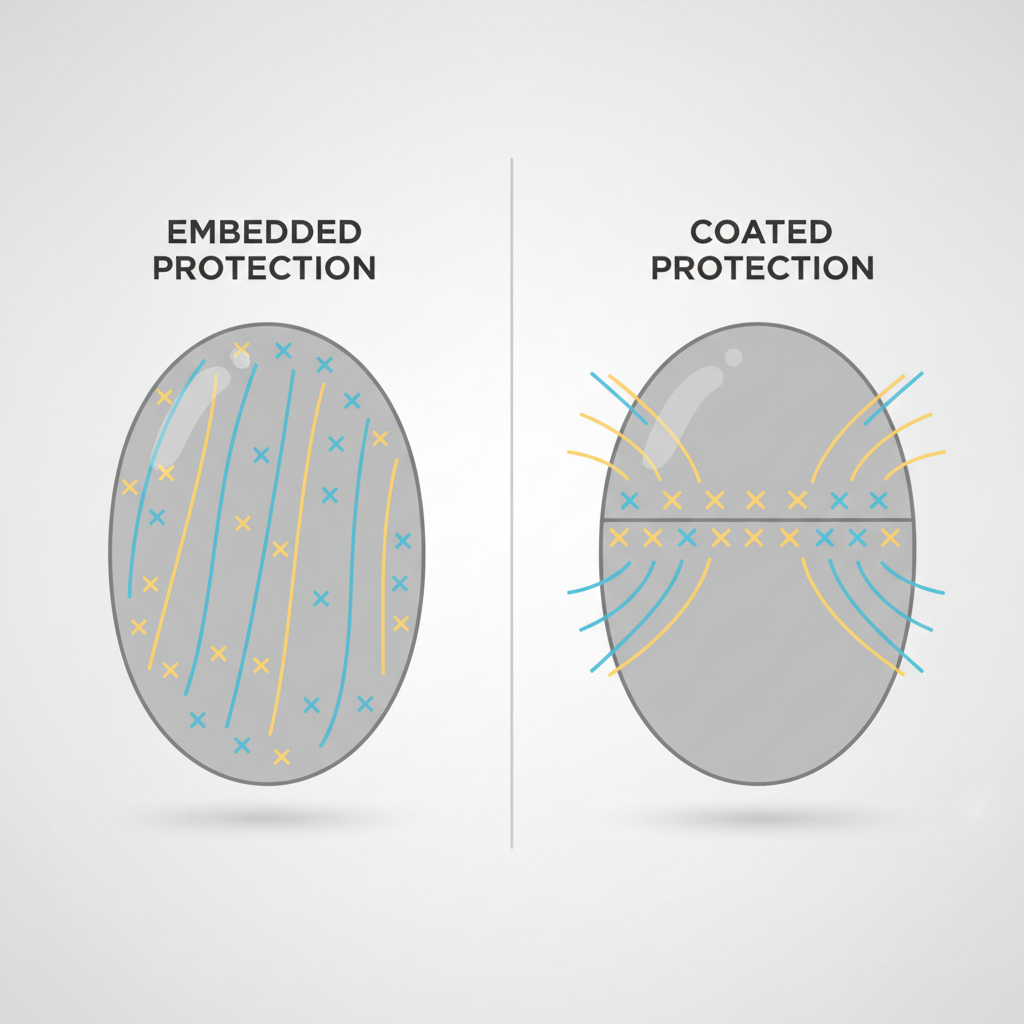
Embedded (In-Material) Protection: Modern lens materials like polycarbonate have UV protection built directly into their chemical structure. The UV-blocking properties are part of the lens itself and cannot be scratched off or worn away. This is a major advantage for durability and long-term safety.
-
Coated Protection: Other common lens materials, like the plastic known as CR-39, often rely on a UV-blocking coating applied to the surface. While effective, this coating is a thin, transparent layer that is vulnerable to damage over time. This is the primary source of declining UV protection in many sunglasses.
What "UV400" Really Means
The "UV400" label signifies that the lenses block light rays with wavelengths up to 400 nanometers, which covers all harmful UVA and UVB radiation. Some older or lower-quality standards only protected up to 380 nm. However, as technical analysis from optical science publications has shown, the 380-400 nm range contains a significant amount of UV energy. According to research published by SPIE, the international society for optics and photonics, the range from 280-400 nm contains 45% more solar UV energy than the 280-380 nm range. Insisting on UV400 ensures you are getting comprehensive protection based on the most current safety recommendations.
How UV Coatings Wear Off: The Main Culprits
If your sunglasses rely on a surface coating for UV protection, that shield is under constant assault from physical, chemical, and environmental stress. Here’s what causes it to break down.
- Physical Scratches: This is the most common cause of failure. Every time you clean your lenses with a paper towel or your t-shirt, you create micro-scratches. A deep scratch from a drop or from being loose in a bag can scrape away a portion of the UV coating, creating a "tunnel" for harmful radiation to pass directly through to your eye.
- Chemical Exposure: Solvents are the enemy of lens coatings. This includes household glass cleaners, alcohol-based wipes, and even the chemicals in sunscreen and hairspray. These substances can break down the chemical bonds of the coating, causing it to peel, flake, or develop a hazy film.
- Heat and UV Degradation: Leaving your sunglasses on the dashboard of a hot car is one of the worst things you can do. Extreme heat can cause the lens and its coatings to expand at different rates, leading to cracking or crazing. Furthermore, long-term, intense UV exposure itself can slowly degrade the coating in a process called "photobleaching," reducing its effectiveness. Studies have shown that lens efficacy can decline after prolonged exposure in a solar simulator.
- Back-Surface Reflection: In a surprising twist, some coatings can work against you. As noted in a study published in the journal of the Public Library of Science (PMC), standard anti-reflective (AR) coatings can inadvertently reflect UV rays from the back surface of the lens into your eye. To combat this, it's important to choose lenses that have a UV-absorbing treatment on the backside as well, ensuring protection from all angles.
A Practical Guide to Sunglass Care and Inspection
Proper maintenance is the key to extending the life of your eyewear. You should treat your lenses not as indestructible pieces of glass, but as precision optical instruments.
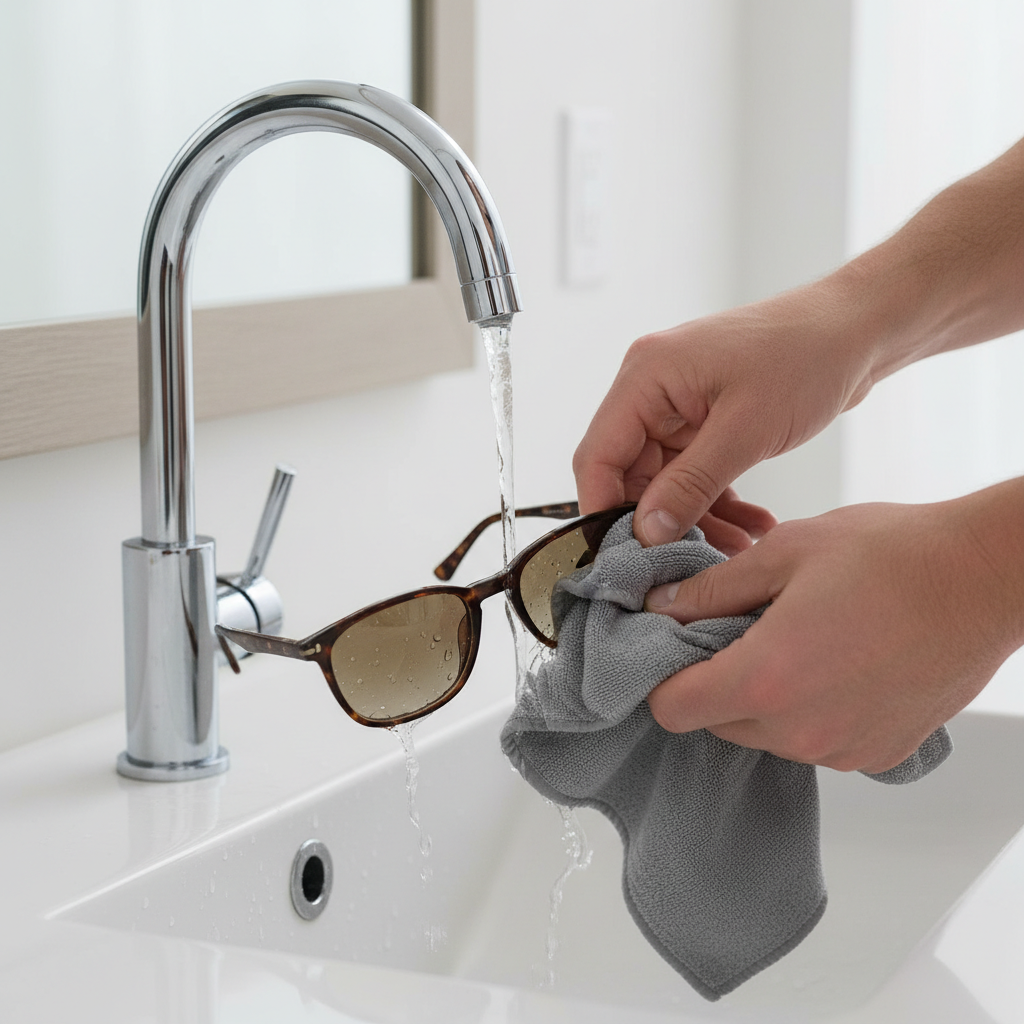
The Do's and Don'ts of Cleaning
- DO: Rinse your glasses with lukewarm water to wash away dust and grit before wiping.
- DO: Use a drop of gentle, lotion-free dish soap to break up oils.
- DO: Dry your lenses only with a clean, soft microfiber cloth.
- DON'T: Never use paper towels, napkins, or the hem of your shirt. These materials are abrasive and will scratch your lenses and their coatings.
- DON'T: Never use window cleaner, alcohol, or other harsh solvents.
- DON'T: Store them loose. Always use a protective case.
Sunglass Inspection and Replacement Checklist
So, how do you know when it’s time for a new pair? While you can’t see UV light, you can inspect for the physical signs of coating failure. Use this table as a guide.
| Visual Symptom | What It Looks Like | Severity & Action |
|---|---|---|
| Micro-Scratches | Fine, web-like scratches visible when held up to a light source. | Low. Common with use. Does not significantly impact UV protection unless widespread. Continue to monitor. |
| Deep Scratches | A scratch you can feel with your fingernail. | High. This has likely compromised the UV coating in that area. Replacement is recommended. |
| Coating Peeling/Flaking | The coating is visibly lifting, often starting at the edges of the lens. | Critical. The UV protection is failing. Replace immediately. |
| Hazy or Oily Film | A cloudy appearance that cannot be removed with proper cleaning. | High. This indicates a chemical breakdown of the coating. Replacement is recommended. |
| Lens Distortion | When looking at a straight line or grid (like floor tiles), the lines appear wavy or bent. | Critical. This indicates a loss of optical quality and can be a sign of material failure. Replace immediately. |
Expert Advice: When to Replace Your Sunglasses
Even with perfect care, coatings have a finite lifespan. Based on insights from optical technicians, we can establish some practical rules for replacement.
- The General Rule: For a pair of sunglasses you wear daily, plan on replacing them every 2-3 years. This is a safe interval to ensure the coatings are still performing as expected.
- High-Exposure Use: If you are a professional who works outdoors or spend significant time at the beach, on the water, or skiing, you should shorten this cycle to 12-18 months. The intense, direct, and reflected UV exposure in these environments accelerates the degradation of the lenses.
- Frame Fit is Part of Safety: Remember that protection isn't just about the lenses. A study on ocular exposure using 3D models found that "middle-sized" frames offered the least protection due to significant light leakage from the periphery. For maximum safety, especially for children, choose oversized or wraparound styles that fit closely to the face to block UV rays from all angles.
Frequently Asked Questions (FAQ)
Q1: Do more expensive sunglasses have better UV protection that lasts longer? Not necessarily. Price is often tied to brand name, frame materials, and design—not UV quality. A certified UV400 lens from an affordable, reputable brand offers the same level of protection as a designer one. The key factor for longevity is whether the protection is embedded in the lens material (like polycarbonate), which is more durable than a simple coating.
Q2: Are polarized lenses automatically UV-protective? No. This is a critical distinction. As explained by resources like Science News Explores, polarization is a separate filter that only blocks horizontal glare. It does not block UV radiation. While most polarized lenses today include UV protection, the two are not the same. Never assume polarization equals safety; always look for the UV400 label.
Q3: Can I get my old lenses re-coated with a new UV layer? Unfortunately, this is not a service that is practically available. Lens coatings are applied in highly controlled laboratory environments during manufacturing. Once a coating is damaged, the lens needs to be replaced.
Q4: Do my clear prescription glasses have UV protection? Many do! Most modern prescription lenses made from polycarbonate or high-index materials have UV protection inherent in the lens, offering "invisible" protection even indoors. If you have standard plastic lenses, you can (and should) opt for a UV-protective coating add-on.
Wrapping Up: Your Eyes Are Worth It
Your sunglasses are essential health devices, not just fashion accessories. While their protective capabilities can diminish over time, you now have the knowledge to fight back. By choosing lenses with durable, embedded UV protection, caring for them properly, and replacing them on a regular schedule, you can ensure your eyes get the full defense they deserve from the sun's damaging rays.
Disclaimer: This article is for informational purposes only and does not constitute professional medical advice. Consult with a qualified eye care professional for any concerns about your vision or eye health, especially if you have pre-existing conditions.


