







Sunglasses for Post-Cataract Surgery: Essential Protection Tips
Understanding Your New Eyes: Why Protection is Paramount
Cataract surgery is a remarkable procedure that restores clarity to your vision. By replacing the cloudy natural lens with a clear intraocular lens (IOL), the world appears brighter and sharper. However, this new lens, while clear, lacks the natural UV-blocking capabilities of the lens you were born with. Your eyes are now more susceptible than ever to the damaging effects of ultraviolet (UV) radiation.
TL;DR: Your Post-Surgery Sunglasses Checklist
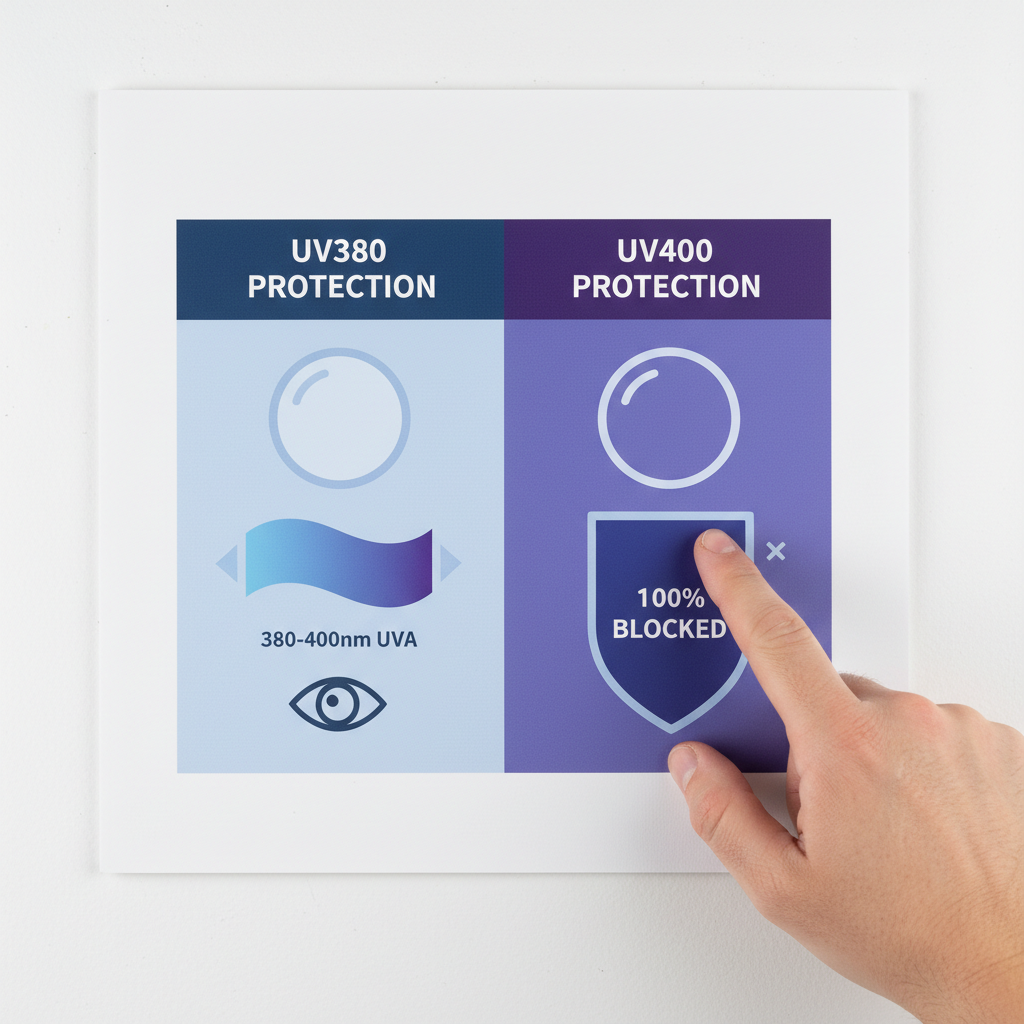
- 100% UV400 Protection: This is non-negotiable. The label must explicitly state "UV400" or "100% UVA/UVB Protection" to block all harmful rays up to 400 nanometers.
- Uniform, Dark Tint (Category 3): For the first few months, a solid, dark tint provides the most consistent protection and comfort. Avoid gradient lenses initially.
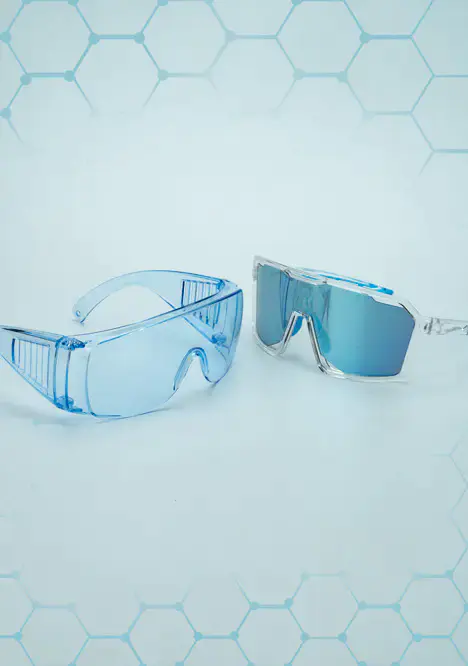
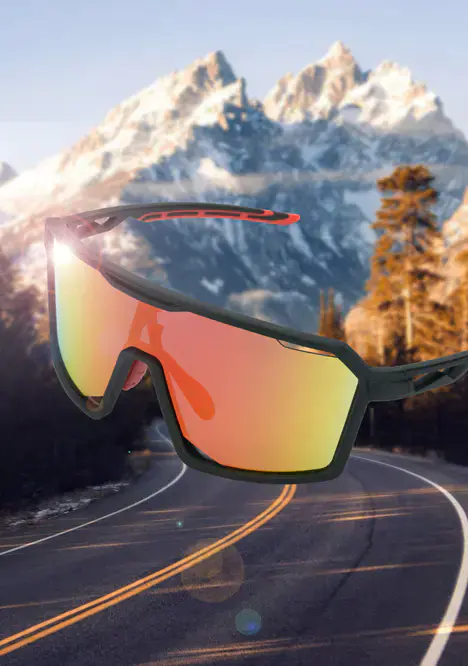
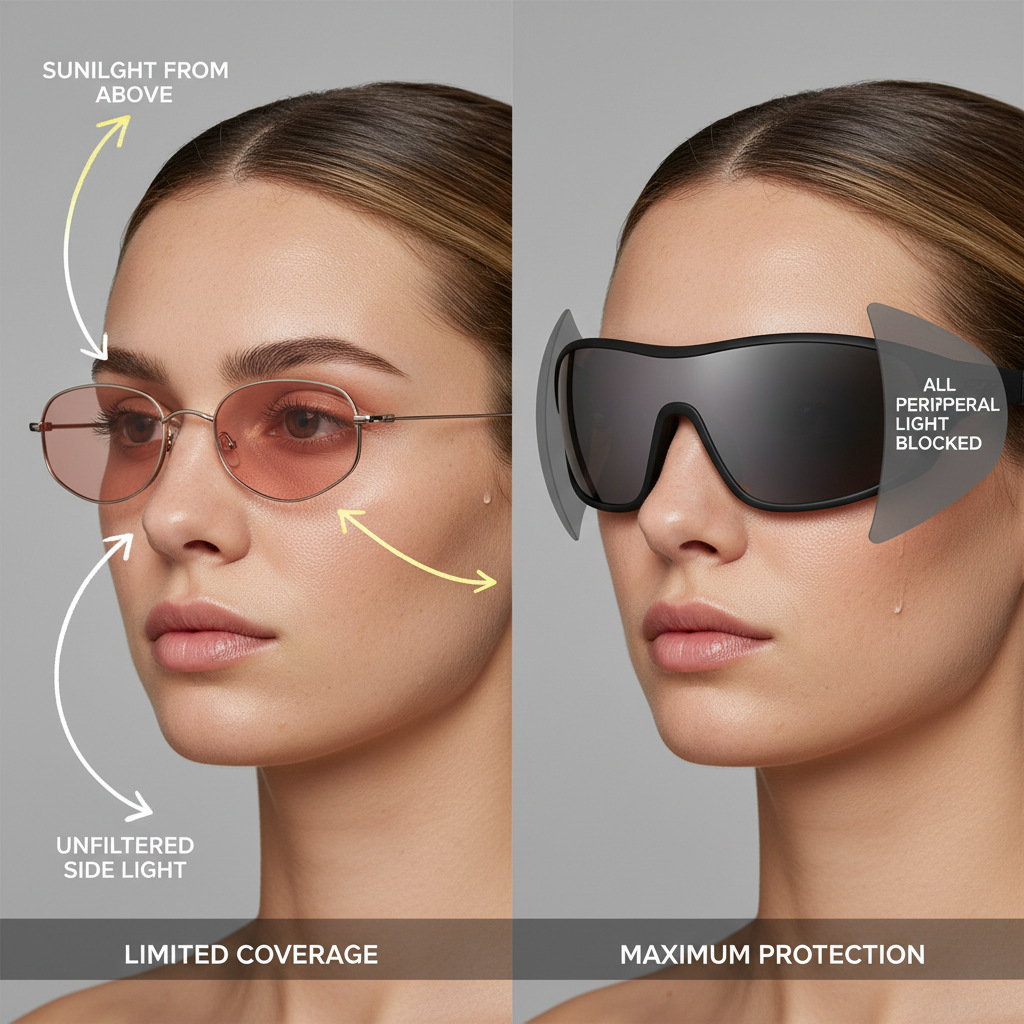
- Large or Wraparound Frames: Coverage is crucial. Choose styles that block light from entering around the sides, top, and bottom of the lenses.
- Impact-Resistant Lenses: All lenses sold in the U.S. must meet FDA impact-resistance standards, but polycarbonate material offers superior shatter resistance for added safety.
- Clean, Scratch-Free Lenses: Retire old, scratched sunglasses. Scratches can create glare and visual distortions that strain a healing eye.
Think of your new sunglasses not as an accessory, but as an essential medical device for your recovery. According to research from the National Eye Institute (NEI), UV light can trigger a process called glycation within the eye's lens, causing proteins to clump together and form cataracts. While your cataract is gone, the same UV radiation poses a long-term risk to your retina, contributing to conditions like Age-Related Macular Degeneration (AMD). Protecting your eyes now is a critical investment in your lifelong vision health.

The Non-Negotiable Lens Requirements for Recovery
Choosing the right lenses is the most critical decision you'll make. The technical specifications are not just marketing terms; they are vital features that shield your sensitive, healing eyes.
1. UV Protection: The UV400 Standard
Your surgeon removed the eye's natural, yellowing lens that provided some UV filtering. Your new IOL is crystal clear, letting more light in—including damaging UV rays.
- What is UV400? This rating signifies that the lenses block 99-100% of UVA and UVB rays, up to 400 nanometers (nm). Some cheaper lenses may only block up to 380nm, leaving a critical gap of high-energy light that can still harm your retina. As a technical report in PubMed highlights, the 380-400 nm band contains significant energy, making complete blockage essential. Always look for the UV400 label.
- Darkness is Not Protection: A very dark lens without certified UV400 protection is more dangerous than wearing no sunglasses at all. As experts at the MD Anderson Cancer Center warn, the dark tint causes your pupils to dilate, allowing more unfiltered UV radiation to enter the eye.
2. Tint, Color, and Polarization
The tint of your lenses manages visible light, reducing glare and improving comfort.
- Tint Category: For the first 8-12 weeks post-surgery, I recommend a lens with a uniform, deep tint. Look for a Category 3 lens, which transmits only 8-18% of visible light and is ideal for bright, sunny conditions.
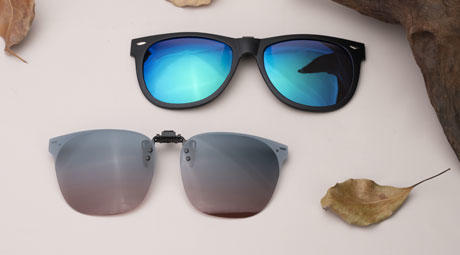
- Why Uniform Tint? Gradient tints, which are darker at the top and lighter at the bottom, can be problematic during recovery. Your pupil's response to light can be irregular as it heals, and a consistent tint provides a more stable and comfortable visual experience.
- Lens Color: While a personal choice, certain colors have functional advantages. The American Optometric Association (AOA) recommends gray lenses for true color perception, which is crucial for tasks like driving. Brown or amber lenses can enhance contrast, which may be helpful for some individuals.
- Polarization: Polarized lenses have a special filter that blocks intense, horizontally reflected light, known as glare. This is incredibly helpful for reducing eye strain from reflections off water, pavement, and other flat surfaces. For post-cataract patients, this reduction in glare can significantly improve comfort. Just be aware that polarization can sometimes make it difficult to view LCD screens, like those on your phone or car dashboard.
3. Material and Durability
The material your lenses are made from impacts both safety and clarity.
- Impact Resistance: Per FDA regulation 21 CFR 801.410, all spectacle lenses sold in the United States must be impact-resistant. This is verified through a "drop ball test."
- Polycarbonate Lenses: For superior safety, polycarbonate is an excellent choice. This material is more shatter-resistant than standard plastic (CR-39) and is the same material used in safety glasses. It also has the added benefit of being naturally UV-blocking.
- Scratch-Resistant Coating: A scratch-free surface is vital. Scratches on a lens can cause light to scatter, creating distracting glare and visual "hotspots" that can irritate a healing eye. If you're buying new sunglasses, ensure they have a durable anti-scratch coating. It's also why you should retire any old, scuffed-up pairs you own. If you're unsure, learn the signs your sunglasses' UV defense is fading.
Frame Selection: Comfort and Coverage for Healing Eyes
The right frame does more than hold your lenses; it provides a physical barrier, maximizes your protected field of view, and ensures comfort during a period when your face may be sensitive.
Maximize Your Coverage
UV rays don't just come from the front. They can leak in from the top, bottom, and sides of your frames, reflecting off the back surface of the lens and into your eye. A 3D head-form study published in PMC confirmed that frame geometry is a critical factor in total eye protection, with "middle-sized" frames offering the least protection due to this peripheral leakage.
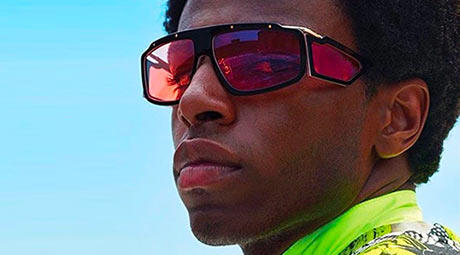
- Oversized and Wraparound Styles: The American Academy of Ophthalmology (AAO) recommends oversized or wraparound styles to prevent this lateral UV entry. Styles like large square frames, classic aviators, or sportier wraparound designs offer excellent coverage. For those who wear corrective lenses, a guide to wraparound high prescription sunglasses can be particularly helpful.
- The Coroneo Effect: This is the scientific term for how light entering from the side (temporally) is focused onto the inner part of the eye (the nasal limbus). This phenomenon is linked to the development of pterygium ("surfer's eye"). Wide temples on your frames can help block this side-entering light.
A Gentle Fit for a Sensitive Face
It's common to experience some minor swelling or tenderness around the eyes and temples after surgery. Your old glasses might feel tight or uncomfortable.
- Lightweight Materials: Choose frames made from lightweight materials like acetate, TR90, or titanium to minimize pressure on your nose and behind your ears.
- Professional Adjustments: A proper fit is key. However, be cautious with adjustments. From my professional experience, applying heat to budget frames for more than 10 seconds can damage the material's memory. Gentle, incremental bending is the safest approach.
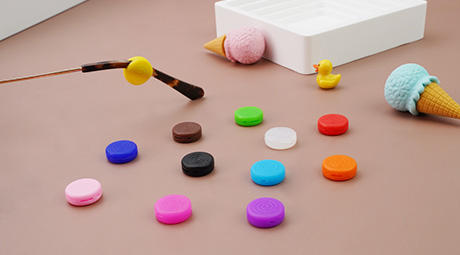
- A Pro Tip for Swelling: If the temple tips feel too tight due to post-operative swelling, ask an optician for temporary silicone sleeve extenders. These soft tubes slide over the ends of the frame's arms, cushioning the area behind your ear and relieving pressure. It's a simple fix that is rarely mentioned in standard guides but makes a world of difference in comfort.
Frequently Asked Questions (FAQ)
Q: How soon after surgery should I start wearing sunglasses? You should wear protective sunglasses immediately after your procedure, starting with the ride home from the clinic. Your doctor will provide a temporary shield or glasses, but you should have your own high-quality pair ready.
Q: Can I use my old sunglasses? You can, but only if they meet the criteria: they must be certified UV400, have large or wraparound frames, and the lenses must be completely free of scratches. If you have any doubt, it is safer to invest in a new pair.
Q: Do I need a prescription in my sunglasses? This depends on your surgical outcome. Many cataract procedures correct your distance vision, meaning you may only need non-prescription (plano) sunglasses. If you have residual astigmatism or require a different correction, you will need prescription sunglasses. Consult your optometrist about 4-6 weeks after surgery once your vision has stabilized.
Q: What if my eyes are still very sensitive to light, even with sunglasses? Some light sensitivity (photophobia) is normal during recovery. If it persists or is severe, contact your ophthalmologist. It could be a normal part of healing, or it may require a follow-up evaluation. Ensure your sunglasses are Category 3 or even Category 4 for extreme brightness (note: Category 4 is not safe for driving).
Q: How long do I need to be this careful about wearing sunglasses? While the most critical healing period is the first few months, the need for UV protection is lifelong. Because your new IOL does not block UV light, you should commit to wearing UV400 sunglasses whenever you are outdoors to protect your retinal health for the rest of your life. Even contact lens wearers still need UV sunglasses for complete protection.
Your cataract surgery was a significant step toward better vision. By choosing the right protective sunglasses, you ensure that this investment in your sight is protected for decades to come. Treat your sunglasses as the final, crucial step in your surgical journey—the shield that guards your new, clear world.
Disclaimer: This article is for informational purposes only and does not constitute professional medical advice. The information provided is not a substitute for a consultation with a qualified ophthalmologist or optometrist. Always follow the specific post-operative instructions provided by your surgeon.
References:
- National Eye Institute (NEI). "New research sheds light on how UV rays may contribute to cataract." https://www.nei.nih.gov/about/news-and-events/news/new-research-sheds-light-how-uv-rays-may-contribute-cataract
- Cole, B. L. "Solar ultraviolet radiation protection by sunglasses: a technical report." PubMed, https://pubmed.ncbi.nlm.nih.gov/31274741/
- MD Anderson Cancer Center. "9 things to know about sunglasses, eye protection and cancer." https://www.mdanderson.org/cancerwise/9-things-to-know-about-sunglasses--eye-protection-and-cancer.h00-159699123.html
- American Optometric Association (AOA). "UV Protection." https://www.aoa.org/healthy-eyes/caring-for-your-eyes/uv-protection
- U.S. Food & Drug Administration (FDA). "Impact-Resistant Lenses: Questions and Answers." https://www.fda.gov/regulatory-information/search-fda-guidance-documents/impact-resistant-lenses-questions-and-answers
- Alfawaz, A. M., et al. "Ocular UV dosimetry using a head-form." PMC, https://pmc.ncbi.nlm.nih.gov/articles/PMC6803516/
- American Academy of Ophthalmology (AAO). "How to Choose the Best Sunglasses." https://www.aao.org/eye-health/glasses-contacts/sunglasses-3


