








Switching to Dailies from Monthlies: A Guide
TL;DR: Your Quick Guide to Switching
Making the switch from monthly to daily disposable lenses offers major benefits in convenience and hygiene. This guide walks you through the transition, including what to expect in terms of feel, vision, and daily routine.
- Hygiene First: Dailies dramatically reduce the risk of eye infections by eliminating contaminated lenses, cases, and solutions.
- Adaptation is Key: Expect a short adjustment period of a few days to two weeks as your eyes get used to the new material and fit.
- A New Fit is Non-Negotiable: You cannot use your monthly lens prescription for dailies. Differences in material, base curve, and diameter require a new fitting from your eye care professional to ensure safety and clear vision.
- One and Done: Daily disposables are for single use only. Never reuse, rinse with water, or sleep in them.
The Core Benefits of Switching to Daily Disposables
If you're used to the nightly ritual of cleaning and storing your monthly lenses, the idea of a fresh, new pair every morning can sound like a dream. The benefits go far beyond just saving a few minutes before bed; it's a significant upgrade for your eye health and lifestyle.
A Fresh Start for Your Eyes, Every Day
The single greatest advantage of daily disposables is hygiene. Research has consistently shown that reusable lens wearers struggle with proper care. A study published by the Centers for Disease Control and Prevention (CDC) found that a staggering 99% of surveyed lens wearers reported at least one risky hygiene behavior. These habits, like using a dirty case or failing to rub and rinse lenses properly, can lead to painful and potentially serious eye infections.
Daily disposables eliminate these variables. You open a sterile blister pack in the morning and discard the lens at night. There's no lens case to become a breeding ground for bacteria and no cleaning solution to manage. This simple routine drastically reduces the risk of deposit buildup and microbial contamination.
Unmatched Convenience and Simplicity
Beyond hygiene, the convenience is a game-changer.
- No More Cleaning: Forget about "rub and rinse" instructions, enzymatic cleaners, and keeping track of when to replace your lens case.
- Travel Made Easy: Packing for a trip becomes as simple as counting out the number of pairs you need. There are no bulky solution bottles to worry about.
- Perfect for Part-Time Wear: If you only wear contacts for sports, special occasions, or on weekends, dailies are incredibly practical. You don't have to worry about a lens sitting in solution for days or weeks at a time.
Potential for Improved All-Day Comfort
For many people, daily lenses provide a more comfortable wearing experience. Protein, lipids, and allergens from your tears can build up on reusable lenses over time, even with perfect cleaning. This buildup can cause irritation and dryness. A fresh lens every day is free from these deposits. A retrospective study on "problem" patients who switched to dailies found a significant reduction in symptoms of dryness and corneal staining, demonstrating a clear therapeutic benefit for those struggling with comfort in their reusable lenses.
The Transition Process: What to Expect Day-by-Day
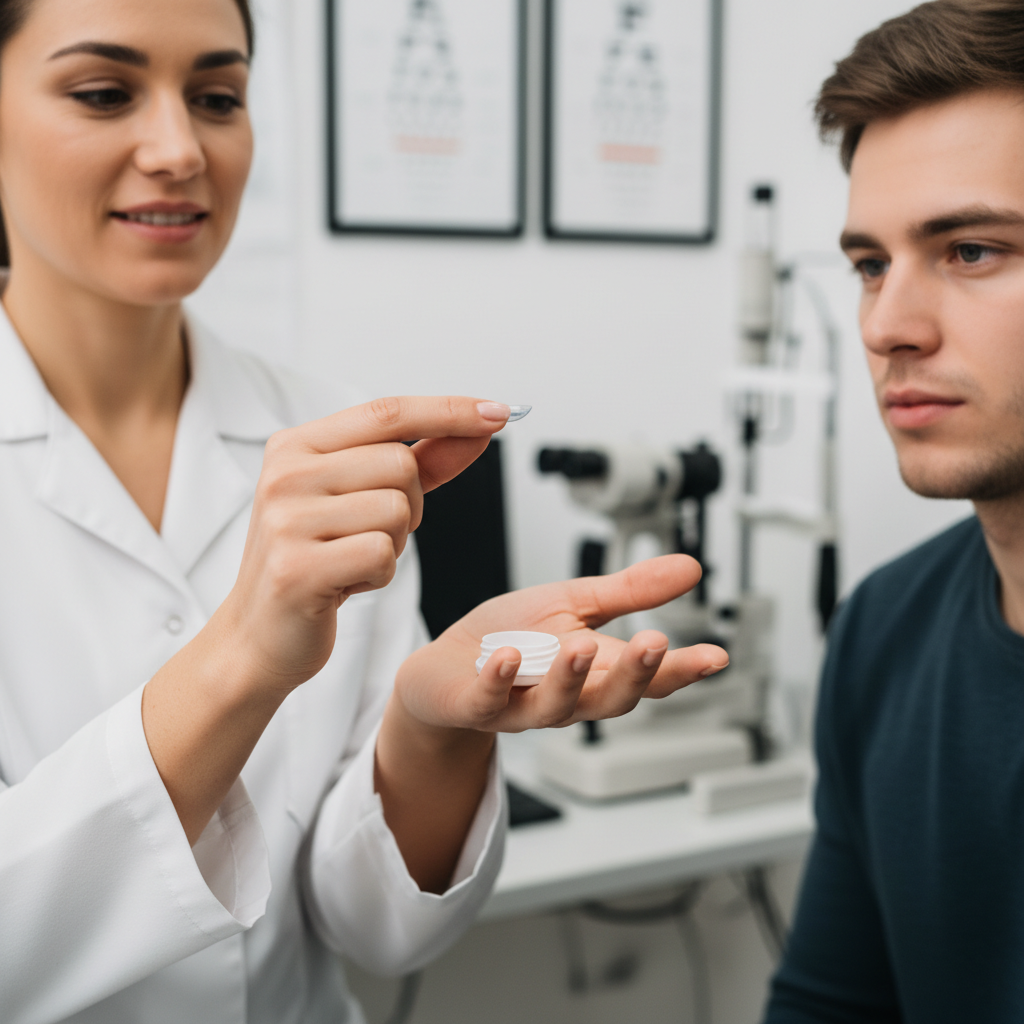
Switching to dailies isn't as simple as just buying them in your old prescription. It's a process that requires professional guidance to ensure a healthy and successful transition.
Debunking the Myth: Why You Need a New Fitting
A common and dangerous misconception is that your contact lens prescription is one-size-fits-all. In reality, a prescription for a monthly lens is not directly transferable to a daily disposable lens. Here’s why a new fitting with your optometrist is essential:
- Base Curve (BC) and Diameter: These measurements determine how the lens sits on your cornea. Different brands and models, especially across different modalities like monthlies and dailies, have unique BC/Diameter combinations. An incorrect fit can cause the lens to move excessively (leading to blurry vision) or be too tight (restricting tear flow and oxygen).
- Material and Water Content: Monthly and daily lenses are made from different hydrogel or silicone hydrogel polymers. These materials interact with your unique tear film differently. A material that was comfortable for you in a monthly lens might feel dry in a daily version, or vice versa.
- Vertex Distance: For prescriptions stronger than ±4.00 diopters, the power of the lens needs to be adjusted based on its distance from the eye. Since glasses sit further away than contacts, this calculation is critical. When switching lens types, your optometrist may need to recalculate the effective power to ensure your vision is perfectly sharp.
Your Adaptation Timeline: A Practical Schedule
Your eyes need time to adjust to a new lens. We recommend a gradual approach to build up wear-time, which helps minimize initial awareness and discomfort. While most people adapt fully within a week or two, here is a sample schedule to follow:
| Day | Recommended Wear Time | Notes |
|---|---|---|
| 1 | 2–4 Hours | Remove the lenses if you feel any significant discomfort. |
| 2 | 4–6 Hours | You may be more aware of the lens, which is normal. |
| 3 | 6–8 Hours | Continue to increase wear time as long as vision is clear and eyes are comfortable. |
| 4-7 | Increase by 1-2 hours daily | Pay attention to how your eyes feel at the end of the day. |
| Week 2 | Full-Day Wear | By now, you should be able to wear the lenses for a full day comfortably. |
This is a general guideline. Always follow the specific advice of your eye care professional.
Troubleshooting Common Issues During the Switch
Even with a perfect fit, you might encounter a few small hurdles. Here’s how to handle the most common issues.
Issue: "My vision seems blurry or unstable."
- Potential Cause: The fit may need a minor adjustment, or if you have astigmatism, the toric lens might be rotating slightly. Daily toric lenses have different stabilization methods than their monthly counterparts and can behave differently on the eye.
- Solution: Do not try to "get used to" blurry vision. Contact your optometrist. They can assess the lens movement on your eye and may select a different brand or parameter that provides more stable vision.
Issue: "My eyes feel dry or uncomfortable."
- Potential Cause: This often comes down to a mismatch between the lens material and your tear chemistry. It could also be related to environmental factors like air conditioning or prolonged screen time.
-
Solution Checklist:
- Use Rewetting Drops: Use only preservative-free artificial tears approved for soft contact lenses. Apply 1-2 drops as needed.
- Stay Hydrated: Drinking plenty of water can help improve overall hydration, including your tear film.
- Follow the 20-20-20 Rule: When working on a computer, take a break every 20 minutes to look at something 20 feet away for 20 seconds. This helps reduce digital eye strain.
- Consult Your Doctor: If dryness persists, talk to your eye doctor. They can recommend a daily disposable lens with a different material, water content, or surface technology designed specifically for dry eyes.
Issue: "The lenses are hard to handle."
- Potential Cause: Daily disposable lenses are often thinner and more flexible than many monthly lenses, which can make them feel slippery or difficult to manage at first.
- Solution: Practice makes perfect. Ensure your fingertip is completely dry before balancing the lens on it. If the lens inverts, gently slide it between your thumb and forefinger to reshape it. With a little time, the new handling technique will become second nature.

The Golden Rules: Non-Negotiable Habits for Daily Lens Wearers
To get the full health and safety benefits of daily disposables, you must commit to a few unbreakable rules.
Rule 1: One Day, One Lens. No Exceptions.
The U.S. Food and Drug Administration (FDA) classifies daily disposables as single-use medical devices. They are not designed or approved for repeated wear. The materials are not robust enough to resist the microscopic deposits and bacterial biofilms that accumulate over time. Reusing them, even for one extra day, defeats their primary purpose and puts you at risk.
Rule 2: Never Use Water on Your Lenses
This is a critical safety warning. Tap water, distilled water, and even bottled water can contain a dangerous microorganism called Acanthamoeba. As the Environmental Protection Agency (EPA) warns, this organism can cause Acanthamoeba keratitis, a severe and extremely painful eye infection that is very difficult to treat and can lead to permanent vision loss. Never rinse your lenses, your case (if you mistakenly have one), or your hands with tap water just before handling your lenses.
Rule 3: Never Sleep in Your Lenses
Sleeping in contact lenses dramatically increases the risk of ulcerative keratitis, a serious infection of the cornea. A landmark clinical study found that overnight wear increases this risk by more than 8 times compared to daily wear. When your eye is closed, the contact lens reduces the supply of oxygen to your cornea, making it more vulnerable to infection-causing bacteria.
Rule 4: Know the Red Flags
Listen to your eyes. If you experience any of the following symptoms, remove your lenses immediately and consult your eye care professional:
- Persistent pain or a feeling that something is in your eye
- Worsening or blurry vision
- Unusual sensitivity to light
- Significant redness or discharge
Wrapping Up: Your Checklist for a Successful Switch
Transitioning from monthly to daily disposable contact lenses is a positive step for your eye health and convenience. By following a structured process and adopting the right habits, you can ensure the switch is smooth and successful.
- [ ] Schedule a Professional Fitting: Book an appointment with your optometrist to be properly fitted for daily disposable lenses.
- [ ] Follow the Adaptation Plan: Gradually increase your wear time over one to two weeks.
- [ ] Prioritize Hygiene: Wash and dry your hands thoroughly before handling lenses.
- [ ] Commit to Single Use: Discard your lenses every single night, without exception.
- [ ] Have Backup Glasses: Always maintain an up-to-date pair of glasses.
- [ ] Report Problems: Don't hesitate to contact your doctor if you experience persistent discomfort, redness, or blurry vision.
Frequently Asked Questions (FAQ)
Can I use my monthly lens prescription to buy dailies? No. A prescription for monthly lenses is not valid for daily disposables. They are different medical devices with unique fitting characteristics (base curve, diameter, material). You must be fitted specifically for a daily disposable lens by an eye care professional.
Are daily disposables better for allergies? Many people with allergies find that daily disposables are much more comfortable. Because you discard the lens each day, there is no time for pollen, dust, and other allergens to accumulate on the lens surface, which can significantly reduce irritation.
Why are daily disposables more expensive than monthlies? While the upfront cost per box is typically higher, it's important to consider the total cost. With dailies, you no longer need to purchase contact lens solution or storage cases. You are paying a premium for the superior hygiene, safety, and convenience of a fresh, sterile lens every day.
Can I get daily disposables for astigmatism or presbyopia? Yes. Most major manufacturers offer daily disposable lenses in toric designs (for astigmatism) and multifocal designs (for presbyopia). The range of available parameters may be slightly more limited than in monthly lenses, which is another reason why a professional fitting is essential to find the right product for your specific needs.
Disclaimer: This article is for informational purposes only and does not constitute professional medical advice. The information provided is not a substitute for a comprehensive eye exam or the advice of a qualified eye care professional. Always consult with your optometrist or ophthalmologist regarding your eye health and before making any changes to your contact lens wear or care routine.
References
- Centers for Disease Control and Prevention (CDC): Contact Lens Wearer Demographics and Risk Behaviors
- PubMed: Refitting "Problem" Patients with Daily Disposables
- U.S. Food and Drug Administration (FDA): Types of Contact Lenses
- Environmental Protection Agency (EPA): The Danger of Using Tap Water with Contact Lenses
- PubMed: Ulcerative Keratitis and Overnight Wear


