






Can I Use Tap Water for My Contacts? The Hidden Risks Explained
TL;DR: The Non-Negotiable Rule
If you're in a hurry, here is the one thing you need to know: Never, under any circumstances, use tap water, bottled water, or any water to rinse, clean, or store your contact lenses. Doing so exposes your eyes to microorganisms that can cause painful, sight-threatening infections. If your lenses have come into contact with water, the safest action is to discard them immediately and use a fresh pair.
The Question Every Contact Lens Wearer Asks
It’s a familiar scenario. You're away from home, your contact lens feels dry or has an eyelash on it, and you've run out of saline solution. You look at the sink, and the thought crosses your mind: "Can I just use a little tap water for a quick rinse?"
It seems harmless. After all, you drink this water and wash your face with it. Why would it be dangerous for a tiny piece of plastic that goes in your eye?
As eye care professionals, we hear this question often, and our answer is always an emphatic and unequivocal no. Using water with your contact lenses is one of the most significant and easily avoidable risks you can take with your vision. This article will explain the science behind this critical rule, debunk common myths, and provide a clear action plan to protect your eyes.
Why Water Is the Enemy of Your Contact Lenses
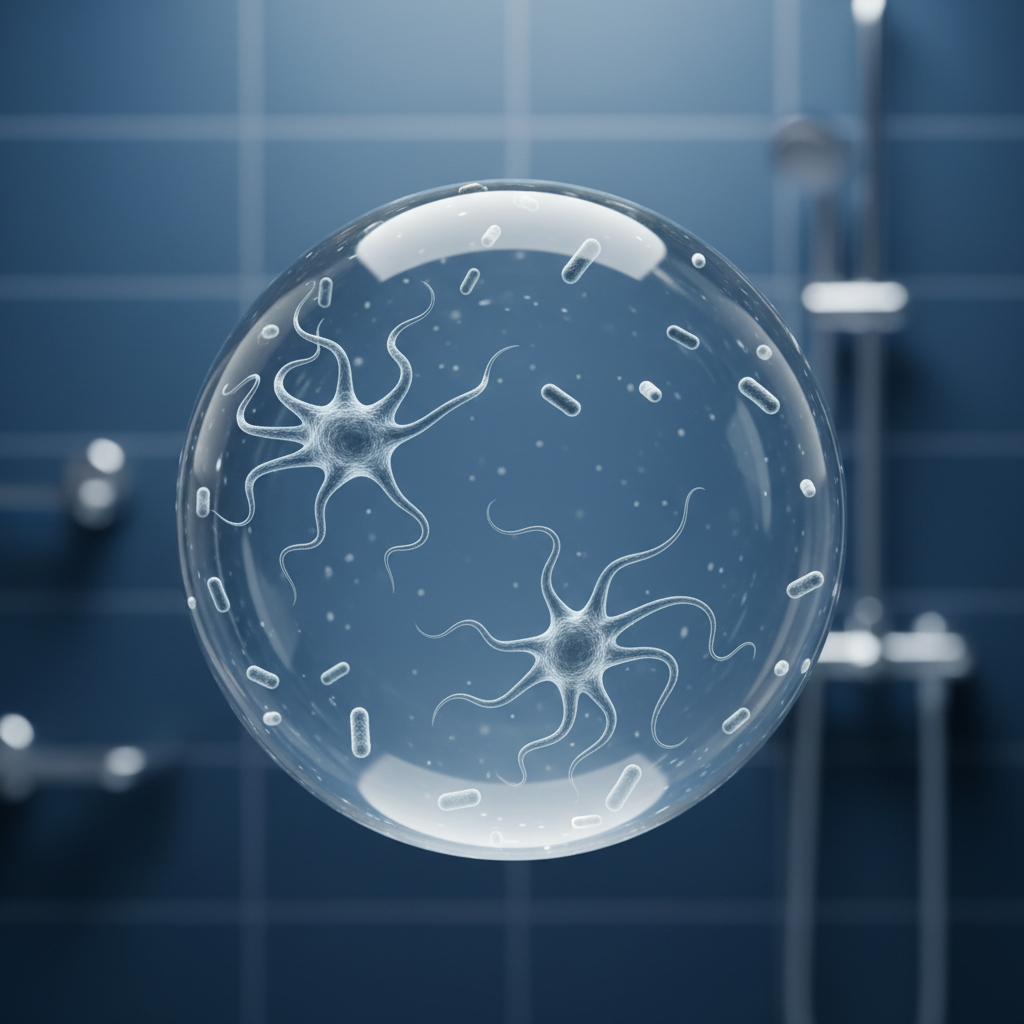
The water from your tap is safe to drink but it is not sterile. It contains a host of microorganisms that your digestive system can handle but your eyes cannot. When you introduce these microbes to the delicate environment of your cornea and trap them under a contact lens, you create a perfect incubator for infection.
The Most Dangerous Culprit: Acanthamoeba
The primary threat in tap water is a microscopic, free-living amoeba called Acanthamoeba. According to the Environmental Protection Agency (EPA), this organism is commonly found in tap water, well water, lakes, oceans, and swimming pools.
When Acanthamoeba gets trapped between your contact lens and your cornea, it can cause a severe infection called Acanthamoeba keratitis. This condition is notoriously difficult to treat and intensely painful. The amoeba essentially burrows into the corneal tissue, leading to scarring that can permanently impair vision and, in severe cases, cause blindness or require a corneal transplant.
Bacterial Threats: Beyond the Amoeba
Besides Acanthamoeba, tap water can also contain bacteria like Pseudomonas aeruginosa, a frequent cause of microbial keratitis. As the Centers for Disease Control and Prevention (CDC) explains, these germs can create a biofilm—a sticky, protective layer—on your lenses and in your lens case, making them resistant to disinfection and creating a recurring source of contamination.
The Physics of Water and Lenses: A Dangerous Combination
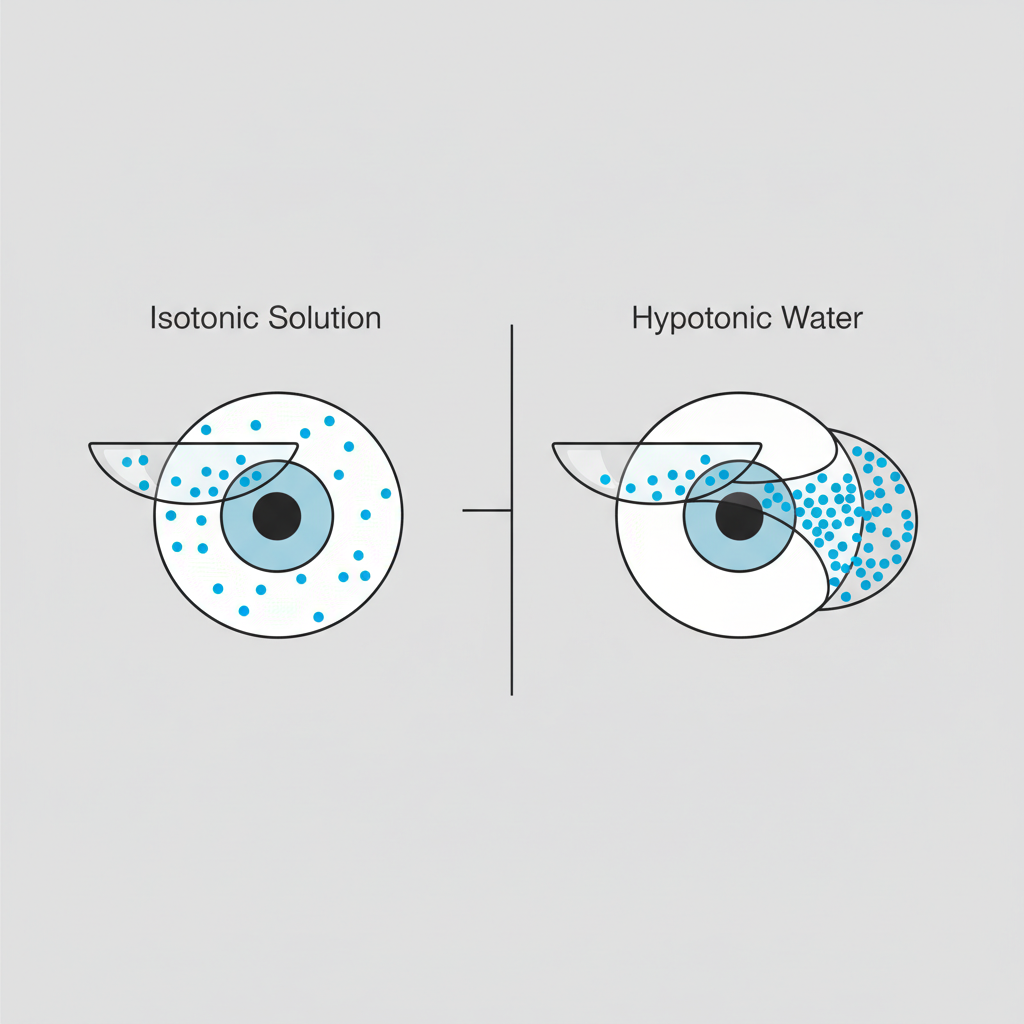
Beyond the microbial risk, there's a physical reason water is incompatible with soft contact lenses. Your lenses are designed to be in a solution that matches the natural saltiness of your tears (an isotonic environment).
Tap water is hypotonic, meaning it has a much lower salt concentration. When you place a soft contact lens in water, it acts like a sponge, absorbing the water and swelling up. This causes two problems:
- The Lens Shape Changes: The swollen lens no longer fits the curve of your eye correctly. It tightens, effectively suctioning onto your cornea.
- Microbes Get Trapped: This tightening effect dramatically reduces the natural tear exchange from behind the lens, trapping any microbes present directly against your cornea for hours.
This is why even a "quick rinse" is so hazardous. You introduce the germs and then seal them against the very surface they are poised to attack.
Common Myths and Dangerous Justifications Debunked
Many well-intentioned people risk their vision because of persistent myths about water and contact lens care. Let's address them directly.
-
Myth 1: "Bottled, distilled, or purified water is safe."
- Fact: While these waters may be cleaner, they are not sterile and do not contain any disinfecting agents. The U.S. Food and Drug Administration (FDA) explicitly warns against using any type of water as a substitute for contact lens solution. They lack the precise saline balance to prevent the lens from swelling and tightening on the eye.
-
Myth 2: "It's just for a quick rinse, not for storage."
- Fact: As explained above, even a few seconds of contact is enough for microorganisms to adhere to the lens surface. From our clinical experience, we know that once a lens is contaminated, the biofilm can be difficult to remove. Rinsing a lens case with tap water and letting it "air dry" is equally dangerous, as it can create a contaminated environment for your next pair of lenses.
-
Myth 3: "I've done it before and nothing happened."
- Fact: This is a classic case of survivorship bias. You may have been lucky, but it doesn't change the medical reality of the risk. A landmark study published in the Morbidity and Mortality Weekly Report found that a staggering 99% of contact lens wearers engage in at least one risky hygiene behavior. Each exposure is a new roll of the dice with your eyesight.
Your Emergency Action Plan: What to Do If You've Used Water
If you've already rinsed or stored your lenses in water, do not panic. The key is to act swiftly and correctly to minimize the risk.
- Discard the Lenses Immediately. Do not try to "rescue" them by soaking them in a proper solution. Once exposed, they should be considered contaminated. In our practice, we advise patients to follow a "24-hour rule": if you even suspect water exposure, throw the lenses away. It is not worth the risk.
- Use a Fresh Pair or Wear Your Glasses. Switch to a brand-new, sterile pair of contact lenses from an unopened package. If you don't have one, use your backup eyeglasses.
-
Monitor Your Eyes Closely. For the next few days, pay close attention to how your eyes feel and look. The FDA lists key warning signs of an infection:
- Redness or irritation
- Unusual pain or a "gritty" feeling
- Watery eyes or discharge
- Blurry vision
- Extreme sensitivity to light
- See an Eye Doctor Immediately If Symptoms Appear. Do not wait for it to get better on its own. An early diagnosis is critical for successfully treating infections like Acanthamoeba keratitis.
Building a Failsafe Routine: Never Get Caught Out Again
The best way to avoid this dangerous situation is to build resilient, safe hygiene habits.
- The "Rub and Rinse" Method: The CDC emphasizes that the most effective way to clean your lenses is to mechanically rub them with your fingers using a proper solution, then rinse them thoroughly before storing. Never use a "no-rub" solution as an excuse to skip this critical step.
- Always Carry a Travel Kit: Keep a small, TSA-approved bottle of multipurpose solution and a spare lens case in your bag, car, or at your office. This is the single best way to prevent being caught in a bind.
- Respect the Lens Case: Never "top off" old solution with new. Empty the case completely, rinse it with fresh sterile solution (never water), and let it air dry upside down on a clean tissue. Replace your case every three months.
- Keep Backup Glasses Updated: Ensure you always have a reliable pair of eyeglasses with a current prescription. This gives you a safe and comfortable alternative if you need to remove your lenses unexpectedly.
Your eyesight is invaluable. While the convenience of using tap water is tempting, the potential consequences are severe and irreversible. Treating your contact lenses with the respect a medical device deserves is the ultimate investment in a lifetime of healthy vision.
Frequently Asked Questions (FAQ)
Q: Can I shower or swim with my contact lenses in? A: No. The CDC and FDA strongly advise against this. Water from showers, pools, hot tubs, and oceans contains the same microorganisms as tap water, posing a significant risk of infection.
Q: What if I get soap or shampoo in my eye while wearing contacts? A: Remove the lens as soon as possible. Do not use tap water to rinse your eye while the lens is still in. Once the lens is out, you can flush your eye with sterile saline or artificial tears. Clean and disinfect the lens properly with its solution before reinserting, or preferably, discard it and use a new one.
Q: My eyes feel very dry. Can I use water as an eye drop? A: Never. This will not only introduce microbes but also disrupt the natural tear film on your eyes. Use only sterile, commercially prepared artificial tears or rewetting drops formulated for contact lens wearers.
Q: Is it safe to use a homemade saline solution? A: Absolutely not. It is impossible to create a sterile, pH-balanced solution at home. Non-sterile homemade solutions have been linked to severe eye infections and are extremely dangerous. Only use FDA-approved products.
YMYL Disclaimer
This article is for informational purposes only and does not constitute professional medical advice. The information contained herein is not intended to be a substitute for professional medical advice, diagnosis, or treatment. Always seek the advice of your eye doctor or other qualified health provider with any questions you may have regarding a medical condition. Never disregard professional medical advice or delay in seeking it because of something you have read in this article.
References
- Centers for Disease Control and Prevention (CDC): Contact Lens Care Systems & Solutions
- U.S. Food and Drug Administration (FDA): Contact Lens Risks
- U.S. Environmental Protection Agency (EPA): The Danger of Using Tap Water with Contact Lenses
- Cope, J. R., et al. (2015). Contact Lens Wearer Demographics and Risk Behaviors for Contact Lens-Related Eye Infections — United States, 2014. Morbidity and Mortality Weekly Report, 64(32), 865–870.


