





Test Your Reading Power at Home with This Chart
TL;DR: Find Your Reading Power in 5 Minutes
Feeling the strain of holding your phone farther away to read? You've likely met presbyopia, a normal part of aging. This guide provides a simple, printable chart to estimate the reading glasses power you need.
- Print the Chart: Download and print our reading chart at 100% scale. Use the ruler on the page to confirm it printed correctly.
- Good Lighting: Sit in a well-lit area.
- Measure Distance: Hold the chart 14-16 inches (35-40 cm) from your face.
- Read Down: Start from the top and read each line. The first line that appears slightly blurry indicates your limit.
- Select Power: Your ideal power is the strength listed on the line just above the first blurry one. When in doubt, choose the lower strength to prevent eyestrain.
This tool is for estimating non-prescription reader strength and is not a substitute for a comprehensive eye exam.
Understanding Why You Suddenly Need Reading Glasses
If you've recently found yourself stretching your arms out to read a menu or a text message—a move I often call the "trombone effect"—you're experiencing a completely normal, age-related vision change called presbyopia. According to the National Eye Institute, presbyopia is a gradual loss of your eyes' ability to focus on nearby objects. It happens because the natural lens inside your eye becomes less flexible over time.
Think of your eye's lens like a new camera lens—flexible and quick to adjust focus. As we age, that lens hardens. This makes it more difficult to focus on close-up tasks like reading, sewing, or working on a computer. This isn't a disease, but a natural part of the aging process that affects almost everyone, typically starting in our early to mid-40s.
Myth vs. Reality: Do Reading Glasses Weaken Your Eyes?
A common myth is that wearing reading glasses will make your eyes dependent on them and accelerate the decline of your vision. This is incorrect. Reading glasses are simply a tool that compensates for the reduced focusing ability of your natural lens. They don't change the anatomy of your eye or worsen presbyopia. Delaying the use of readers only leads to unnecessary eyestrain, headaches, and frustration. Using the correct power helps you see clearly and comfortably without any negative impact on your long-term eye health.
Before You Begin: The Pre-Test Checklist
Getting an accurate estimate at home requires a little setup. I’ve seen many people get skewed results because they skipped these simple but crucial steps. Taking a moment to prepare ensures the power you find is the power you actually need.

Here’s your checklist for a reliable test:
- Print the Chart Correctly: Download our reading test chart. When you print, ensure your printer settings are at "100% scale" or "Actual Size," not "Fit to Page." Use the 1-inch reference square on the chart and a physical ruler to verify the printout is the correct size. An incorrect size will make the entire test invalid.
- Create a Well-Lit Environment: Good lighting is non-negotiable. Sit in a comfortable spot with ample, direct light on the chart, aiming for about 300–500 lux—similar to a well-lit office. Avoid dim or overly warm-colored lighting, as it can make it harder to focus and skew your results.
- Maintain a Consistent Testing Distance: The standard reading distance used to calculate lens power is 14–16 inches (35–40 cm). Many people instinctively hold material closer, which can lead them to select a power that is too strong. To prevent this, stretch an arm out and use a ruler to measure the distance from your eyes to the chart. Maintaining this distance throughout the test is key.
How to Use the Reading Test Chart: A Step-by-Step Guide
Once your space is set up, you're ready to find your power. Follow these steps carefully. Move slowly and pay attention to what your eyes are telling you.
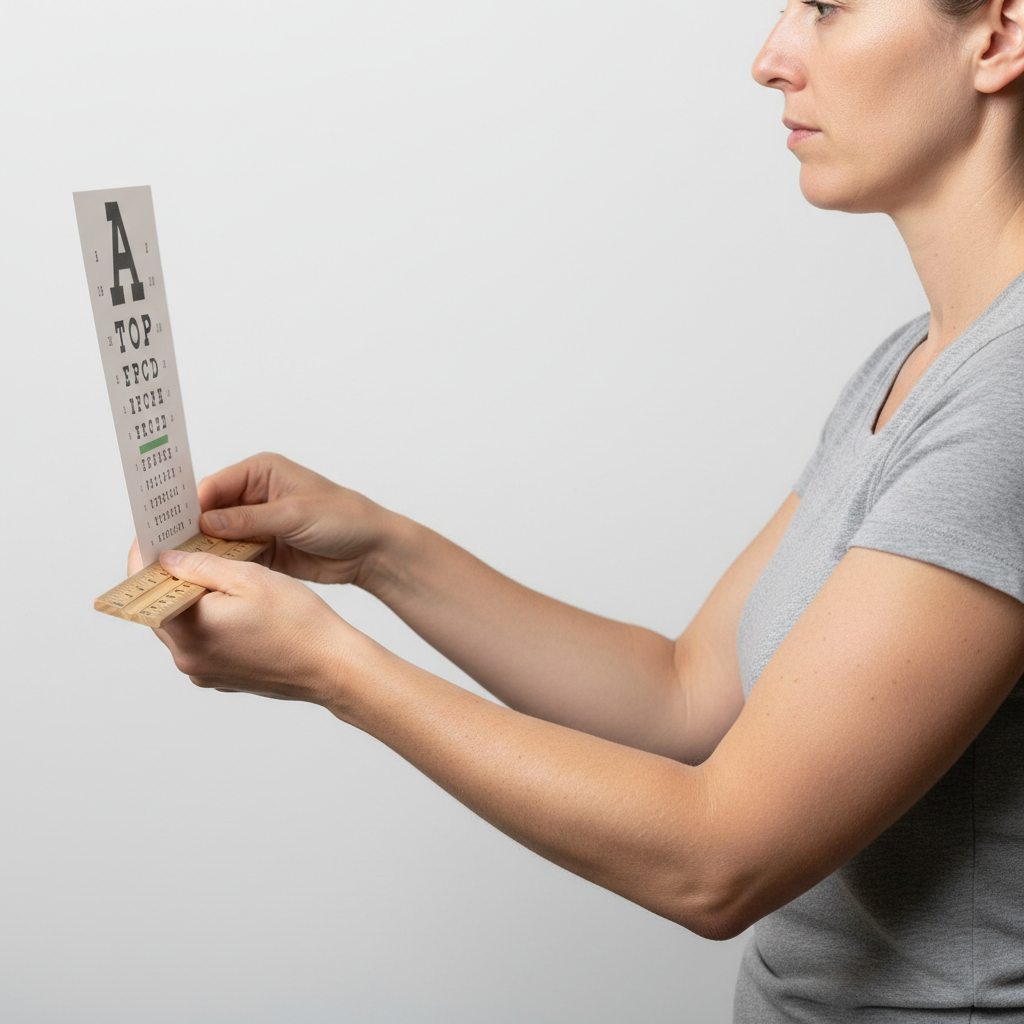
- Get Comfortable: Sit in your typical reading posture. If you wear glasses for distance vision, keep them on. This test is for the additional "add" power you need for reading.
- Position the Chart: Hold the printed chart at the measured 14–16 inch distance. Keep your arms steady.
- Read the Chart: Covering one eye at a time can be helpful, but it’s also fine to test with both eyes open. Start at the top with the largest text and read down each line.
- Find Your "Just Barely Blurry" Line: Continue reading down the chart until you reach the first line of text that feels slightly difficult or blurry. You shouldn't be straining or squinting hard to see it. The goal is comfortable clarity.
- Determine Your Power: Your estimated reading power is the strength listed for the line directly above the first one you found challenging. For example, if the +1.75 D line is the first one that feels blurry, your ideal starting strength is likely +1.50 D.
Pro Tip: When you're between two sizes, always choose the weaker (lower number) of the two. A common mistake I see in returns is from customers choosing a power that is too strong, which can cause headaches and eyestrain. It’s better to be slightly underpowered than overpowered.
Interpreting Your Results and Common Pitfalls
Now that you have your number, what does it mean? Reading power is measured in diopters (D), which indicates the strength of the lens. This number can also be used as a starting point for discussion with an optician.
Reading Power Reference Table
| Power (Diopters) | Typical Age Range | Common Use Case |
|---|---|---|
| +0.75 D to +1.00 D | 40–44 | Early presbyopia; for those who need just a little boost for small print. |
| +1.25 D to +1.50 D | 45–49 | Mild presbyopia; general reading of books and magazines. |
| +1.75 D to +2.00 D | 50–54 | Moderate presbyopia; frequent readers or those with more advanced focus loss. |
| +2.25 D to +2.50 D | 55+ | Advanced presbyopia; for clear vision of fine print and detailed tasks. |
This table provides general estimates. Your individual needs may vary.
Why Store-Bought Readers Might Not Be Enough
While this home test is a great starting point for simple, over-the-counter (OTC) readers, it has limitations. According to the American Academy of Ophthalmology, ready-made readers have two main drawbacks:
- They don't correct for astigmatism. Astigmatism, an imperfection in the curvature of the eye, is very common. If you have it, using readers that don't correct for it can lead to persistent headaches and eye fatigue.
- The power is the same in both lenses. Many people have a slightly different prescription in each eye (a condition called anisometropia). Custom-made glasses can account for this difference, providing much clearer and more comfortable vision.
If you experience headaches with OTC readers or suspect your eyes have different needs, ordering a pair of custom prescription reading glasses online is a more precise and comfortable solution. This is also crucial if you have a high prescription, as small errors in pupillary distance (PD) can cause blur. You can learn more about how to measure your PD at home for a perfect fit.
Important: When to See an Eye Doctor
This guide and at-home chart are intended for finding a comfortable power for over-the-counter reading glasses. They are not a substitute for a professional eye health examination.
It's crucial to distinguish between the normal, gradual vision changes of presbyopia and the symptoms of a more serious eye condition. As noted by experts at Johns Hopkins Medicine, certain symptoms should never be ignored. Schedule an immediate appointment with an optometrist or ophthalmologist if you experience:
- Sudden vision loss in one or both eyes
- Persistent double vision
- Flashes of light or new floaters
- Eye pain, redness, or discharge
- A feeling of a "curtain" coming down over your field of vision
Regular eye exams are vital for detecting serious conditions like glaucoma, macular degeneration, and diabetic retinopathy, especially as you get older. Remember, under the federal Eyeglass Rule, your eye doctor must give you a copy of your prescription after an exam, giving you the freedom to purchase glasses from any provider.
Key Takeaways
Finding the right reading power is the first step toward clearer, more comfortable vision. By using our printable chart and following the setup instructions, you can get a reliable estimate at home. Remember to prioritize good lighting, maintain the correct 14-16 inch distance, and always choose the weaker power if you are unsure.
While over-the-counter readers are a great solution for many, they can't solve issues like astigmatism or different power needs in each eye. If you still experience strain or headaches, investing in custom prescription glasses is your best next step. And most importantly, never ignore signs of serious eye trouble—always consult a professional for a comprehensive eye health check.
Frequently Asked Questions (FAQ)
1. Can I use this test to find glasses for my computer? No, this test is calibrated for a standard reading distance of 14-16 inches. Computer screens are typically positioned farther away (20-24 inches), which requires a lower-power lens. Using reading glasses for computer work can cause eyestrain.
2. What if I have astigmatism? If you know you have astigmatism, over-the-counter reading glasses will likely cause headaches or distorted vision. You will need custom prescription glasses that include "CYL" and "Axis" values to correct for it.
3. How often should I re-test my reading power? Presbyopia is progressive, so your needs will change over time. It's a good practice to re-evaluate your reading power every one to two years, or whenever you notice a change in your near vision.
4. Is it safe to buy reading glasses online? Yes, it is very safe, provided you use a reputable vendor and have a current prescription (if needed). For a full breakdown of what to look for, check out our guide on whether buying prescription glasses online is safe.
Disclaimer: This article is for informational purposes only and does not constitute medical advice. The at-home test is designed to help you choose non-prescription reading glasses. It is not a substitute for a comprehensive eye examination from a qualified optometrist or ophthalmologist. Consult a professional for any eye health concerns or before making decisions about your vision care.
References
- National Center for Biotechnology Information (NCBI), StatPearls: Presbyopia
- American Academy of Ophthalmology (AAO): Tips for Choosing the Right Reading Glasses
- Johns Hopkins Medicine: Low Vision: What You Need to Know as You Age
- U.S. Food & Drug Administration (FDA): Code of Federal Regulations Title 21 - § 801.410 Impact-resistant lenses


