









Why Thicker Frames Are a Stylish High Rx Solution
TL;DR: Turn Your High Prescription into a Style Superpower
Embrace the Bold: Instead of trying to hide your strong prescription, use it as a reason to choose stylish, thick acetate frames that are currently in fashion.
Conceal with Confidence: Thick frames are experts at hiding the lens edge thickness common with high-minus (nearsighted) prescriptions, turning a technical challenge into an aesthetic win.
Lens Index is Key, But Not Everything: Use high-index lenses (1.61, 1.67, or 1.74) to reduce weight and thickness, but match the index to your specific prescription to balance cost and optical clarity.
Fit is Functional: The right fit—specifically a smaller frame eye size and an accurate Pupillary Distance (PD)—is more critical than ever for high prescriptions to minimize distortion and thickness.
Avoid the Wrong Match: Steer clear of rimless, semi-rimless, and large, thin metal frames, as they will accentuate lens thickness and are less durable for high-power lenses.
For years, having a strong prescription felt like a style limitation. The dreaded "coke bottle" effect, the visible rings at the edge of your lenses, and the sheer weight of the glass could make finding fashionable eyewear a frustrating experience. You were often guided toward small, unassuming frames, the logic being that the less visible, the better.
But what if we flipped the script? What if, instead of hiding from your high prescription, you embraced it? The solution isn't about making your lenses disappear; it's about choosing a frame that works with them. This is where bold, thick acetate frames become your greatest ally, masterfully concealing thick lens edges while turning your necessary eyewear into your most powerful accessory.
The High Prescription Dilemma: Why Lens Thickness is a Challenge
Before solving the problem, it’s important to understand the science behind it. A prescription is considered "high" when the spherical (SPH) value is generally beyond -6.00 diopters for nearsightedness (myopia) or +4.00 diopters for farsightedness (hyperopia). If you see a high number in your SPH or CYL (cylinder for astigmatism) column on your Rx, this guide is for you. If you need a refresher, our guide to reading your eyeglass prescription can help you decode every detail.
Lenses work by bending light to correct your vision. The stronger your prescription, the more light-bending power is needed, which requires a more curved lens.
For Myopia (Nearsightedness): Lenses are thinnest in the center and thickest at the outer edges. The higher the minus power, the thicker the edge becomes.
For Hyperopia (Farsightedness): Lenses are thickest in the center and thinner at the edges. The higher the plus power, the more the center bulges.
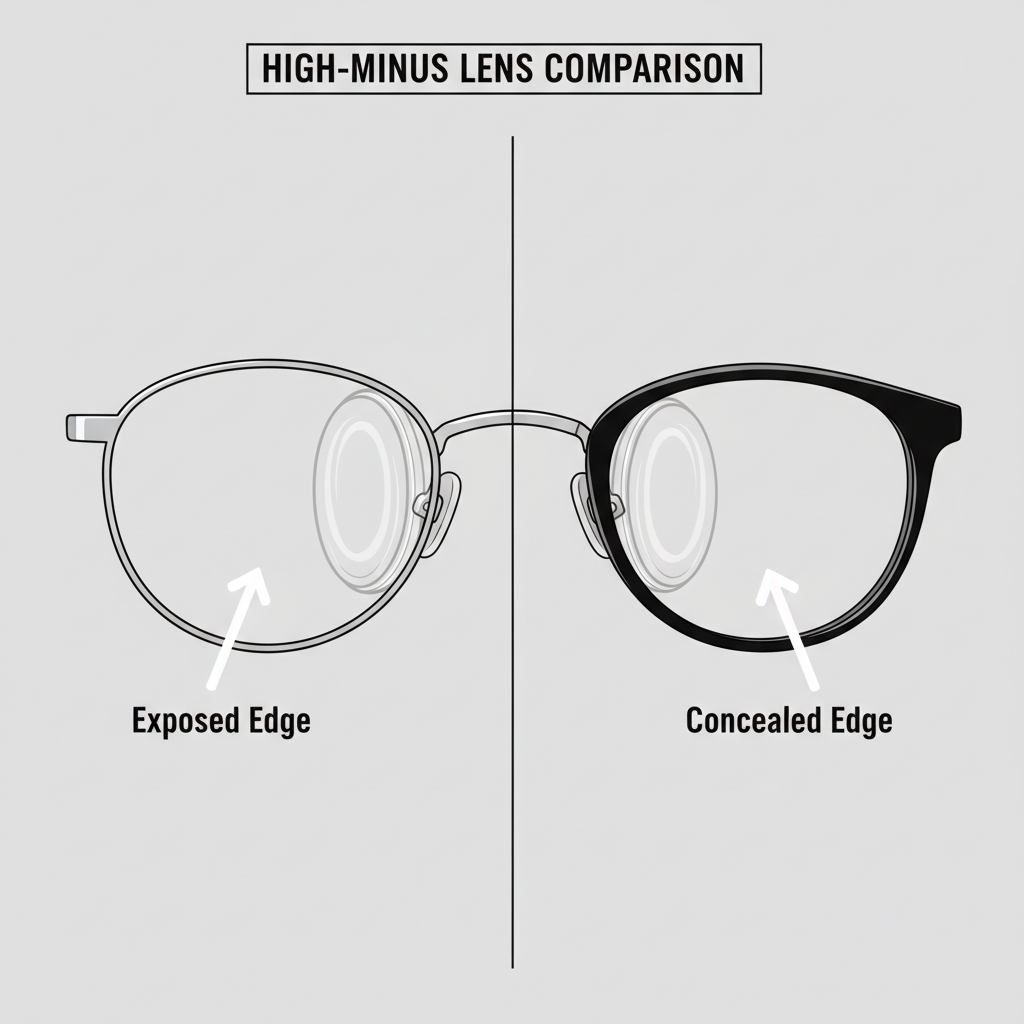
Placing these lenses into the wrong frame leads to common frustrations. A high-minus lens in a wide metal frame will leave the thick, polished edges exposed, creating distracting concentric rings. A high-plus lens can bulge forward, making your eyes appear magnified. This is not just an aesthetic issue; it also adds weight, which can cause your glasses to constantly slip down your nose.
The Stylish Solution: How Thick Frames Master Lens Edges
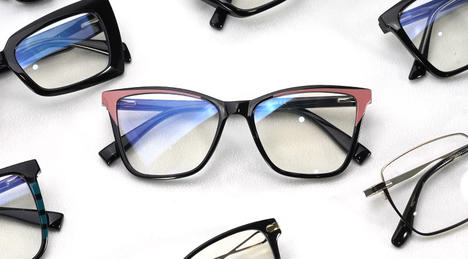
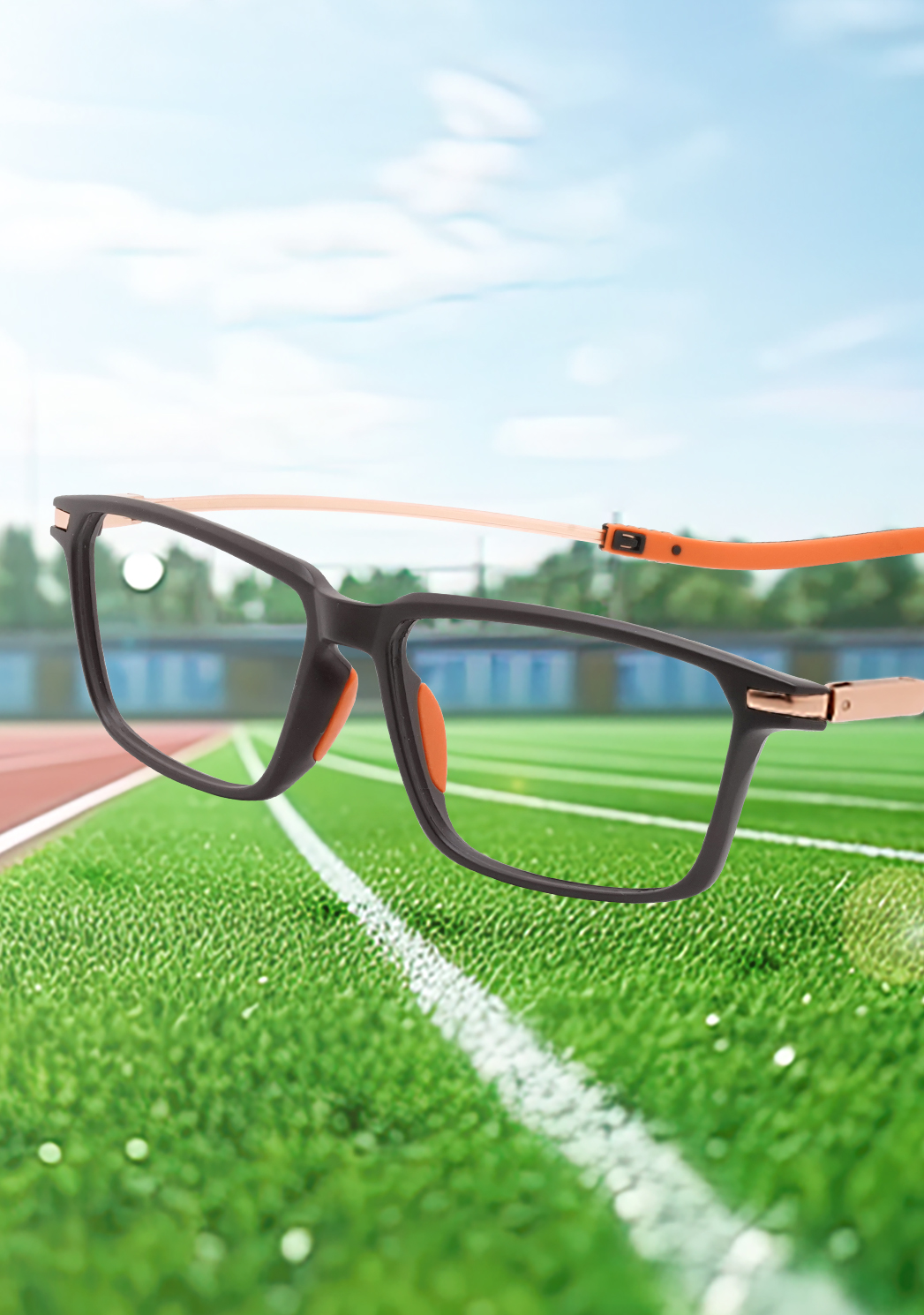
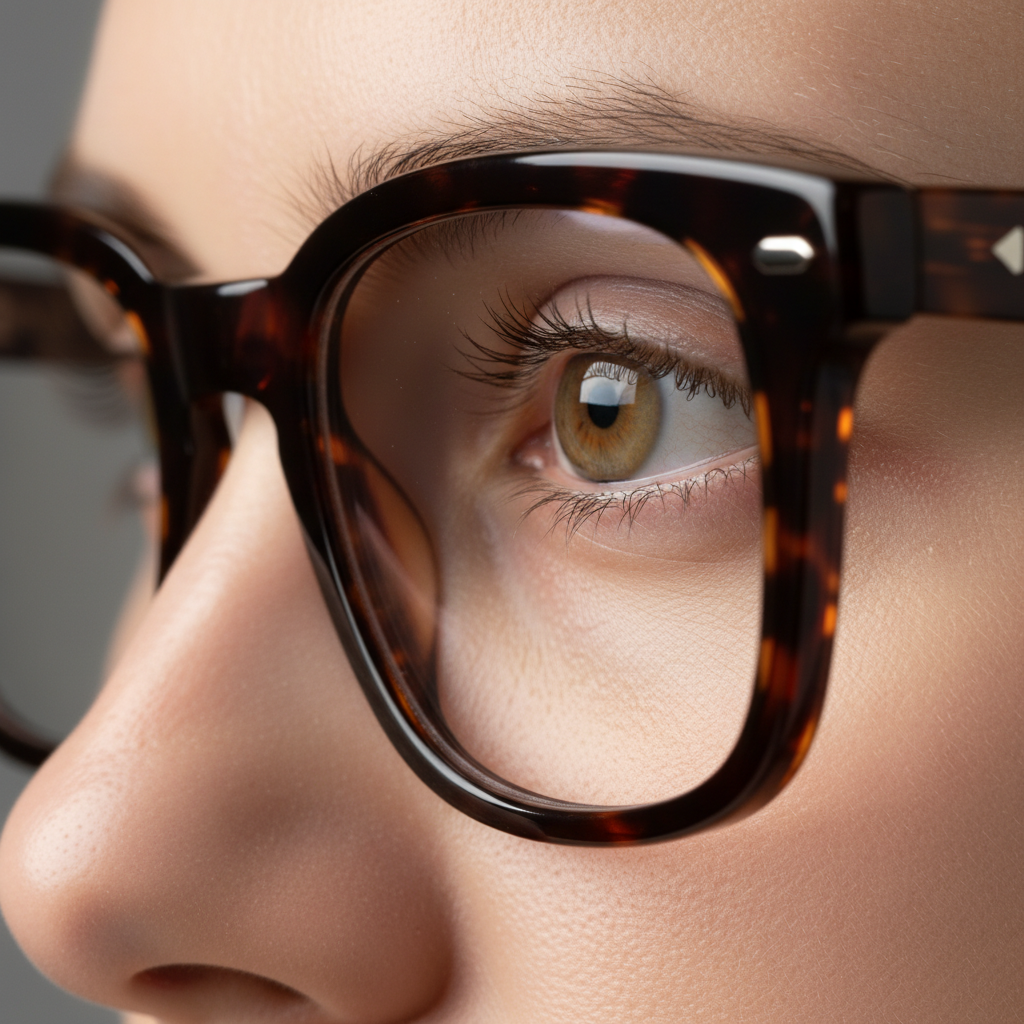
A thick acetate or plastic frame is the single most effective tool for managing the appearance of high-prescription lenses. Unlike a thin metal wire that reveals everything, a substantial frame rim provides the depth needed to completely house the thickest part of the lens.
Think of it this way: the beveled edge of the lens, where it's shaped to fit the frame, can be seated deep within the acetate. The frame's own thickness acts as a visual buffer, drawing the eye to the design of the frame itself rather than the edge of the lens within it. A dark or patterned acetate is particularly effective, as it further camouflages the lens edge.
This turns a technical necessity into a deliberate style choice. Bold, chunky frames have become a hallmark of modern fashion, conveying confidence and personality. By choosing a thicker frame, you are not settling; you are opting into a trend that perfectly suits your visual needs.
Common Misconception: You Must Hide Your High Rx
A pervasive myth in eyewear is that the ultimate goal for a high prescription is to make the lenses look as thin as possible, at any cost. This often leads people to choose unsuitable frames, like delicate metal styles, in the hope they will be less noticeable. In reality, this approach often backfires by highlighting the very thickness you're trying to hide. The real solution is not to hide, but to integrate. A well-chosen thick frame doesn't just conceal the lens—it harmonizes with it, creating a cohesive and stylish look.
A Practical Guide to High-Index Lenses
While the frame does the heavy lifting aesthetically, lens technology is crucial for comfort and clarity. This is where high-index lenses come in. According to Ferris State University's College of Optometry, high-index materials are denser and bend light more efficiently than standard plastic. This means a lens made from a 1.67 or 1.74 index material can be significantly thinner and lighter than one made from standard 1.50 plastic for the same prescription.
However, thinner isn't always better without context. The highest index (1.74) is more expensive and can sometimes produce more chromatic aberration (color fringing) than a slightly less powerful index like 1.67. The key is to select the right tool for the job. An experienced optician will tell you to balance the prescription strength with the lens material to optimize for aesthetics, weight, and optical clarity.
Pro Tip: Match Your Lens Index to Your Prescription
Here is a practical framework, often used by dispensing opticians, for choosing the right lens index. This ensures you get the benefits of a thinner lens without overpaying or compromising on visual quality.
| Prescription Range (SPH) | Recommended Index | Key Benefit | Important Considerations |
|---|---|---|---|
| Up to ±3.00 D | 1.56 | An affordable step up from basic plastic. | Good for full-rim frames. |
| ±3.00 to ±6.00 D | 1.61 | The workhorse index; a great balance of thinness and value. | Provides a noticeable reduction in thickness and weight. |
| ±6.00 to ±8.00 D | 1.67 | Significantly thinner and lighter for strong prescriptions. | An anti-reflective (AR) coating is essential to reduce reflections. |
| Above ±8.00 D | 1.74 | The thinnest and lightest plastic lens material available. | Best for extreme prescriptions where every millimeter matters. |
Crucially, all high-index lenses should be paired with an aspheric design. This lens surface profile reduces the distortion that can cause the "bug-eye" (for + Rx) or "tiny-eye" (for - Rx) look, ensuring a more natural appearance.
Expert Fitting Tips for High-Prescription Wearers
With a strong prescription, the precision of the fit is just as important as the materials you choose. Small details can have a big impact on both how you see and how your glasses look.
1. Frame Size is Everything
Here’s a secret from the lens workshop: the smaller the lens, the thinner it will be. For a nearsighted prescription, the thickest part of the lens is the very outer edge. A smaller, narrower frame means the lab can cut away more of that thick periphery, resulting in a dramatically thinner finished lens. For high-minus prescriptions, I recommend looking for frames with an "eye size" (the width of one lens) of 48mm or less.
2. Pupillary Distance (PD) Must Be Exact
Your PD is the distance between the centers of your pupils. For a high-prescription lens to work correctly, its optical center must be perfectly aligned with your pupil. An error of even one or two millimeters can induce prism and cause eye strain or distorted vision. This is why a precise PD measurement is critical. For very high or complex prescriptions (e.g., with high cylinder or anisometropia, where the two eyes have very different prescriptions), a monocular PD (measuring from your nose to each pupil separately) is the gold standard.
3. Don't Forget Vertex Distance
Expert Warning: For prescriptions stronger than ±4.00 D, vertex distance—the distance from the back of the lens to the front of your eye—can alter the lens's effective power. If your new glasses sit a few millimeters closer or further from your eyes than the ones used during your eye exam, the prescription can feel "off." This is a parameter that a skilled dispenser considers. When choosing a frame, ensure it sits comfortably and securely on your nose without being too far away.
Wrapping Up: Your Checklist for High Rx Confidence
Choosing glasses with a strong prescription doesn't have to be a compromise. By combining smart frame selection with the right lens technology, you can achieve a look that is comfortable, clear, and incredibly stylish.
Here is your final checklist:
Seek Boldness: Prioritize thick acetate or plastic frames that can conceal lens edges.
Go Smaller: Choose frames with a smaller lens width to naturally reduce edge thickness.
Select the Right Index: Use the table above to match the lens index to your prescription for the best balance of thinness, clarity, and cost.
Insist on Aspheric: Ensure your high-index lenses have an aspheric design to reduce eye distortion.
Nail the Fit: Provide an accurate Pupillary Distance (PD). For prescriptions over ±4.00 D, consider a professional fitting to account for parameters like vertex distance.
Stay Safe: Remember that all prescription lenses sold in the U.S. must meet the FDA's impact-resistance standards, as outlined in 21 CFR 801.410. A well-fitted, robust frame adds another layer of security.
Frequently Asked Questions (FAQ)
Can I put my high prescription in thin metal or rimless frames?While technically possible, it's not recommended. As we've discussed, these styles do nothing to hide lens thickness and can even accentuate it. They also offer less support for heavier lenses, increasing the risk of the frame bending or the lenses chipping. For a much deeper look at this, you can read our article on wearing thin frames with a high Rx.
Is it safe to buy glasses for a high prescription online?Yes, provided you take the right precautions. A study in the journal Optometry found that a significant percentage of online glasses could have errors in optical parameters. However, you can mitigate this risk by ensuring you provide a valid, recent prescription and an extremely accurate PD measurement. Our checklist for buying glasses online safely provides a step-by-step guide to ensure a successful order.
Does my eye doctor have to give me my prescription?Absolutely. In the United States, the FTC's Eyeglass Rule legally requires your eye doctor to provide you with your prescription immediately following an eye exam. You do not have to ask for it, and they cannot charge you for it or require you to buy glasses from them. This rule ensures you have the freedom to purchase your glasses from any provider you choose.
Disclaimer: This article is for informational purposes only and does not constitute medical advice. The information provided is not a substitute for a professional eye examination or for the diagnosis, treatment, or care of any eye condition. Always consult with a qualified optometrist or ophthalmologist for any questions about your eye health and prescription needs.


