








Packable & Versatile Sunglasses for the Male Traveler
One pair to rule them all. That’s the traveler’s dream, isn’t it? Finding a single pair of men's sunglasses that can survive being crammed into a suitcase, look sharp in a historic city square, and perform flawlessly on a sun-drenched coastline feels like a quest for a holy grail. Too often, we compromise, packing a fragile, expensive pair for style and a cheap, functional pair for adventure, knowing one of them might not make the trip home in one piece.
But what if you could have both durability and style without compromise? The key is knowing what to look for—not in the branding, but in the materials, engineering, and lens technology. Forget fleeting fashion trends; the best travel sunglasses are built on a foundation of practical performance. They are lightweight, tough, and provide uncompromising protection for your eyes. This guide will walk you through the essential features that define a truly versatile and packable pair of sunglasses, ensuring you’re ready for any destination.
The Anatomy of a Travel-Proof Frame
The difference between a pair of sunglasses that lasts a weekend and one that lasts for years of travel often comes down to the frame. The material and construction are the backbone of durability, determining how well your eyewear handles the inevitable drops, bends, and pressures of life on the road.
Materials Matter: A Traveler's Guide to Frame Composition
While classic acetate frames have their place, modern travelers benefit from advanced materials designed for resilience and comfort. TR-90, a thermoplastic nylon, is a standout choice. It’s incredibly lightweight, flexible, and resistant to stress cracking and material fatigue, meaning you can twist it and it will return to its original shape. This flexibility makes TR-90 frames exceptionally forgiving when packed in a hurry.
To help you choose, here’s how common frame materials stack up for a traveler:
| Feature | TR-90 / Nylon | Standard Acetate | Metal Alloys |
|---|---|---|---|
| Durability | Excellent (Flexible & Impact-Resistant) | Good (Prone to snapping under pressure) | Fair (Can bend and deform permanently) |
| Weight | Excellent (Extremely Lightweight) | Good (Slightly heavier) | Fair to Good (Varies by alloy) |
| Flexibility | Excellent (High memory, returns to shape) | Poor (Rigid) | Poor to Fair (Can be brittle or bend out of shape) |
| Best For | All-purpose travel, active use | Casual city wear, careful packers | Style-focused trips, less physical activity |
Construction Gotchas: Hinges and Rims
Beyond the primary material, pay close attention to the small details. The hinges are a common point of failure. Look for sturdy, well-integrated barrel hinges rather than thin, flimsy alternatives. For long trips, it's wise to avoid sunglasses with very thin, plated metal rims. From my experience, these are often the first components to show wear, with hinge fatigue and plating flaking after repeated packing and unpacking.
Decoding Lens Technology for the Modern Traveler
A great frame is useless without high-performance lenses. The right lenses not only protect your vision from harmful radiation but also enhance clarity and reduce eye strain, all while being tough enough to handle the journey.
Debunking a Dangerous Myth: Why Darker Lenses Aren’t Always Better
A common and dangerous misconception is that the darkness of a lens is what protects your eyes. In reality, UV protection comes from an invisible coating or inherent properties of the lens material. As experts at MD Anderson Cancer Center warn, wearing dark lenses without certified UV protection can be more harmful than wearing no sunglasses at all. The dark tint causes your pupils to dilate, allowing even more damaging UV radiation to enter your eye.
UV Protection: The Non-Negotiable UV400 Standard
Always look for a label that says "UV400" or "100% UV Protection." This signifies that the lenses block all light rays with wavelengths up to 400 nanometers, which covers all of the sun’s harmful UVA and UVB rays. Some older standards only protected up to 380 nm, but technical analysis has shown the 380-400 nm range contains a significant amount of UV energy. A technical report published on PubMed argues that standards capping protection at 380 nm are "not at all cautious," making the UV400 standard a medical necessity, not just a marketing term. Furthermore, all non-prescription sunglasses sold in the U.S. are regulated as Class I Medical Devices and must comply with FDA standards for impact resistance, ensuring a baseline of safety against shattering.
Lens Material: Why Polycarbonate Is Your Best Bet
For travel, polycarbonate lenses are the undisputed champion. They are significantly lighter and more impact-resistant than glass lenses, making them the safest and most comfortable choice. This inherent toughness means they are less likely to shatter if you drop them or if your bag gets jostled in transit. This aligns with recommendations from the American Optometric Association, which frequently suggests polycarbonate for its safety profile.
Polarization: A Double-Edged Sword
Polarized lenses are fantastic for cutting glare from flat surfaces like water, snow, and roads. However, this feature can also be a drawback for travelers. As explained by Harvard Health, the polarization filter can make it difficult or impossible to read LCD screens on your phone, GPS device, or in-flight entertainment system. For some professionals, this is a deal-breaker; the FAA even advises pilots against using them because they can interfere with cockpit instruments. Consider your travel habits—if you’re constantly navigating with your phone, non-polarized lenses might be a more practical choice.
Fit & Style: The Art of All-Day Comfort and Versatility
Even the most technically advanced sunglasses will be left behind if they aren’t comfortable or don’t fit properly. For a traveler, fit is about both comfort and protection.
Pro Tip: Coverage Is Your Best Defense
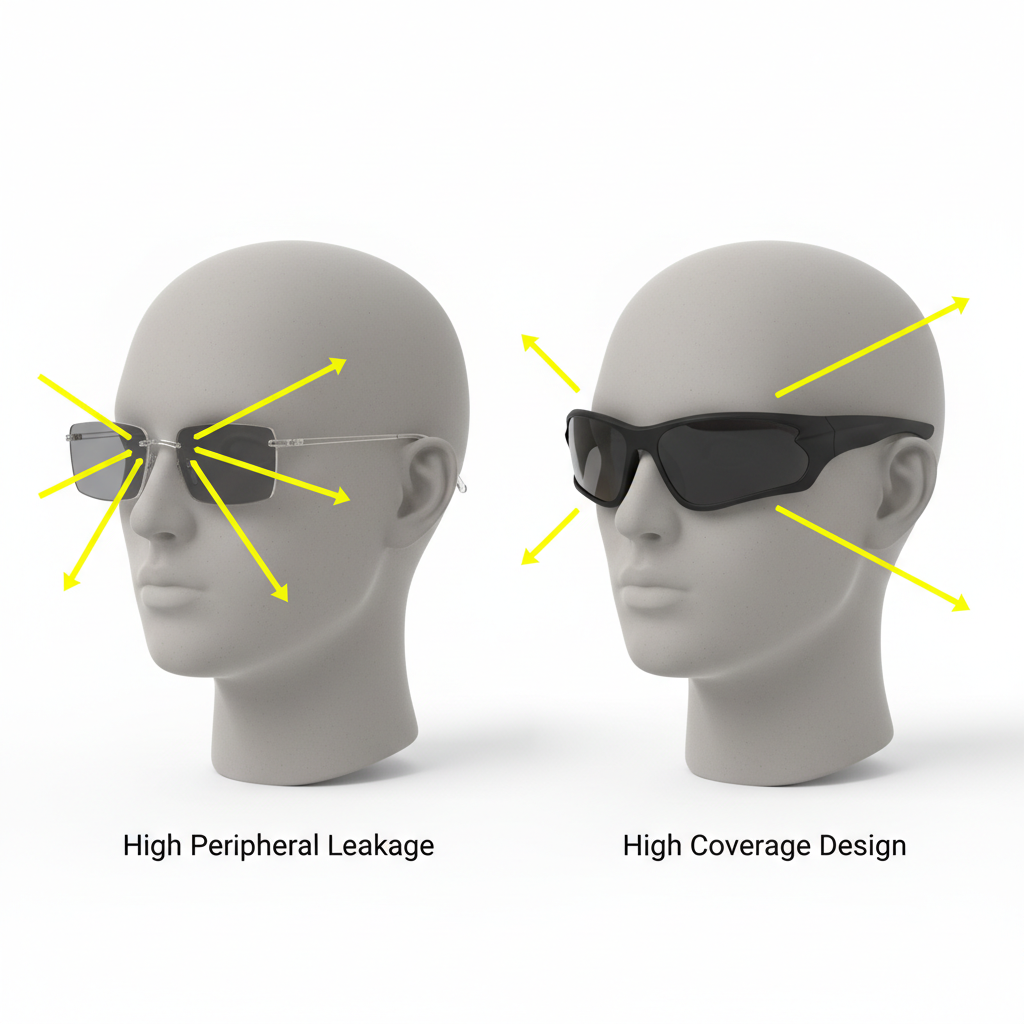
UV rays don’t just come from the front; they leak in from the sides, top, and can even reflect off the back surface of your lenses. This is why frame geometry is a critical safety feature. A study on ocular UV exposure using 3D models found that "middle-sized" sunglasses offered the least protection due to this peripheral light leakage. The most protective styles were those with a "wraparound" design or larger lenses that sit closer to the face. You can learn more about this in the study published in the National Library of Medicine. Aim for a lens height between 42–50 mm and a frame that follows the curve of your face to minimize gaps. This design not only provides superior protection but also helps keep out wind and dust during outdoor activities.
Choosing a Universal Tint
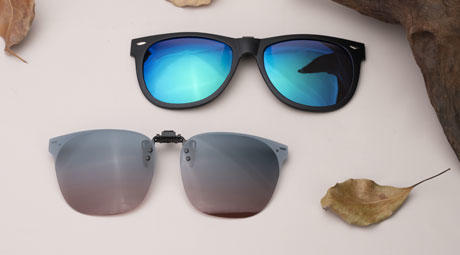
While bright, mirrored lenses might look trendy, neutral tints are far more versatile. Gray, green, and brown lenses distort color the least, ensuring that you see your destination’s scenery accurately. According to the Cleveland Clinic, gray lenses are particularly good for driving and general use because they maintain true color perception. A neutral tint ensures your sunglasses are appropriate for any setting, from a formal lunch to a rugged trail.
Lightweight for the Long Haul
Finally, consider the total weight. For a pair of sunglasses you’ll wear all day, every gram counts. A good target for all-day comfort is a total frame weight under 30-40 grams. Lightweight materials like TR-90 and polycarbonate lenses are essential for hitting this mark, preventing the pressure and soreness on your nose and ears that can come from heavier frames.
Key Takeaways for the Smart Traveler
Choosing the perfect travel sunglasses isn’t about finding the most expensive brand; it’s about identifying the smartest features. By prioritizing durability, comprehensive UV protection, and a secure fit, you can find one pair that will reliably serve you on any adventure. Before your next trip, look for a pair that combines a flexible TR-90 or nylon frame with shatter-resistant polycarbonate lenses that offer certified UV400 protection. Opt for a wraparound shape or large lenses with a neutral gray or brown tint. With the right choice, you can finally pack with confidence, knowing you have one pair of sunglasses ready for anything.
Disclaimer: This article is for informational purposes only and does not constitute professional medical advice. Consult with a qualified eye care professional to address your specific vision needs, especially if you have pre-existing conditions.
References
- MD Anderson Cancer Center: 9 Things to Know About Sunglasses, Eye Protection and Cancer
- PubMed (SPIE): UV Protection Provided by Sunglasses: A Technical Report
- FDA.gov: Impact-Resistant Lenses: Questions and Answers
- American Optometric Association: UV Protection
- Harvard Health Publishing: Polarized sunglasses: Protecting your eyes from harmful glare
- Federal Aviation Administration: Sunglasses for Pilots
- PMC (National Library of Medicine): Ocular UV Dosimetry
- Cleveland Clinic: Do Sunglasses Really Protect Your Eyes?


