










UV Index and Eye Damage Thresholds: When Protection is Urgent
The Invisible Threat: Understanding UV Index and Eye Damage
The UV Index (UVI) is a tool most of us associate with sunburn risk on a beach day. However, its most critical warnings are often for a part of the body we forget to protect: our eyes. Unlike skin, which can heal from a minor burn, the damage ultraviolet (UV) radiation inflicts on the eye's lens and retina is cumulative and often irreversible. This guide translates the abstract UVI into a practical framework for ocular safety, helping you understand the specific damage thresholds and when protection becomes an urgent health requirement.
According to a cross-sectional study on public awareness, a staggering 47% of people who don't wear sunglasses cite "uncertainty in the efficiency of UV protection" as the main reason (PMC: Public Awareness of UV Harm (Bakkar et al.)). This highlights a critical trust gap. The truth is, consistent protection is a crucial investment in your long-term vision, preventing conditions that develop silently over decades.
Decoding the UV Index: From Low-Level Exposure to Acute Danger
The UVI scale, developed by the WHO and WMO, measures the intensity of UV radiation. The risk to your eyes correlates directly with these numbers, but not always in the way you might think.
-
UVI 0-2: Low (The Baseline Risk): At this level, the risk is minimal for most. However, for individuals with light-colored eyes or children, protection is still wise. Children's eyes are particularly vulnerable; due to their clearer natural lenses, they can transmit UV light more deeply into the eye. Research using 3D head models found that 2-5% of UV radiation reaches a child's retina, compared to just 1% in adults (PMC: Ocular UV Dosimetry & Frame Geometry). This makes early and consistent protection vital.
-
UVI 3-5: Moderate (The Cumulative Damage Zone): This is the most deceptive range. The sun doesn't feel intensely dangerous, so compliance with sunglass use often drops. However, this is precisely the exposure level experienced during daily commutes or sitting near a window. This chronic, low-grade exposure is a primary contributor to the development of early-onset cataracts. A large-scale study in Taiwan found that individuals who did not wear glasses had a 57% increased risk of cataracts (PMC: Taiwan Cataract & Protection Study (Wang et al.)).
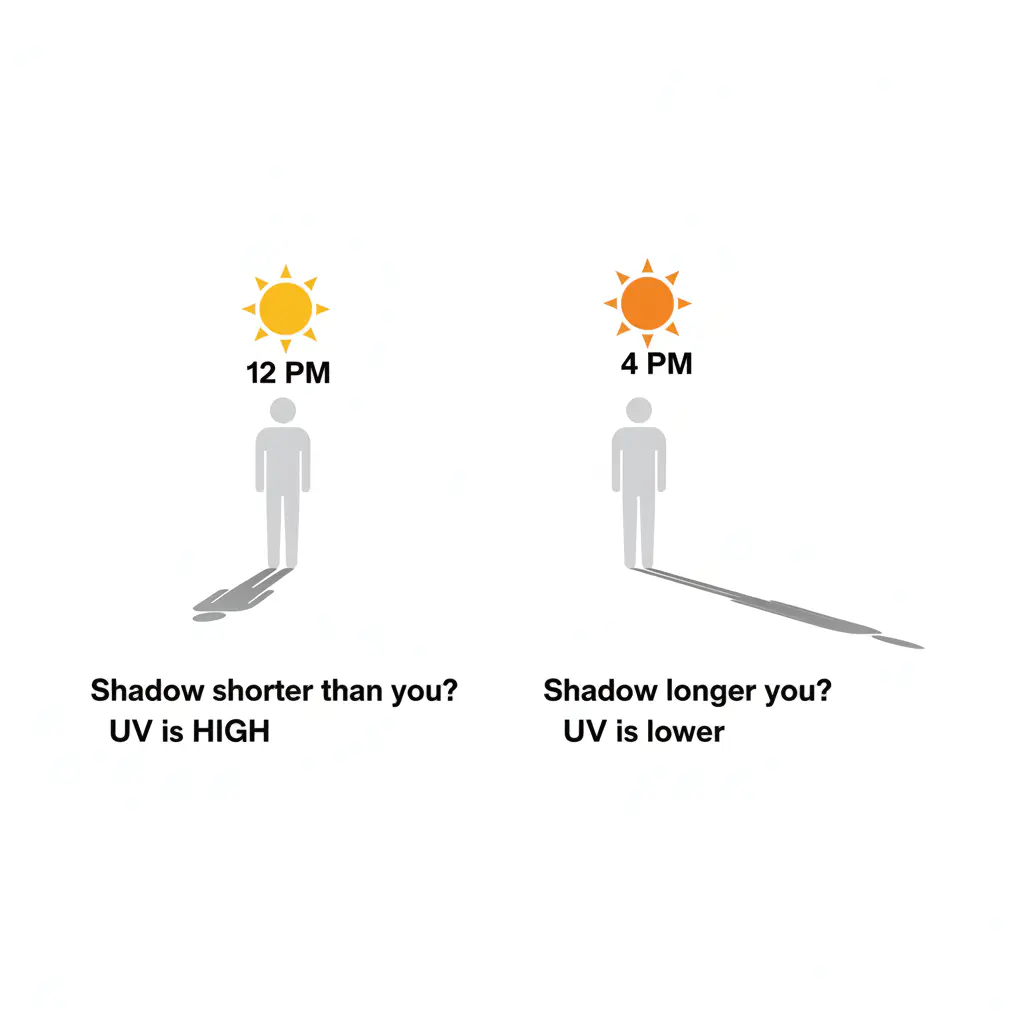
Practical Heuristic: The Shadow Rule A simple rule of thumb used by optical professionals is the 'Shadow Rule'. If your shadow is shorter than you are tall, the sun is high and UV intensity is strong enough to warrant serious protection.
-
UVI 6-10: High to Very High (Urgent Protection Needed): At these levels, the risk of acute damage becomes significant. Conditions like photokeratitis—essentially a sunburn of the cornea—can occur after just a few hours of intense exposure. Symptoms include pain, redness, and a gritty feeling in the eyes. Long-term, this level of exposure dramatically accelerates the risk for cataracts, pterygium ("surfer's eye"), and certain types of ocular cancers.
-
UVI 11+: Extreme (Maximum Precaution): This level is common at high altitudes, in tropical regions, or near reflective surfaces like snow. Protection is not optional; it's mandatory to prevent severe and rapid damage to the ocular surface and internal structures.
Beyond the Index: Environmental Factors That Amplify UV Risk
The daily UVI forecast is a baseline. Your actual exposure can be significantly higher depending on your environment.
-
Altitude & Reflection: UV radiation increases by about 10-12% for every 1000 meters in altitude. Furthermore, surfaces can act as multipliers. The American Academy of Ophthalmology warns that snow can double your effective UV exposure by reflecting up to 80% of rays from the ground (AAO: Sun Safety Tips). Water and sand also reflect UV light, increasing the total dose your eyes receive.
-
Clouds & Haze: A common and dangerous myth is that cloudy days are safe. In reality, thin clouds can scatter UV radiation, sometimes even increasing its intensity. Overcast skies do not block UV rays effectively.
-
Windows & Back-Surface Reflection: Standard car and home windows block most UVB but allow much of the UVA to pass through. This is why all-day protection matters. Even for clear prescription lenses, back-surface reflection can be a hazard. A study on clear lens technology notes that standard anti-reflective (AR) coatings can inadvertently reflect UV rays from the back of the lens into the eye, making a UV-absorbing AR coating a necessary upgrade for comprehensive protection (PMC: UV Protection by Clear Lenses).
Who Is Most Vulnerable? High-Risk Groups for UV Damage
While everyone is at risk, certain populations need to be exceptionally vigilant.
1. Children and Teenagers: As mentioned, UV damage is cumulative over a lifetime. The Mayo Clinic advises that children should start wearing high-quality sunglasses as early as 6 months old to mitigate this lifelong risk (Mayo Clinic: Why Sunglasses are a Must-Wear).
2. Individuals with Light-Colored Eyes: People with blue, green, or hazel eyes have less protective pigment (melanin) in their irises compared to those with brown eyes. This "melanin shield" helps block harsh light. A comprehensive review identified light eye color as a significant risk factor for Uveal Melanoma, a rare but serious eye cancer (The Impact of Ultraviolet Radiation on the Aetiology and Development of Uveal Melanoma). This lack of pigment is also why light-eyed individuals often experience more photophobia (light sensitivity), according to experts at Duke Health.
3. Contact Lens Wearers: While many modern contact lenses offer UV protection, they are not a substitute for sunglasses. They do not cover the entire eye and surrounding tissues, leaving the sclera (the white of the eye) and eyelids vulnerable. For this reason, it's critical that contact lens wearers still use UV-protective sunglasses.
Your Action Plan: Choosing the Right Level of Protection
Translating risk into action means selecting eyewear that offers verified, comprehensive protection.
-
Demand UV400: Some older standards only certify protection up to 380 nanometers (nm). However, a critical technical report highlights that the 380-400 nm band contains significant high-energy radiation. Look for a label that explicitly states "UV400" or "100% UV Protection." This ensures blockage of all UVA and UVB rays up to 400 nm (PubMed: Solar UV Protection Technical Report (Cole BL)).
-
Don't Confuse Polarization with Protection: Polarization is a filter that cuts horizontal glare, which is excellent for reducing eye strain during activities like driving or fishing. However, as Harvard Health explains, it does not inherently block UV light (Harvard Health: Polarized Sunglasses). A lens must have a separate UV400 filter applied, regardless of whether it is polarized.
-
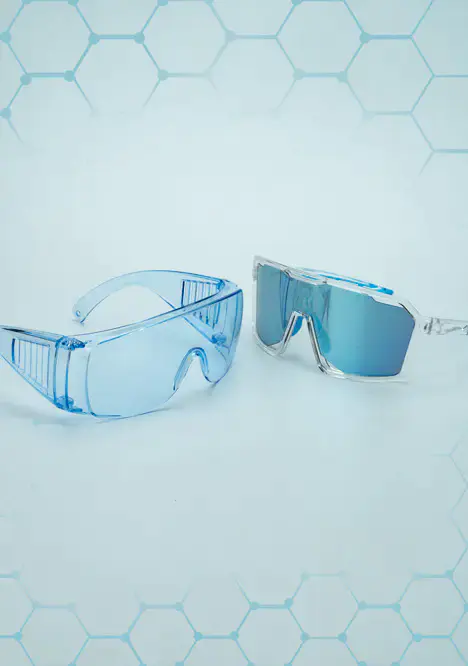
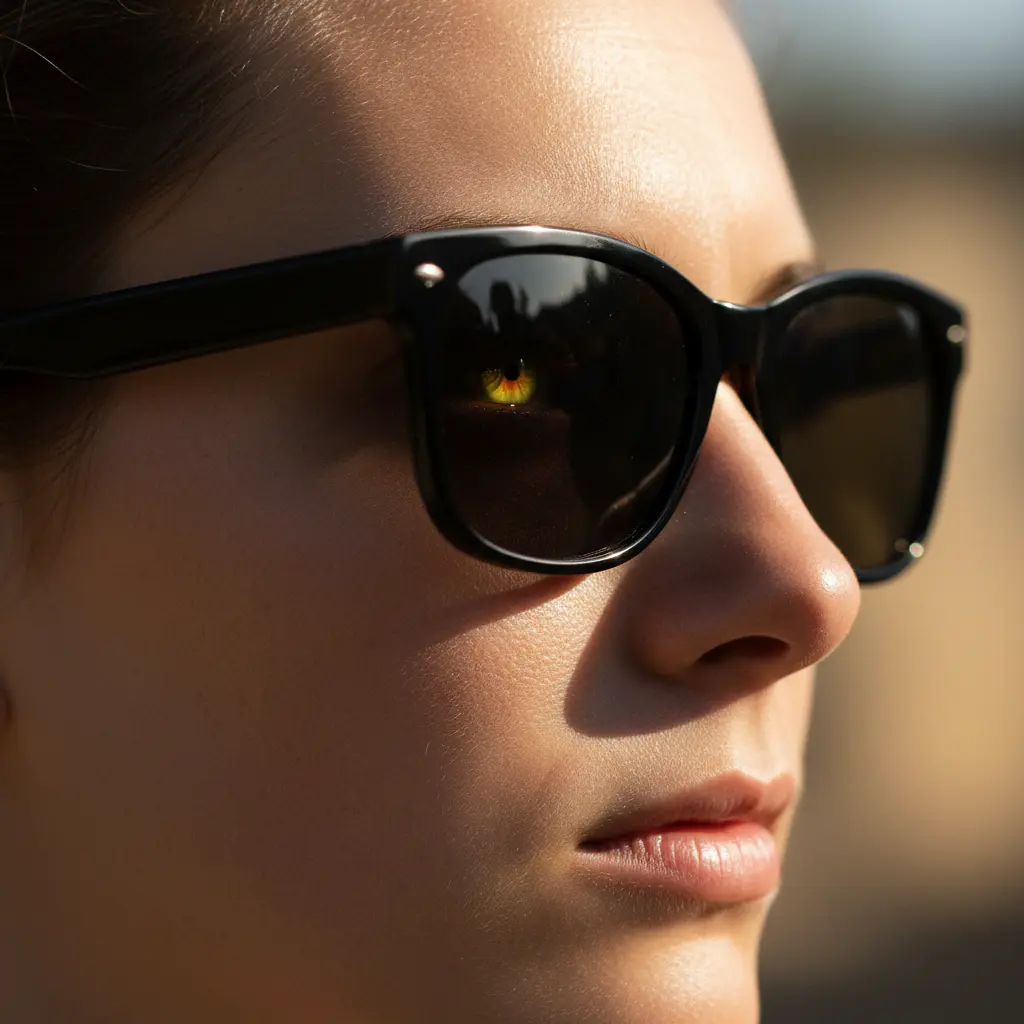
Frame Shape is a Safety Feature: The same 3D head-form study that measured UV dosage in children also found that frame geometry is critical. "Middle-sized" sunglasses offered the least protection due to significant peripheral light leakage from the sides, top, and bottom. For high-exposure environments, oversized or wraparound styles that sit close to the face offer vastly superior protection (PMC: Ocular UV Dosimetry & Frame Geometry).
-
Match Lens Category to Your Activity:
- Category 3 (8-18% light transmission): The best all-around choice for daily driving and general use. It provides enough darkness to be comfortable in bright sun without impairing vision.
- Category 4 (3-8% light transmission): These are special-purpose lenses for extreme conditions like mountaineering or desert trekking. They are too dark and illegal for driving in most regions.
Ultimately, treating sunglasses as essential health equipment rather than a seasonal accessory is the most effective strategy for preserving your vision for a lifetime. Consistent, daily use—regardless of the season or cloud cover—is your best defense against the silent, cumulative threat of ultraviolet radiation.
Disclaimer: This article is for informational purposes only and does not constitute professional medical advice. Consult with a qualified eye care professional for any health concerns or before making any decisions related to your eye health.


