












Vertex Distance: Why the Same Rx Feels Different in Different Frames
TL;DR: Understanding Vertex Distance
Vertex distance is the specific gap between the back surface of your eyeglass lens and the front of your cornea. A small change in this distance—caused by switching from a close-fitting frame to a larger, flatter one—can significantly alter the lens's effective power. This effect is most noticeable for prescriptions stronger than +/- 4.00 diopters. If your new glasses feel "off" despite having the correct prescription, a change in vertex distance is the likely reason. For high-prescription wearers, especially those using progressive lenses, sticking to a similar frame fit or getting a professionally compensated prescription is crucial for clear, comfortable vision.
Decoding Vertex Distance: The Critical Gap in Your Prescription
You’ve just received your new glasses, ordered with the exact prescription from your last eye exam. You put them on, but something is wrong. The world seems slightly blurry, or you feel a sense of dizziness. It’s a common frustration, and the reason often isn't a mistake in the prescription itself, but a hidden variable known as vertex distance.
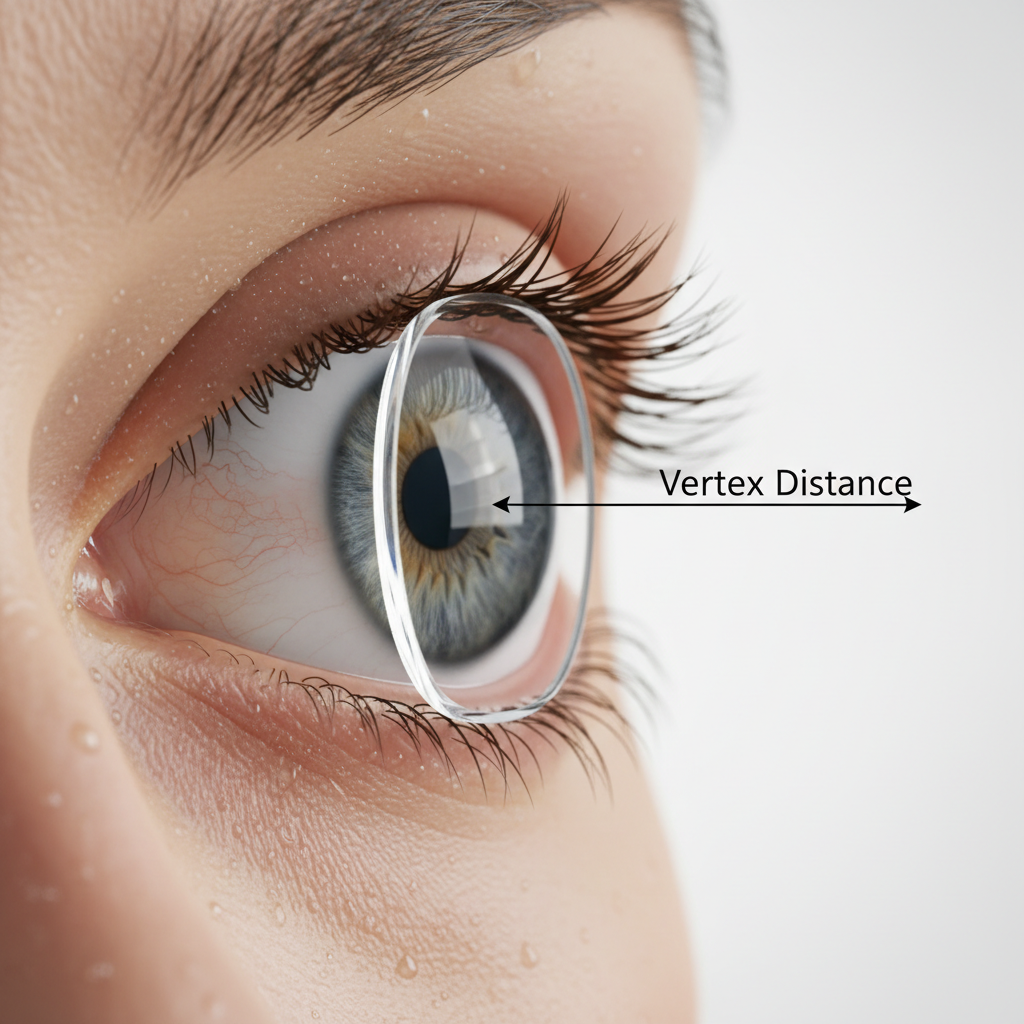
In simple terms, vertex distance (VD) is the measurement from the back of your eyeglass lens to the front surface of your eye (the cornea). Think of it like focusing a magnifying glass or a projector; the distance between the lens and the target surface is critical to achieving a sharp image. Your eye is the target, and if that distance changes, the focus changes with it.
The Physics of Effective Power: A Simple Explanation
When an optometrist determines your prescription, they perform the measurement at a specific vertex distance, typically between 12mm and 14mm, using a device called a phoropter. The power of the lenses prescribed is optimized for that exact distance.
When you wear a pair of glasses, the power your eye actually experiences is called the "effective power." If your new frames sit closer to or farther from your eyes than the phoropter did, the effective power changes. This creates a mismatch between what was prescribed and what you’re experiencing.
Here is a simple rule of thumb:
-
For Nearsightedness (Minus Lenses):
- Moving the lens away from your eye makes it feel stronger (more minus).
- Moving the lens closer to your eye makes it feel weaker (less minus).
-
For Farsightedness (Plus Lenses):
- Moving the lens away from your eye makes it feel weaker (less plus).
- Moving the lens closer to your eye makes it feel stronger (more plus).
Who Is Most Affected by Vertex Distance Changes?
This phenomenon is not equally important for everyone. The change in effective power is directly related to the strength of your prescription.
- Low Prescriptions (+/- 0.25 to +/- 3.75 D): For individuals in this range, the change in effective power from shifting frame styles is usually so minimal that it goes unnoticed.
- High Prescriptions (+/- 4.00 D and above): This is where vertex distance becomes critical. The effect is magnified, and even a small shift can cause significant blur and discomfort.
Real-World Impact: In optical practice, it's understood that for a person with a -8.00 D prescription, a vertex distance change of just 3mm can require a -0.25 D power adjustment to restore clear vision. This is a clinically significant difference.
From Wraparounds to Flat-Fronts: How Frames Alter Your Effective Rx
The most common reason for an unexpected change in vertex distance is switching frame styles. A prescription that worked perfectly in one type of frame can feel completely wrong in another, leading to confusion and frustration.

The Common Scenario: Switching Frame Styles
Let's consider a frequent situation we see based on customer support patterns. A user with a -7.00 D prescription has worn a snug, slightly curved pair of glasses for years. They decide to order a new, trendy pair of large, flat-front fashion frames online using their existing prescription. When the new glasses arrive, their distance vision is blurry.
The problem is that the new, flatter frame sits much farther from their face, increasing the vertex distance. For their nearsighted prescription, moving the lens away makes it effectively stronger, over-correcting their vision and causing the blur.
A Practical Guide to Frame Styles and Their Typical Vertex Distance
Different frame designs naturally create different vertex distances. Understanding this can help you anticipate potential issues when shopping.
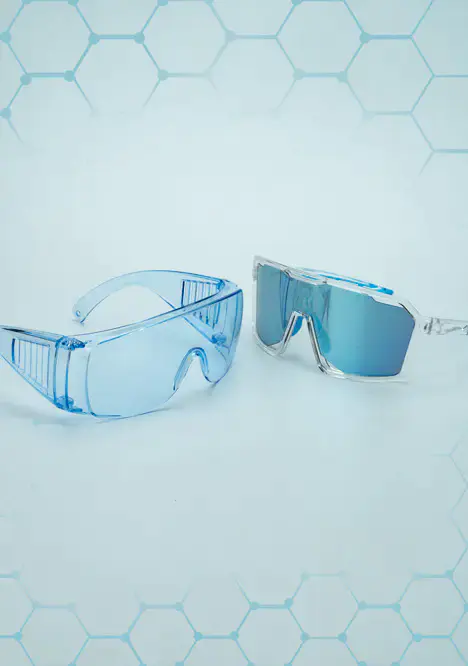
- Close-Fitting & Sports Wraps: These frames curve to follow the contour of your face, resulting in a short vertex distance. They keep the lens very close to the eye.
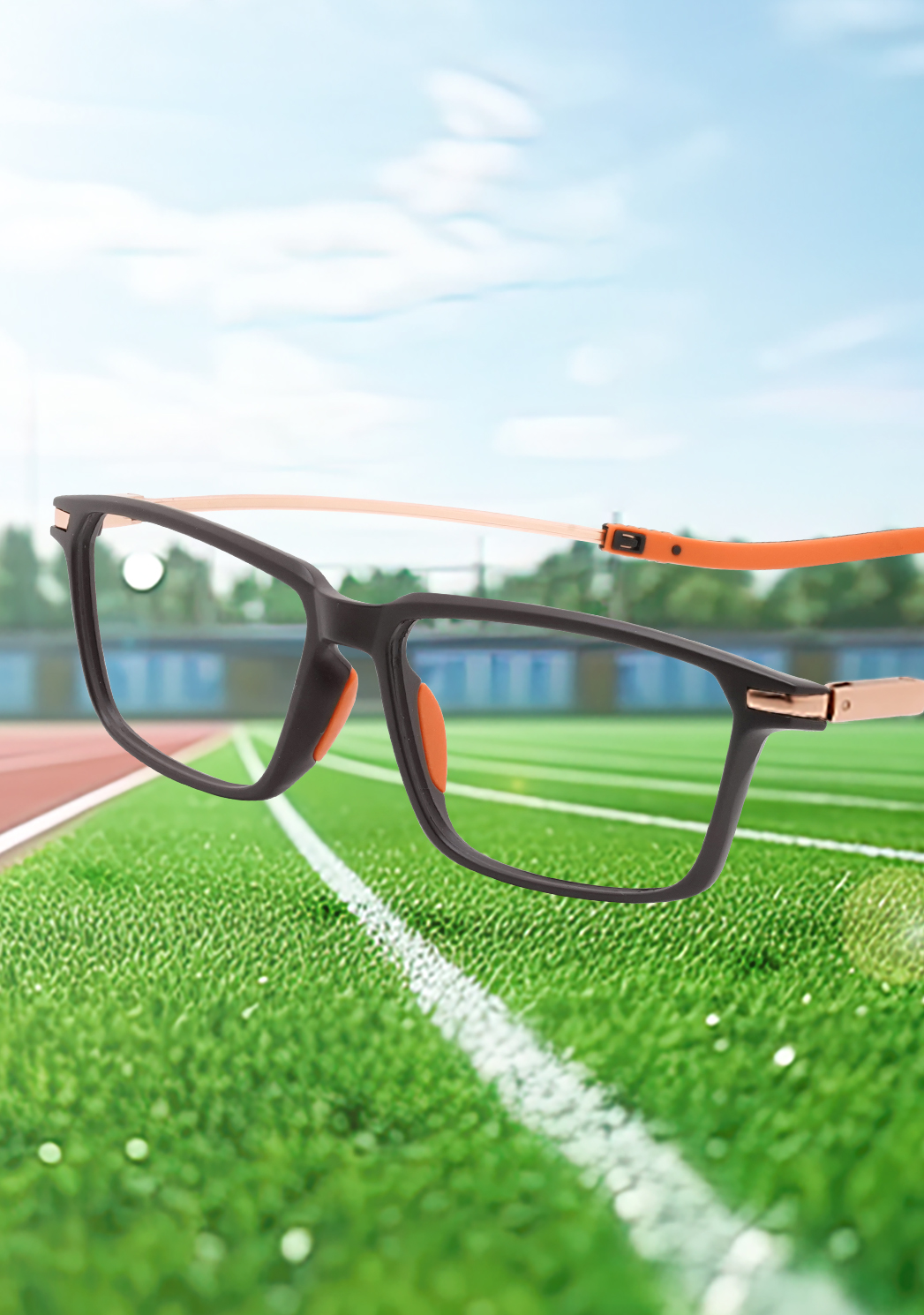
- Standard Metal & Acetate Frames: These are the most common styles and typically sit at a medium vertex distance, which is often close to the standard 12-14mm used during an eye exam.
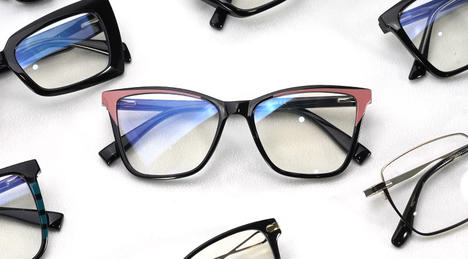
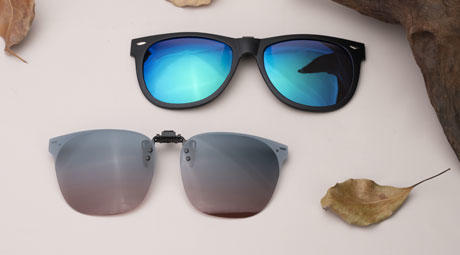
- Oversized & Flat-Front Fashion Frames: These trendy styles are designed to be bold and often have a very flat front curve. They sit farther away from the face, creating a long vertex distance.
- Aviator-Style Frames: These can be variable. While often flat, their adjustable nose pads allow for some modification of the vertex distance.
A Heuristic for High-Prescription Wearers: As a practical rule of thumb, if your prescription is over +/- 4.00 D, any change in frame style that alters the vertex distance by more than 2mm from your original glasses warrants a professional reassessment or a compensated prescription.
Beyond Simple Myopia: Vertex Distance in Progressive and Astigmatic Lenses
For wearers of more complex lenses, vertex distance introduces additional layers of difficulty that go beyond simple blur. It can disrupt the very design and function of the lens.
The Progressive Lens Problem
Progressive lenses are a marvel of optical engineering, providing seamless vision from distance to near in a single lens. However, their performance is critically dependent on precise positioning. The lens has a very specific "corridor" of clear vision that must be perfectly aligned with your pupil.
When the vertex distance changes, it not only alters the distance power but also effectively misaligns the reading corridor. You may find yourself having to tilt your head unnaturally to find the "sweet spot" for reading, leading to neck pain and eye strain. Furthermore, the "add power" for reading also requires its own vertex distance compensation—a complex calculation that simple online tools cannot perform. This makes switching frame styles with progressive lenses particularly challenging without professional guidance.
Astigmatism and Vertex Distance
Astigmatism correction involves a cylindrical (CYL) power at a specific axis. While vertex distance has less impact on astigmatism than on spherical power, a significant change can induce a slight rotational or skew effect, causing visual distortion that may feel like the world is tilted. According to studies on spectacle adaptation, these small inter-ocular differences can trigger dizziness and visual motion distortions.

Actionable Steps for a Perfect Fit Every Time
Understanding vertex distance empowers you to make smarter choices and avoid visual discomfort with your next pair of glasses. Here’s how you can take control of this critical factor.
Know Your Original Fitting Conditions
If you have a high prescription, knowledge is power. At your next eye exam, ask your optometrist to note the vertex distance at which they performed the refraction. This number is your baseline and becomes an essential piece of information if you plan to buy glasses elsewhere, especially in a different style.
When Ordering Online: Be a Smart Shopper
Ordering glasses online offers convenience and value, but for high-power users, it requires careful consideration.
- Stick to Similar Styles: The safest option is to choose new frames that have a similar size, shape, and fit to your current, comfortable pair.
- Measure Your Current Frames: Use a ruler to measure your current frame's bridge width and overall width. Use these measurements as a guide when browsing new styles.
- Leverage Adjustable Nose Pads: Frames with adjustable nose pads offer a valuable way to fine-tune the vertex distance, allowing you to move the lenses slightly closer to or farther from your eyes for optimal clarity.
When to Seek Professional Help
Online ordering is suitable for many, but some situations demand an expert's touch. Always seek a professional fitting from a qualified optician if:
- You have a prescription over +/- 4.00 D and want to switch to a dramatically different frame style (e.g., from small and curved to large and flat).
- You wear progressive lenses and are changing frame styles.
- You are experiencing persistent dizziness, distortion, or eye strain with new glasses.
An optician can take precise measurements of the new frame on your face and order lenses with a prescription that is compensated for the specific vertex distance.
Frequently Asked Questions about Vertex Distance
Why do my new glasses make me dizzy? Dizziness is often caused by a new visual stimulus that your brain hasn't adapted to. A change in vertex distance can alter magnification and peripheral vision, especially if you have different prescriptions in each eye (anisometropia). This can create a sensation of the floor being tilted or objects appearing distorted, leading to dizziness until your brain adapts.
Can I measure my own vertex distance? Accurately measuring vertex distance at home is very difficult as it requires a specialized tool called a distometer. While some methods exist using a ruler and a mirror, they are prone to error. The most reliable way to get this measurement is from an eye care professional.
Does vertex distance matter for low prescriptions? For prescriptions under +/- 4.00 D, the effect of changing vertex distance is usually so small that it is not visually perceptible. Therefore, it is generally not a concern for people with mild prescriptions.
My contact lens and glasses prescriptions are different. Is this because of vertex distance? Yes, this is the most common and perfect example of vertex distance compensation. A contact lens sits directly on the cornea, so its vertex distance is zero. An optometrist uses a standard formula to convert your glasses prescription to a contact lens prescription to account for this difference.
Empowering Your Eyewear Choices
Your prescription is more than just a set of numbers; it's a precise formula for clear vision that depends on how the lens is positioned in front of your eye. Vertex distance is the crucial, often-overlooked link between that formula and your real-world visual experience.
By understanding how frame style impacts this critical distance, you can diagnose why a new pair of glasses might feel wrong and take proactive steps to prevent it. Whether you choose to stick with a familiar fit or work with an optician to get a compensated prescription, you are now equipped with the knowledge to ensure your next pair of glasses delivers the perfect vision you expect.
Disclaimer: This article is for informational purposes only and does not constitute professional medical advice. The information provided is intended to support, not replace, the relationship that exists between a patient and his/her physician. Always seek the advice of a qualified health provider with any questions you may have regarding a medical condition.
References:
- National Center for Biotechnology Information (NCBI). "Spectacle Adaptation and Aniseikonia." Available at: https://pmc.ncbi.nlm.nih.gov/articles/PMC11603396/
- National Center for Biotechnology Information (NCBI). "StatPearls: Contact Lenses." Available at: https://www.ncbi.nlm.nih.gov/books/NBK580554/
- Hoya Vision. "How Corridor Lengths Impact Patient Satisfaction." Available at: https://www.hoyavision.com/en-us/blog/blogs-and-article/how-corridors-lengths-impact-patient-satisfaction/


