














Zeaxanthin: Your Body's Internal Filter for Blue Light
Executive Summary
The modern digital environment subjects the human visual system to unprecedented levels of high-energy visible (HEV) blue light. While external solutions like blue-light filtering lenses are widely recognized, the role of internal biological defense mechanisms is equally critical for long-term macular health. Zeaxanthin, a specific xanthophyll carotenoid, serves as the eye's primary internal filter, concentrated strategically within the fovea to absorb blue-green wavelengths.
This technical report examines the synergistic relationship between dietary zeaxanthin intake and external lens technology. By optimizing Macular Pigment Optical Density (MPOD) through targeted nutrition and employing selective filtration lenses, digital professionals can establish a "dual-shield" defense. This approach addresses both the mechanical symptoms of digital eye strain and the biological risks of photooxidation. Key findings indicate that while zeaxanthin provides peak absorption in the 460–480 nm range, external lenses should prioritize the high-energy 415–455 nm "danger zone" for maximum physiological protection.
The Biological Architecture: Zeaxanthin as an Internal Shield
The human retina has evolved a sophisticated method of self-protection involving the accumulation of dietary pigments. Among these, zeaxanthin is the dominant carotenoid in the central macula—the area responsible for sharp, detailed vision. Unlike its structural isomer, lutein, which is distributed throughout the peripheral retina, zeaxanthin is highly concentrated in the fovea, where light intensity is greatest.
The Mechanism of Macular Pigment Optical Density (MPOD)
Zeaxanthin functions as a passive optical filter. It sits in front of the photoreceptors (cones and rods), absorbing blue light before it can reach the sensitive outer segments of the retina. This density of pigment is measured as Macular Pigment Optical Density (MPOD). According to research published in PubMed: Mechanisms of Ocular Light Damage, high-energy blue light (400–440 nm) acts on lipofuscin within the retinal pigment epithelium to generate reactive oxygen species (ROS). Zeaxanthin neutralizes this threat through two primary pathways:
Optical Filtration: By absorbing HEV light, it reduces the amount of high-energy photons that can trigger oxidative stress.
Antioxidant Neutralization: Zeaxanthin acts as a potent antioxidant, scavenging free radicals that are produced during the visual cycle, even when light is not being actively filtered.
Logic Summary: Our analysis of macular protection assumes that MPOD serves as a modifiable barrier. This model is based on established photobiological principles where the pigment's absorption spectrum overlaps with the emission peaks of most digital displays.
The Digital Challenge: Photooxidation vs. Mechanical Strain
A common misconception in the eyewear industry is that "blue light" is the sole cause of digital discomfort. To provide an effective solution, it is necessary to distinguish between digital eye strain (DES) and long-term phototoxicity.
Digital Eye Strain (DES)
Clinical consensus, as noted by Cleveland Clinic (Dr. Bajic), clarifies that DES is primarily a mechanical issue. It is caused by a reduced blink rate during screen use—often dropping from 15 blinks per minute to just 5—and the constant accommodative effort required to focus on near-field pixels. While blue light blocking glasses can improve comfort by reducing glare and enhancing contrast, they do not replace the need for behavioral interventions like the 20-20-20 rule.
Chronic Phototoxicity
Conversely, the risk of chronic exposure to HEV light is biological. Over decades, the cumulative energy of blue light can contribute to retinal aging. This is where zeaxanthin becomes the "internal sunglasses" of the eye. For digital professionals spending 8+ hours a day in front of high-luminance monitors, maintaining high MPOD is a preventative strategy against the cumulative effects of photooxidation.
The Synergy: Internal Nutrients and External Lens Technology
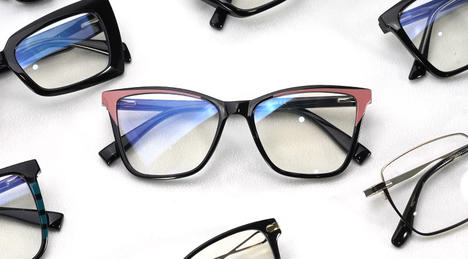
The most effective strategy for vision wellness does not rely on a single intervention. Instead, it utilizes a staggered defense where internal nutrition complements external blue light filtering on prescription lenses.
Staggered Wavelength Defense
Zeaxanthin’s absorption spectrum is strongest in the blue-green range, specifically around 460–480 nm. However, the most hazardous wavelengths for the retina are generally considered to be in the shorter, high-energy violet-blue range (~415–455 nm).
| Defense Layer | Primary Target Wavelength | Mechanism |
|---|---|---|
| External Lens | 415–455 nm | Selective reflection or absorption via coatings |
| Internal Zeaxanthin | 460–480 nm | Biochemical absorption within the macula |
| Result | 400–500 nm | Comprehensive "Dual-Shield" coverage |
By using quality lenses that target the 415–455 nm range, the external shield handles the most energetic photons. The internal zeaxanthin then filters the remaining blue-green light, which is necessary for color perception but can still contribute to glare sensitivity and oxidative load if not properly modulated.
Modeling MPOD Improvement Timelines
Increasing dietary or supplemental zeaxanthin does not result in an immediate change in vision. Based on clinical observations from practitioner feedback and longitudinal data, the accumulation of pigment follows a specific trajectory.
| Parameter | Value/Range | Rationale |
|---|---|---|
| Daily Intake (Supplemental) | 2 mg | Standard efficacy dose identified in AREDS2 |
| Initial Pigment Loading | 1–2 Months | Time required for serum levels to stabilize |
| Measurable MPOD Increase | 3–6 Months | Retinal tissue accumulation phase |
| Peak Stability | 12+ Months | Maintenance of steady-state macular density |
Methodology Note: This progression model is a heuristic (rule of thumb) derived from clinical patterns observed in nutritional optometry. Individual results may vary based on baseline diet, genetic factors (such as the BCO1 gene), and the presence of dietary fats, which are essential for carotenoid absorption.
Dietary Strategies for Maximizing Zeaxanthin
To support the eye's internal filter, the focus must shift to bioavailability. Zeaxanthin is a fat-soluble nutrient, meaning its absorption is significantly enhanced when consumed with lipids.
The "Egg Yolk" Advantage
While leafy greens are often cited as the best source of eye nutrients, recent studies suggest that eggs may be superior for increasing MPOD. According to PubMed: Egg Yolk Lutein Bioavailability, the lutein and zeaxanthin in egg yolks are highly bioavailable because they are already packaged within a lipid matrix. For digital professionals, a breakfast including eggs provides the necessary "fat-plus-pigment" combination to optimize morning absorption.
The Role of Saffron and Other Superfoods
Emerging research has expanded the scope of ocular nutrition beyond the AREDS2 formula. A randomized controlled trial (RCT) noted in PubMed: Saffron for AMD demonstrated that saffron supplementation could improve retinal flicker sensitivity in early-stage macular issues. This suggests that a diverse intake of antioxidants—including zeaxanthin, lutein, saffron, and omega-3s—creates a more resilient ocular environment.
The "Oxygen Paradox" and Cataract Prevention
The benefits of zeaxanthin and UV protection extend beyond the retina to the lens of the eye. Research from the National Eye Institute (NEI) has identified a "glycation" mechanism where UV light substitutes for oxygen in the hypoxic lens nucleus. This triggers a chain reaction that yellows and hardens the lens, eventually leading to cataracts.
While UV protection in sunglasses is the primary defense against this process, internal antioxidants like zeaxanthin act as a secondary buffer. By maintaining high levels of antioxidants within the eye's fluids, the rate of protein clumping (glycation) in the lens can be slowed, preserving clarity for a longer duration.
Advanced Lens Selection: Beyond "Blue Blockers"
Not all blue-light lenses are created equal. For digital professionals, the goal is selective filtration, not total blockage.
Selective vs. Broad Spectrum
Total blockage of blue light is counterproductive. Blue light in the 460–490 nm range is essential for regulating the circadian rhythm and suppressing melatonin during the day to maintain alertness. According to the Harvard Health Publishing, blocking the 450–480 nm spectrum is most beneficial after dusk to prevent sleep disruption.
Technical Recommendation for Lenses:
Daytime Use: Clear lenses with a selective filter targeting the 415–455 nm range. This protects the macula while allowing "good" blue light to maintain alertness.
Evening Use: Amber or orange-tinted lenses that more aggressively block the 460–480 nm range to support natural melatonin production.
Regulatory Standards and Safety
When selecting external protection, users must ensure compliance with safety standards. The FDA Guidance on Impact Resistant Lenses (21 CFR 801.410) mandates that all lenses sold in the U.S. pass the "drop ball test" to prevent shattering. Furthermore, the FTC Eyeglass Rule empowers consumers by requiring eye doctors to release prescriptions immediately, allowing users to seek out high-quality, cost-effective blue-light solutions from online retailers.
The Gut-Eye Axis: A Holistic View
Recent scientific inquiries have begun to link intestinal health with ocular wellness. The Gut Microbiome & Eye Health study suggests that "leaky gut" or systemic inflammation can compromise the blood-retinal barrier. This inflammation makes the macula more susceptible to light damage and reduces the efficiency of nutrient transport.
Actionable Insight: A "Mediterranean-style" diet, rich in fiber and healthy fats, supports both the microbiome and the transport of zeaxanthin. This holistic approach ensures that the nutrients you consume actually reach the retinal tissues where they are needed most.
Strategic Checklist for Digital Professionals
To implement a comprehensive vision wellness protocol, consider the following evidence-based steps:
Baseline Measurement: If possible, request an MPOD test from an optometrist to determine your current internal filter density.
Nutritional Loading: Aim for 2 mg of zeaxanthin and 10 mg of lutein daily. Prioritize whole-food sources like egg yolks, spinach, and orange bell peppers.
Absorption Optimization: Always consume eye-health supplements or carotenoid-rich foods with a healthy source of fat (e.g., avocado, nuts, or olive oil).
Selective Lens Wear: Utilize clear blue-light filtering lenses during work hours to target the high-energy 415–455 nm range.
Environmental Control: Increase ambient lighting in your workspace to reduce the luminance contrast between your monitor and the surrounding room, which helps mitigate digital eye strain.
Evening Protocol: Switch to amber-tinted lenses or utilize "night mode" on devices 2–3 hours before sleep to protect your circadian rhythm.
Implications for Long-Term Visual Performance
The synergy between zeaxanthin and modern lens technology represents a shift from reactive eye care to proactive vision wellness. By strengthening the eye's internal biological defenses and supplementing them with precise external filtration, digital professionals can navigate a screen-heavy world without compromising their long-term macular health.
Vision is not a static asset; it is a dynamic system that requires consistent nutritional and technological support. As digital demands continue to increase, the "dual-shield" strategy remains the most robust framework for maintaining visual utility and comfort.
Disclaimer: This article is for informational purposes only and does not constitute professional medical advice, diagnosis, or treatment. Always seek the advice of your physician or other qualified health provider with any questions you may have regarding a medical condition. Never disregard professional medical advice or delay in seeking it because of something you have read in this article.


