


Why Is My Child Squinting? Understanding Common Vision Problems
Squinting is often an attempt to improve blurry vision, but it can be a sign of an underlying vision problem. When you notice your child squinting, they are trying to see better, but this doesn't address the root cause of the issue. You still need to find what causes it and find professional help.
Why Does Squinting Help My Child See Better?
Squinting helps your child see better temporarily because it narrows the eyelids, which reduces the amount of light entering the eyes and forces the light to focus more directly on the retina. This can help improve clarity for a short time, especially if your child is struggling with focusing on distant objects or reading.
However, while squinting provides temporary relief, it doesn’t address the underlying cause of the vision problem. To make long-term improvements, it's important to determine the root cause and seek appropriate treatment.
3 Vision Conditions That Cause Squinting
1. Nearsightedness (Myopia)
Children with nearsightedness can see close objects clearly, but distant objects appear blurry. This is because the light entering the eye doesn’t focus correctly on the retina. As a result, your child might squint to try and see faraway objects better, like the TV or the board at school. If your child squints or leans in close to see something far away, it could indicate myopia. It’s one of the most common vision problems in children, and nearsighted glasses can help correct the issue.
2. Astigmatism
Astigmatism occurs when the cornea or lens of the eye is not shaped properly, causing blurred or distorted vision. This condition can affect vision at any distance. Children with astigmatism may squint to reduce distortion, especially when reading or trying to focus on distant objects.
If your child experiences blurry vision regardless of whether they’re looking at something close or far away, prescription glasses can help correct this irregularity.
3. Farsightedness (Hyperopia)
Farsightedness occurs when distant objects are seen clearly, but close objects appear blurry. If your child has hyperopia, they might squint to see things up close, like books or toys. This can make tasks like reading or drawing challenging, and squinting helps temporarily improve focus.
Although hyperopia is less common than nearsightedness, it still requires attention. Corrective lenses can help your child see more clearly, both for close-up activities and at a distance.
Signs Your Child Needs Glasses
In addition to squinting, there are other signs that suggest your child may need glasses. If your child exhibits any of these behaviors, it might be time to schedule an eye exam:
● Frequent eye rubbing: If your child rubs their eyes often, it may be a sign that their eyes are straining to focus.
● Sitting too close to screens or books: Sitting too close to the TV, computer, or holding objects close to their face can be a sign of vision problems.
● Difficulty seeing at school: If your child has trouble reading books, seeing the board, or completing schoolwork, it could indicate vision issues.
● Headaches: Persistent headaches, especially after reading or screen time, may be caused by eye strain.
● Avoiding close-up tasks: If your child avoids activities like reading, drawing, or even puzzles, it could be due to difficulty seeing things up close.
If you notice any of these signs, it’s important to get an eye exam to determine whether glasses are needed. Early intervention can prevent further strain and help your child excel in their activities.
How to Choose Durable Glasses for Kids
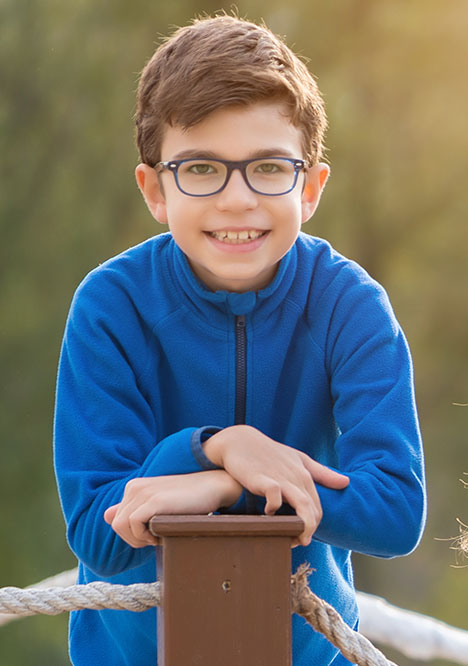
Choosing the right pair of glasses for your child goes beyond just improving their vision—it’s also about durability and comfort. Kids are active, and their glasses need to withstand the wear and tear of daily life. Here’s what to consider when shopping for glasses:
Consideration | Why It Matters | Recommended Option |
Durable Frames | Kids can be rough on their glasses, so sturdy frames that can withstand bending and impact are important. | TR90 or acetate frames are flexible and strong. |
Impact-resistant Lenses | Polycarbonate lenses are lightweight and shatterproof, reducing the risk of injury. | Polycarbonate lenses are ideal for kids. |
Proper Fit | Glasses that don’t fit properly can be uncomfortable and ineffective. | Adjustable temples and nose pads can provide a comfortable fit. |
Lightweight Materials | Kids may wear their glasses all day, so choosing a lightweight option will keep them comfortable. | Materials like acetate and TR90 are lightweight and comfortable. |
For more information on choosing glasses that are both durable and comfortable for your child, it’s important to consult with your optometrist to find the right solution for your child’s needs.
Frame Fit & Blue Light Protection: What Parents Need to Know
Blue light is a type of high-energy visible (HEV) light that screens emit, and long-term exposure can lead to eye fatigue and discomfort.
As more kids use digital devices for school and play, it’s important to consider blue light protection in their glasses.
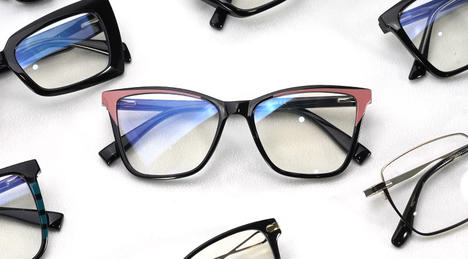
These lenses block or filter blue light, reducing strain during long hours spent on tablets, computers, or smartphones. Ensuring that your child’s glasses provide this protection is one way to support their eye health in today’s digital world.
According to the National Institute of Health research, blue light exposure from screens can impact sleep patterns and overall well-being, especially in children. By choosing the right glasses, you can help reduce these effects.
Helping Your Child See the World Clearly
Squinting can seem like a simple thing to do, but most of the time, it means that there is a bigger problem with your child's eyesight. Nearsightedness, astigmatism, or farsightedness—whatever the cause, getting your child the right prescription glasses can help them see clearly and easily.
When picking out glasses for your child, make sure they are durable, fit well, and have features like blue light protection. Lensmart has many stylish and long-lasting prescription glasses for kids. With the right pair of glasses, your child can enjoy a world of clear vision and bright possibilities.
FAQs
Q1: Why does my child squint all the time?
Squinting can be a sign that your child has blurry vision. It’s often a way of trying to see more clearly, but it’s not a long-term fix. An eye exam can help identify the cause of the blurry vision.
Q2: How can I tell if my child needs glasses?
Signs that your child may need glasses include squinting, sitting too close to screens, frequent eye rubbing, and trouble reading or seeing at school. If you notice any of these behaviors, it’s a good idea to schedule an eye exam.
Q3: Can blue light glasses help my child?
Yes! Blue light glasses help reduce eye strain caused by prolonged screen time. They can be especially helpful if your child spends a lot of time on digital devices for school or entertainment.


